


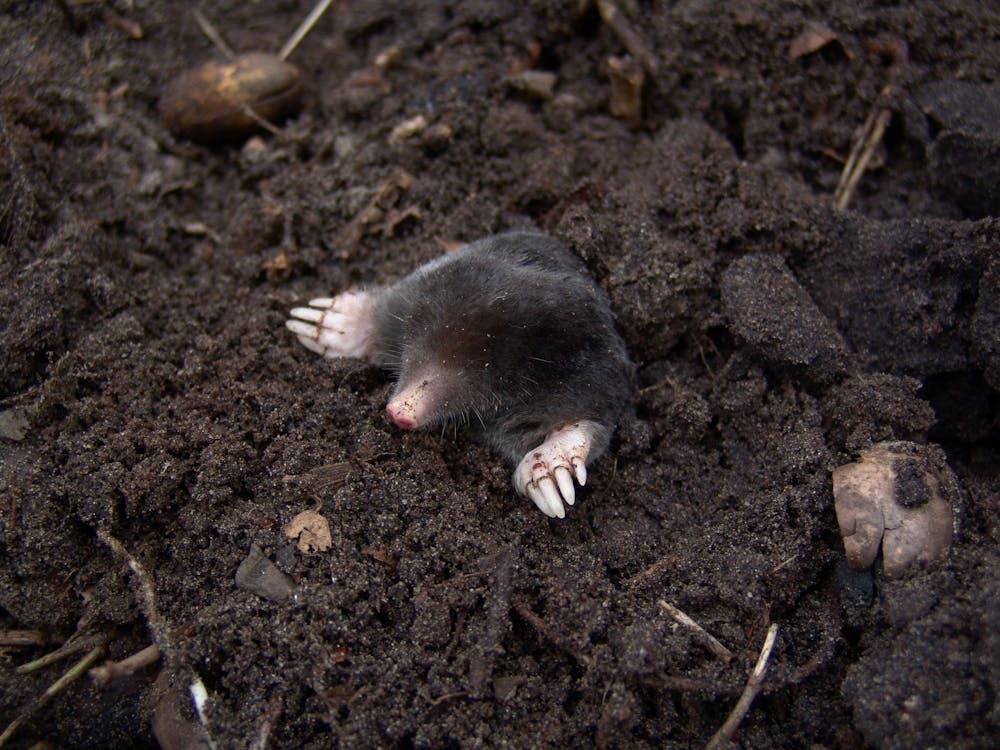
A single mole can create 100 feet of tunnels per day, destroying lawn roots and creating a hazardous surface of raised ridges. Despite their small size, moles are difficult to remove — repellents provide temporary relief, but trapping and eliminating their food source are the only reliable long-term solutions.
Key Takeaways
- A single mole can dig 100 feet of tunnel per day — damage escalates quickly; act at the first sign
- Moles eat earthworms primarily, not grubs — grub treatment alone rarely eliminates moles
- Mole traps placed in active tunnels are the most reliably effective removal method
- Castor oil repellent drives moles away from treated areas but they typically relocate within your property
- Most lawns harbour just 1–3 moles — their solitary nature means a small number creates disproportionate damage
Quick Answer
Find an active main tunnel by pressing down a section of raised ridge and checking if it’s pushed back up within 24 hours. Place a scissor-jaw or harpoon mole trap in the active tunnel, covered to block light. Check every 24 hours. Set multiple traps in multiple active tunnels simultaneously. Most yard mole problems are resolved within 1–2 weeks of consistent trapping.
Moles vs Voles — Know the Difference
Moles and voles cause different damage and require different treatments.
| Feature | Mole | Vole |
|---|---|---|
| Damage | Raised ridges and mounds, dead grass strips above tunnels | Surface runways in grass, chewed plant roots and bark |
| Tunnels | Deep, raised ridges; volcano-shaped molehills | Shallow surface runways, golf ball-sized holes |
| Diet | Earthworms, grubs, insects | Plant roots, bulbs, bark, seeds |
| Treatment | Traps, castor oil, food source reduction | Snap traps baited with peanut butter, exclusion mesh |
How to Identify Active Tunnels
Before trapping, identify which tunnels are active — trapping in abandoned tunnels wastes time.
- Press down a 12-inch section of raised ridge firmly with your foot
- Mark the spot
- Check after 24 hours — if the ridge is raised again, this is an active tunnel
- Straight tunnels connecting two areas of the lawn are usually main runways — the most productive trap placement sites
8 Methods to Get Rid of Moles
Method 1: Mole Traps — Most Effective
Trapping is the most reliably effective mole removal method. Three main trap types work well:
- Scissor-jaw trap: Placed in the tunnel with jaws straddling the ridge; triggered when mole pushes through. Most popular for main runways.
- Harpoon trap: Spike trap pushed into the tunnel roof; triggered by mole pushing up. Works well in raised ridges.
- Tunnel trap (live catch): Cylindrical tube placed in the tunnel; mole enters and cannot exit. Check every 6–8 hours.
Trap placement rules:
- Only use active tunnels (confirmed by the press-and-check method above)
- Wear gloves when handling traps — moles can detect human scent and avoid traps
- Cover the set trap with an inverted bucket or piece of turf to block light — moles plug light-exposed tunnels
- Set 3–6 traps simultaneously in different active tunnels for faster results
- Check every 24 hours — reset immediately if sprung but empty
Method 2: Castor Oil Repellent
Castor oil-based mole repellents are the most effective non-lethal option. Moles find the smell and taste of castor oil repellent and abandon treated areas. Apply granular castor oil repellent (Mole Scram, Sweeney’s, or similar) across the affected lawn and water in thoroughly.
Limitation: Castor oil drives moles away from the treated area but typically just pushes them to another part of your property or your neighbour’s yard. It does not eliminate the mole. Best used after trapping to prevent reinfestation of a treated area.
Reapply monthly during the mole season (spring and autumn). Safe for pets, children, and plants.
Method 3: Eliminate Grubs and Soil Insects
Moles eat earthworms as their primary food source, but also consume grubs, beetle larvae, and other soil insects. Reducing the soil insect population makes your lawn less attractive overall.
Apply beneficial nematodes (available at garden centres) to the lawn in spring or autumn — they kill soil insect larvae including grubs without harming earthworms, plants, or other animals. Milky spore (Bacillus popilliae) targets Japanese beetle grubs specifically.
Important note: Earthworm reduction is not recommended — earthworms are essential for healthy soil and lawn quality. Target only soil insects and grubs.
Method 4: Reduce Lawn Moisture
Moles prefer soft, moist soil that’s easy to tunnel through and supports high earthworm populations. Reducing lawn watering frequency (watering deeply but less often rather than shallow daily watering) makes soil harder and less hospitable. This is beneficial for the lawn’s root depth as well.
Method 5: Sonic Spikes
Solar-powered sonic repeller stakes create vibrations in the soil that moles find irritating. Push stakes into the ground every 30–40 feet across the affected area. Moles may relocate away from treated areas temporarily.
Honest assessment: Results are highly variable — some gardeners report significant reduction, others see no effect. Evidence is largely anecdotal (per Penn State Extension) Most effective when used alongside trapping or castor oil treatment.
Method 6: Physical Barriers
For raised garden beds, vegetable plots, or high-value planting areas, a physical underground barrier prevents mole tunnelling into the protected zone. Bury galvanised hardware cloth (½ inch mesh) vertically to a depth of 24 inches around the perimeter of beds. Bend the bottom 6 inches outward underground. Labour-intensive but permanent.
Method 7: Mole-Repellent Plants
Several plants are reported to repel moles, including Euphorbia lathyris (caper spurge / mole plant), daffodils, and crown imperials (Fritillaria imperialis). Plant a perimeter border of these around the lawn or garden beds. Evidence is largely observational rather than scientific (per Penn State Extension), but the plants are easy to establish and have low ongoing maintenance.
Method 8: Flooding Tunnels
Inserting a garden hose into an active tunnel and flooding it forces moles to the surface where they can be physically removed. Most humane when combined with relocation. Not a long-term solution as moles simply re-enter once water drains. Works best on isolated, confirmed active tunnels during active digging.
When to Call a Professional
If trap catches are not occurring after 2 weeks of consistent effort, if the infestation involves a very large area (over ½ acre), or if moles are accessing from neighbouring properties, a pest control professional with experience in mole control can deploy more extensive trapping programmes and identify patterns in mole activity that are difficult to spot without expertise.
Frequently Asked Questions
How many moles are typically in a yard?
Most lawns with mole damage harbour just 1–3 moles. Moles are solitary and territorial — each animal maintains its own tunnel system. The extensive damage created by one mole often makes it look like a much larger infestation.
What is the most effective mole repellent?
Castor oil-based granular repellents (Mole Scram, Sweeney’s) are the most effective commercially available repellents. They cause moles to abandon the treated area within days. However, they push moles elsewhere rather than eliminating them — trapping is needed for permanent removal.
Do moles eat plant roots?
Moles do not eat plant roots or bulbs — they are insectivores that eat earthworms, grubs, and soil insects. The plant damage associated with moles is a side effect of their tunnelling, which disrupts roots and creates air pockets that dry out the root zone. Voles, which look similar and use mole tunnels, do eat plant roots.
What time of year are moles most active?
Moles are most active in spring (March–May) and autumn (September–October) when soil moisture and earthworm activity are highest. They are active year-round but tunnel deeper in summer when topsoil dries out and in winter when the ground freezes. Spring and autumn are the most productive trapping times.
Does chewing gum or glass in tunnels deter moles?
These folk remedies have no scientific support and do not work. Moles do not eat vegetation and will not ingest gum. Glass and sharp objects in tunnels have not been shown to deter mole activity. Stick to trapping and castor oil repellents for evidence-based results.