
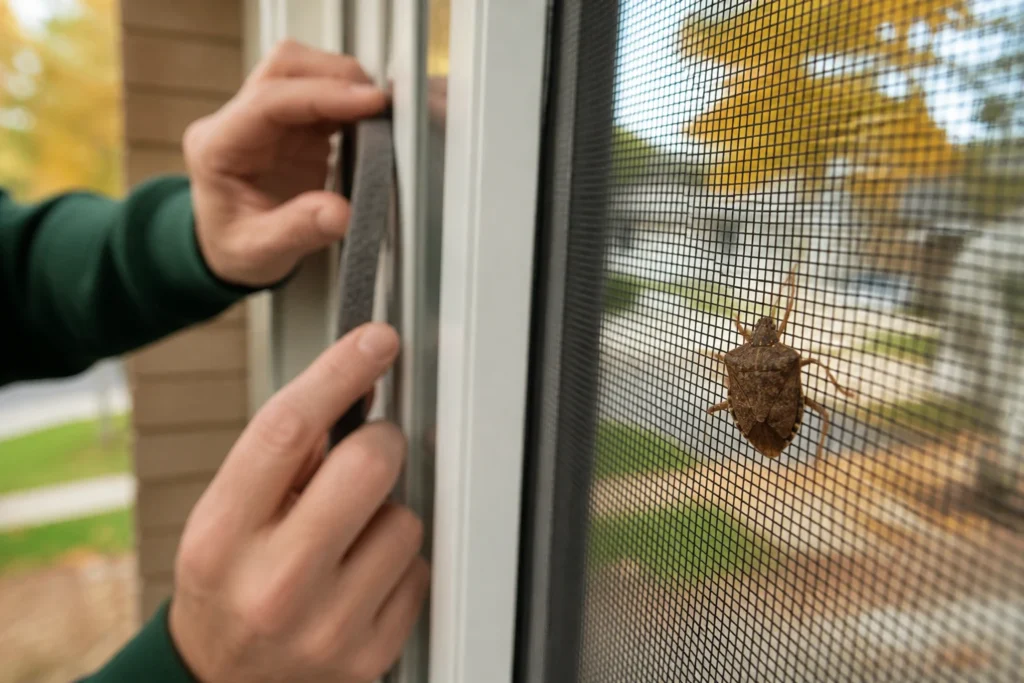
Confirm the insect before following species-specific advice. Brown marmorated stink bugs can seek shelter in buildings and emerge later from concealed locations. Indoor nuisance management is different from controlling crop damage outdoors, and it does not require treating the entire house as a breeding site.

Identify brown marmorated stink bugs and entry points
Inspect the entry and shelter pattern
Species
Distinguish brown marmorated stink bugs from look-alikes.
Exterior entry
Check screens and fitting seals before local seasonal activity.
Concealed shelter
Later strays can emerge from previous entry.
Physical handling
Crushing can release odor and affect surfaces.
Ways to get rid of stink bugs, ranked by practical role
Reduce entry and manage strays
Appropriate screen repair
Close defects without blocking ventilation.
Door and joint maintenance
Use compatible seals where needed.
Careful physical removal
Avoid crushing and use equipment correctly.
Qualified assessment
Use help for unsafe access or unresolved heavy entry.
Keep stink bugs away with screen and door repairs
Repair a removable screen
Inspect mesh and frame on a stable table. Fit repairs properly before reinstalling. Maintain required emergency access and ventilation rather than covering every opening.

Vacuum accessible indoor insects carefully
Use a suitable attachment and follow cleaning and disposal directions for the equipment. Odor can remain in a vacuum, so consider its suitability before use. Do not crush insects on a window or furnish a universal nylon-stocking modification for all machines.

Check the exterior door seal
Inspect ordinary accessible jamb and threshold defects. Use a compatible repair that allows proper closure. Do not assume a clear inspection proves concealed shelter is empty.

Inspect the window from stable ground
Look at suitable stationary gaps and ask for help with inaccessible details. Preserve weep and drainage functions. A fixed late-August deadline is not appropriate for every region.

Prevent stink bugs from entering before seasonal movement
Reduce access before the local entry period
Identify
Confirm the species and locations.
Repair
Maintain suitable screens and seals.
Remove
Manage indoor strays without crushing.
Reassess
Track recurring entry and obtain help where access is unsafe.
Stink bug home remedy myths and facts
Replace permanent-fix and trap promises
Myth: caulk guarantees permanent exclusion
Fact: maintain repairs and inspect other routes.
Myth: every stink bug is the invasive species
Fact: obtain identification.
Myth: indoor fogging solves overwintering shelter
Fact: focus on physical removal and appropriate entry repair.
Myth: all vacuums should be modified alike
Fact: follow equipment-specific instructions.
Why indoor removal alone fails
Vacuuming removes insects already inside but does not correct the exterior gaps they used. Repeated sightings at the same frame, siding joint, vent, or door are useful evidence for the next repair.
Make repairs before the local seasonal movement when practical, while preserving drainage and ventilation. If insects emerge from inaccessible voids in large numbers, an exterior-focused assessment is more useful than routine indoor pesticide application.
What do brown marmorated stink bugs look like?
The brown marmorated stink bug, Halyomorpha halys, is a shield-shaped insect with mottled brown coloring, contrasting pale bands on its antennae and alternating markings along the exposed abdominal edge. Those details are more useful than color alone. Several native stink bugs and other true bugs look similar.
A western conifer seed bug has a narrower outline and leaf-like expansions on its hind legs. A boxelder bug is dark with red or orange markings rather than the same shield pattern. Use our identification guide or ask an extension office before deciding every outdoor bug needs control.
Check a photograph for the diagnostic features without crushing the insect to test its odor. A smell is not a reliable species test, and an indoor removal method should not become a blanket treatment for beneficial garden insects.
What attracts stink bugs into a house?
Brown marmorated stink bugs seek protected overwintering shelter as weather cools. They may congregate on exterior surfaces, then enter through imperfect screens, door fittings or joints. The autumn influx is different from an indoor pest breeding in stored food.
In winter, an insect already concealed in the building can appear on a warmer day. That does not necessarily mean the most recent repair failed. Record whether you see new insects crossing an exterior gap or strays emerging from trim; those observations point to different follow-up work.
Fruit and crop feeding outdoors is a separate issue from shelter indoors. You do not need to discard every houseplant or spray the pantry because a stink bug appeared at the window. UMN explains seasonal shelter and indoor management.
Home remedies for stink bugs: what they can actually do
Collect stink bugs into soapy water
For an accessible individual, hold a stable container beneath it and gently guide it in with a piece of card. A little dish soap in the water can help contain and kill collected bugs. Keep the container away from children, pets, electrical equipment and food preparation, and do not leave it where it can spill.
This is a collection method, not a protective coating for your home. Avoid spraying dish soap across walls, furnishings or plants and assuming the surface is now a repellent barrier. It does not reach insects in concealed shelter.
Use a vacuum cleaner suited to the job
A suitable vacuum can collect accessible indoor stink bugs, although the collection system can retain odor. Check the manufacturer’s cleaning and disposal instructions and empty collected insects promptly. A dedicated collection tool may be more convenient than using a valuable household machine.
Some extension guidance describes a stocking insert for a vacuum tube. Do not assume the modification is compatible with every device or guarantees an odor-free result. Follow equipment guidance and preserve airflow. Maryland Extension describes physical collection options.
Light-and-water traps have a limited role
A light over a pan of soapy water can collect some active indoor bugs, but a trap does not repair access or show that a wall cavity is empty. Do not place electrical equipment over a spill-prone pan or leave an improvised setup unattended. Use a purpose-built device according to its instructions if you want a trap-based monitoring tool.
Compare trap catches with sightings and repairs. A large catch may simply mean bugs already sheltered inside are becoming active. It is not evidence that the entire problem has been eliminated.
Can vinegar, dryer sheets or essential oils repel stink bugs?
White vinegar, clove mixtures, peppermint oil and dryer sheets are widely suggested home remedies. They are not a dependable replacement for intact screens and compatible seals. A strong scent does not demonstrate that stink bugs will stop entering the building.
A homemade spray bottle mixture can stain finishes or expose people and pets. Do not mix vinegar with bleach or other cleaners, and do not call an essential oil harmless because it is plant-derived. There is no need to put scented material into vents or electrical openings.
Diatomaceous earth is not a reason to sprinkle powder through the house. A pesticide product needs an authorized use and exposure precautions. For this seasonal indoor nuisance, collection and entry maintenance are usually more useful than trying each new spray recipe.
Inspect windows, doors and the exterior of your home
Start where insects repeatedly appear, then connect the indoor observation to accessible exterior details. Look at screen edges, stationary frame joints, door sweeps and utility penetrations. Photograph a defect and choose a repair suited to the actual materials.
- Repair torn mesh and frames that no longer seat correctly.
- Check whether a door closes evenly against its weather stripping.
- Inspect compatible joints around windows from stable ground.
- Keep window weep holes, drains, ventilation and emergency access functional.
- Ask for qualified help with rooflines, electrical penetrations or inaccessible siding.
One caulk product is not appropriate for every joint, and sealing a moving part can interfere with operation. Build a short maintenance list rather than treating the whole exterior with a spray. Schedule repairs before local entry activity where practical; the same August deadline does not fit every climate.
When pesticide treatment or professional help is worth considering
Indoor bug bombs and foggers are poorly matched to insects sheltered inside inaccessible construction. They add exposure without closing the route used by the next influx. Do not apply an outdoor product in living spaces or inject a mixture into unknown voids.
For heavy repeated entry where repairs are difficult, ask a pest control professional to assess the exterior. A proposed registered treatment should have a specific target, permitted site and explanation of its limited duration. Ask what repair work still needs doing and how success will be judged. Pesticide use is not a substitute for screen and door maintenance.
Read the exact product label, including occupant precautions, before authorizing an application. EPA’s pest-control guidance explains label-aware decisions and prevention.
Frequently asked questions about stink bugs indoors
Do stink bugs bite or damage the house?
Brown marmorated stink bugs do not feed on structural wood or bite and sting people like social wasps. Their plant-feeding damage outdoors can matter, but an overwintering indoor stray is primarily a nuisance. Confirm identification before applying that description to another bug.
What do stink bugs smell like?
People describe the defensive odor differently, often as pungent or herb-like. Disturbing or crushing the insect can release it. Collect the bug without crushing it on fabric; there is no benefit to testing the smell.
Why are bugs back after I sealed the window?
They may have entered earlier and remained sheltered, or another defect may still allow access. Follow the sighting pattern and inspect connected exterior details. Do not assume every bug is coming through the most recently repaired frame.
Can I keep stink bugs away permanently?
Entry prevention needs upkeep as seals age and screens are damaged. No single home remedy or repair guarantees a permanently stink-bug-free house. Check repairs before the local seasonal influx and collect later strays as needed.
Publishing and affiliate notes
Some product links may be affiliate links. If you buy through them, we may earn a commission at no extra cost to you. Product picks are not lab tests. Read the legal disclaimer.