


A yellow jacket ground nest is one of the most dangerous pest problems a homeowner can face. Unlike paper wasps, yellow jackets are aggressive, sting repeatedly, and a disturbed colony of 1,000–4,000 workers will attack en masse without warning. This guide gives you 9 proven methods to eliminate ground nests safely, plus the timing and safety information that determines whether you succeed — or end up in the emergency room.
Key Takeaways
- Always treat ground nests after dark (10pm–6am) — yellow jackets are inactive inside the nest at night
- Wear full protective clothing including gloves, long sleeves, and eye protection — no exceptions
- Insecticide dust applied into the nest entrance is the most reliable DIY treatment for ground nests
- Do not seal the entrance immediately after treating — allow 24–48 hours for the insecticide to spread through the colony
- If you or anyone nearby has a venom allergy, do not attempt DIY treatment — call a professional
Quick Answer
After dark, wearing full protective gear: apply an insecticide dust (Sevin dust or permethrin dust) directly into the nest entrance using a puffer bottle. Stand to the side — never directly over the entrance. Do not seal the entrance. Return the following night to check; repeat if still active. Most nests are fully eliminated within 24–72 hours.
Identify a Yellow Jacket Ground Nest
Yellow jacket ground nests look like a small hole in the ground with a stream of wasps flying in and out. Key features:
- Entry hole is typically 1–2 inches in diameter, sometimes surrounded by excavated soil
- High volume of wasp traffic — dozens per minute during peak activity
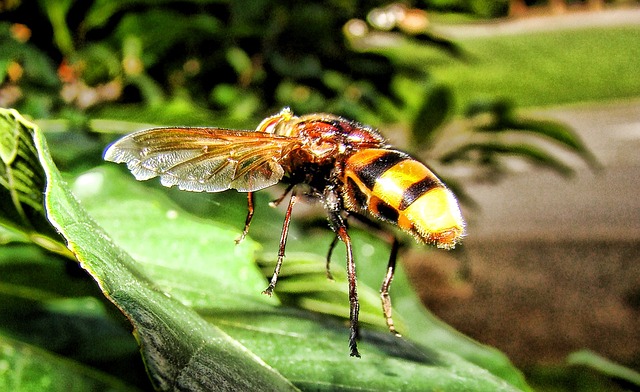
- Yellow jackets are small (about ¾ inch), yellow and black, narrow waist, no fuzzy body — distinct from bumble bees
- Nests in lawns, under decking, at the base of shrubs, or in retaining wall gaps
Do not approach for close inspection. Mark the location from a distance and plan treatment for after dark.
9 Methods to Eliminate Yellow Jacket Ground Nests
Method 1: Insecticide Dust — Most Effective
Insecticide dust (Sevin dust/carbaryl, permethrin dust, or deltamethrin dust) applied directly into the nest entrance is the most reliable DIY treatment. The dust coats yellow jackets as they enter and exit, is carried deep into the nest, and kills the entire colony within 24–72 hours.
Application steps:
- Wait until after dark (at least 10pm) — wasps are inside and inactive
- Wear a long-sleeved shirt, long trousers, gloves, closed shoes, and eye protection
- Use a red-lensed flashlight — yellow jackets cannot see red light
- Approach from the side — never stand directly above the entrance
- Apply dust into the entrance with a puffer bottle or duster — 2–3 puffs is sufficient
- Retreat quickly and quietly. Do not run — jarring the ground can disturb wasps
- Do not seal the entrance — workers returning the next day will carry the dust into the nest
Method 2: Aerosol Wasp Spray (Directed Into Entrance)
Long-range wasp sprays (Raid Wasp & Hornet Killer and equivalents) can be directed into the nest entrance at night from a distance of 15–20 feet. Less effective than dust for ground nests (liquid doesn’t penetrate as deeply) but useful for a fast initial knockdown. Apply for 10–15 seconds directly into the entrance, then retreat. Repeat the following night if activity continues.
Method 3: Peppermint Soap Solution (Natural Method)
Mix 2 tablespoons of peppermint castile soap with 1 litre of warm water. Pour slowly and steadily directly into the nest entrance at night. The soap blocks the wasps’ spiracles; the peppermint creates a strong deterrent effect. Best for small, newly established nests (fewer than 200 workers). Less reliable for large, established colonies.
Method 4: Boiling Water
Slowly pouring 2–3 litres of boiling water into the nest entrance at night kills wasps it contacts directly. Rarely eliminates the full colony as it cannot reach deep chambers. Also poses significant burn risk and triggers an immediate defensive response from any survivors. Better options are available. Only viable for very shallow, small nests.
Method 5: Dry Ice (CO2 Suffocation)
Dry ice placed at the nest entrance releases CO2, which is denser than air, fills the nest cavity, and suffocates the colony. Works best for nests in well-defined, deep holes with limited air circulation. Requires protective gloves to handle dry ice safely.
Method 6: Diatomaceous Earth in the Entrance
Food-grade diatomaceous earth poured and dusted into the nest entrance at night damages yellow jackets’ exoskeletons as they pass through it. Slower-acting than insecticide dust but chemical-free. Apply generously into and around the entrance. Takes 3–7 days to significantly reduce the colony. Best for smaller nests when a natural approach is preferred.
Method 7: Seal the Entrance (Only After Colony is Eliminated)
Once yellow jacket activity has completely stopped (5+ days with no traffic), seal the entrance with soil or caulk to prevent other animals from investigating the empty cavity. Never seal an active entrance — trapped yellow jackets will chew through surrounding soil in all directions to escape and can emerge indoors if the nest is near a structure.
Method 8: Professional Pest Control
A professional is the right choice for nests under a structure (deck, patio, house foundation), nests in a wall void accessed from outside, very large colonies with high traffic, anyone with a venom allergy in the household, or any situation where nighttime access is difficult or unsafe. Professionals have access to stronger insecticides and protective equipment beyond what DIY options allow.
Method 9: Wait for Winter (No-Action Option)
Yellow jacket colonies die naturally after the first hard frost. If the nest is in a low-traffic area where it poses no immediate danger, marking and fencing off the area until winter is a viable option. The nest will be dead by November in most of North America and the UK. Seal the entrance in spring to prevent new queens from reusing the cavity.
What Not to Do
- Don’t treat in daylight — yellow jackets are highly aggressive and will defend en masse; night treatment is not optional
- Don’t mow over the nest — vibration triggers mass attack instantly
- Don’t seal the entrance before the colony is dead — trapped yellow jackets dig in all directions
- Don’t use gasoline or other flammable materials — a serious fire hazard with no control over where the fire spreads underground
Frequently Asked Questions
How deep is a yellow jacket ground nest?
Yellow jacket ground nests can extend 2–4 feet deep and 1–3 feet wide in established colonies. This depth is why surface treatments are less effective than dust or foam applied directly into the entrance, and why boiling water rarely reaches the main colony chambers.
How many yellow jackets are in a ground nest?
A mature yellow jacket colony typically contains 1,000–4,000 workers by late summer, with peak size in August–September. A single disturbed ground nest at peak size will deploy hundreds of stinging workers almost instantly.
Will yellow jackets abandon a ground nest?
No — yellow jackets will not voluntarily abandon an established nest. Deterrents placed near the entrance will cause them to become more aggressive, not to leave. Elimination requires either insecticide treatment or waiting for the natural winter die-off.
What happens if you pour boiling water in a yellow jacket nest?
Boiling water kills yellow jackets it contacts directly, but it is rarely effective for eliminating the entire colony due to nest depth. It also poses significant burn risk and triggers an immediate aggressive response from survivors. Insecticide dust applied at night is far safer and more effective.
When should I call a professional for yellow jackets?
Call a professional if the nest is under a structure or in a wall void, if any household member has a venom allergy, if the colony is very large (high traffic even at dusk), or if previous treatment attempts have failed or agitated the colony. Agitated yellow jackets are significantly more dangerous than undisturbed ones.