
Silverfish and firebrats differ in preferred conditions, and other insects can damage fabrics or books. Inspect the affected material and environment before choosing a response. Moisture management can be useful without claiming it alone eliminates every population.

What attracts silverfish and where they hide
Inspect conditions and material damage
Identification
Distinguish silverfish, firebrats and other insects.
Moisture
Check leaks and repeated dampness rather than one reading.
Stored material
Inspect paper, books and fabrics for activity or damage.
Shelter
Accessible cracks and clutter can complicate inspection.
How to get rid of silverfish: methods and limits
Prioritize inspection and compatible maintenance
Identification and monitoring
Confirm the insect and affected places.
Moisture correction
Repair leaks and improve suitable ventilation.
Storage and cleaning
Reduce accessible resources and inspect stored material.
Conditional labeled control
Choose a suitable method for continuing activity.
Inspection and prevention steps
Check moisture over time
Use a suitable humidity meter as one observation, following its instructions. Investigate recurring dampness and improve compatible ventilation. Do not interpret a single reading as proof that insects cannot reproduce.

Improve dry storage
Inspect books and paper before moving them into suitable dry storage. Avoid trapping damp material inside a closed container. Storage changes improve access and protection but do not establish that hidden insects were removed.

Check an accessible leak
Inspect visible piping under the sink without opening electrical equipment. Arrange a plumbing repair for unresolved or concealed leakage. Emptying a drip tray does not fix the underlying defect.

Repair a suitable stationary gap
Use a material appropriate to the building detail. Do not seal drains or vents, and do not dust behind outlet plates. Continuing damage warrants identification and a targeted plan rather than increasing pesticide amounts.

Sequence and reassessment
Use damage and conditions to guide follow-up
Confirm
Identify the insect and affected material.
Maintain
Correct suitable moisture and storage conditions.
Control if needed
Use a site-appropriate labeled or qualified plan.
Compare
Reinspect damage and activity rather than promise a humidity-based cure.
Myths and facts
Avoid universal humidity and dust claims
Myth: below 50% humidity guarantees death
Fact: species and conditions matter.
Myth: a dehumidifier does everything
Fact: repair leaks and inspect damage.
Myth: food-grade dust is safe everywhere
Fact: follow labeled use and exposure precautions.
Myth: paper damage proves silverfish
Fact: confirm the cause before treatment.
What continued silverfish activity can reveal
Ongoing sightings after cleaning may point to a leak, condensation, damp storage, or movement through gaps beyond the first room inspected. Paper damage alone does not identify the insect.
Use monitors and moisture readings to compare locations over time. Recurring damage in valuable collections, inaccessible damp voids, or uncertainty about the species justifies a building or pest assessment before dusts or sprays are considered.
Start with the moisture source, not a spray
Silverfish (Lepisma saccharinum) favor protected places with moisture and starchy food. Check beneath sinks, around tubs, behind toilets, near water heaters, in basements and beside stored cardboard. A hygrometer helps compare rooms, but the reading is only a clue: a slow plumbing leak, condensation or poor ventilation can create a small damp refuge even when the rest of the room feels dry.
Repair leaks, improve safe ventilation and use a properly sized dehumidifier where damp air is persistent. Keep the condensate system clean and arrange continuous drainage only according to the appliance instructions. Do not choose an arbitrary humidity number as proof that the problem is solved; monitor catches and moisture conditions together.
Protect books, clothes and pantry goods
Silverfish can graze on paper sizing, glue, starch and some natural fibers. Move valuable books, documents and seasonal textiles into clean, dry, lidded containers after inspecting them. Replace damp cardboard storage boxes with washable plastic bins. Vacuum dust, shed hair and debris from shelf edges, baseboards and closet corners, then empty the vacuum outdoors.
Discard contaminated food packaging when appropriate and store dry goods in sealed containers. In libraries or collections, avoid applying household pesticide directly to books; use an experienced conservator or pest professional for valuable materials.
Silverfish control methods compared
| Method | Best use | What it tells or does | Limit |
|---|---|---|---|
| Hygrometer | Comparing damp rooms | Tracks relative humidity trends | Does not locate a hidden leak |
| Dehumidifier or ventilation repair | Persistent excess moisture | Makes habitat less favorable | Will not fix plumbing or roof leaks |
| Sticky monitors | Mapping activity | Shows hot spots and trends | Rarely controls an established problem alone |
| Sealed storage | Books, paper, textiles and dry goods | Protects vulnerable items | Does not treat wall voids |
| Labeled crack-and-crevice product | Confirmed harborages after moisture correction | Targets hidden insects | Site and label restrictions matter |
Where to place silverfish monitors
Place sticky monitors along wall edges beneath sinks, behind toilets, beside shelving and near suspected plumbing routes, where children and pets cannot reach them. Date and label each trap. Compare results weekly for several weeks so you can distinguish one wandering insect from a persistent source.
Seal silverfish entry points after the area is dry
Inspect cracks and crevices along baseboards, pipe penetrations, crawl spaces and attic access points. Old wallpaper paste and loose wall coverings can provide starchy food as well as shelter. After leaks and condensation are corrected, caulk suitable interior gaps and replace damaged coverings. Sealing a damp cavity too soon can hide the moisture problem.
Diatomaceous earth and other desiccant dusts are sometimes sold for silverfish control, but airborne dust can irritate lungs and eyes. Use only a product labeled for the exact indoor site, apply it as the label directs, and keep it away from children, pets and exposed food. Essential-oil repellents are not a reliable fix for an established silverfish infestation.
Silverfish, firebrat or long-tailed silverfish?
True silverfish prefer cooler damp sites; firebrats tolerate warmer areas near boilers, furnaces and hot pipes. Long-tailed silverfish can use drier rooms and spread through stored materials. A clear photo and the exact capture location help a professional identify which conditions to investigate.
Silverfish in the bathroom: do they come up the drain?
A silverfish stranded in a sink or bathtub can look like a plumbing infestation. UC IPM explains that silverfish and firebrats fall into fixtures and cannot climb the slippery sides; they do not crawl up through the drain. Inspect surrounding pipe gaps and damp hiding places instead of pouring a pesticide into the fixture.
Recognize adults, young silverfish and feeding signs
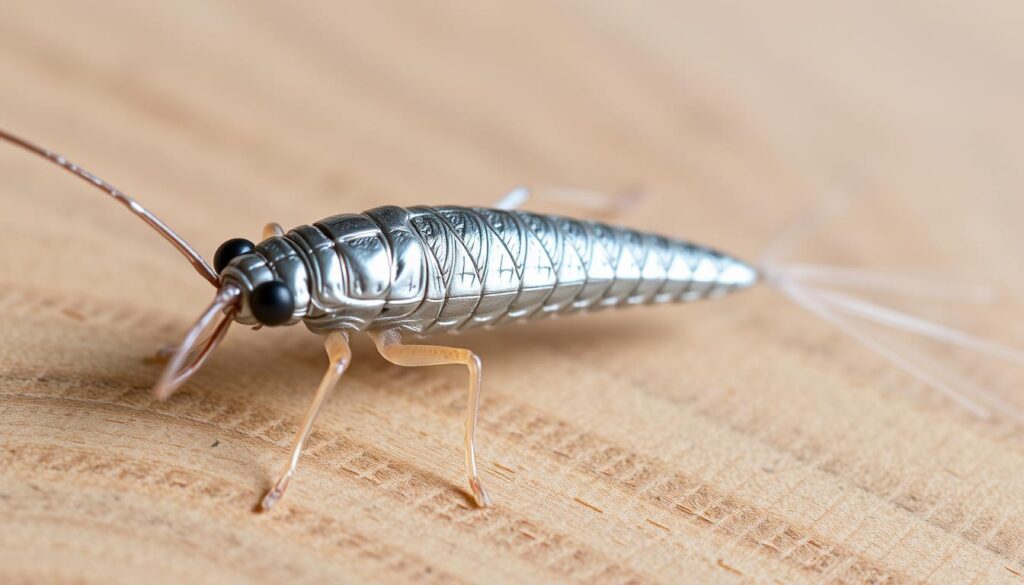
Adult silverfish are tapered, wingless insects with two long antennae and three tail-like appendages. Common silverfish are silver or pearly gray; firebrats are mottled gray or brown. Very small young insects lack the conspicuous scales, so a pale specimen can be the same group at an earlier stage.
Look for surface grazing, irregular holes and delicate shed scales around damaged paper or fabric. Photograph these together with the insect. Silverfish eggs are small and concealed in crevices or materials; failing to see eggs does not rule out a continuing population. Combine identification with your existing monitor record before buying treatment.
Frequently asked questions
Does seeing one silverfish mean an infestation?
No, but it justifies an inspection and monitoring. Repeated catches, shed skins or damage to paper and textiles indicate a continuing source.
Will a dehumidifier get rid of silverfish?
It can reduce favorable moisture, but it will not repair leaks, remove food and clutter, or treat insects already sheltered in cracks.
Should I use a fogger for silverfish?
Foggers usually do not reach the narrow harborages where silverfish hide and add unnecessary exposure. Correct moisture and use a product specifically labeled for the site if treatment is needed.
When is professional help worthwhile?
Use a qualified professional when activity persists after moisture correction, valuable collections are at risk, or insects appear to be moving through inaccessible wall or plumbing voids.
Map silverfish activity before adding products
Use numbered sticky monitors along wall edges, beneath sinks, near stored paper and beside suspected plumbing or condensation problems. Record captures weekly for at least several weeks. The pattern matters more than one insect: a concentration beside a bathroom pipe suggests a different correction from captures inside a dry archive box.
Measure relative humidity in the affected room and, when practical, inside closets, cabinets or basements where air can be wetter than the center of the room. Correct leaks and condensation first. A dehumidifier helps only when it is sized, drained and maintained for the space.
| Finding | Likely priority | Follow-up |
|---|---|---|
| Captures near plumbing | Leak, condensation or damp void | Repair moisture source and monitor the same locations |
| Damage in papers or books | Storage conditions and protected harbourage | Isolate valuables, lower humidity and inspect shelving gaps |
| Activity in a hot utility area | Consider firebrats rather than assuming silverfish | Document temperature and obtain identification |
| Repeated captures in several dry rooms | Long-tailed silverfish or dispersed harbourage may be possible | Use expert identification and a building-wide inspection |
Protect books, clothing and stored materials
Inspect starch-sized paper, cardboard, wallpaper paste, natural-fiber textiles and undisturbed boxes. Vacuum debris and cast skins with a crevice tool, then empty the vacuum promptly. Move valuable documents and textiles into clean, dry, tightly closing containers after checking that insects are not being sealed inside.
Do not apply pesticide directly to books, clothing, food packaging or collection objects unless the label specifically permits that use. Libraries, archives and valuable collections may need a conservator or pest professional familiar with monitored, low-residue treatment.
When a targeted pesticide may be reasonable
If moisture correction, sanitation, storage and exclusion do not reduce a confirmed population, choose only a product labeled for silverfish and the exact indoor site. Target cracks, voids and harbourage according to the label. Keep dusts confined to permitted inaccessible spaces; visible piles are both unnecessary and easier for people or pets to contact.
Total-release foggers rarely solve insects protected deep in cracks and can add avoidable exposure. Mothballs are pesticides for tightly closed containers when the label permits, not room repellents. Essential oils, cucumber peels, salt and spice mixtures do not provide reliable control of a building infestation.
Tell silverfish from related insects
Silverfish are wingless, tapered insects with three tail-like appendages and a preference for humid areas. Firebrats favor hotter locations. Long-tailed silverfish can occur in comparatively drier buildings and may spread through multiple rooms. A clear dorsal photograph, capture location, temperature and humidity help an extension service or pest professional confirm the group.
Judge progress by a trend, not a single sighting
Keep monitors in the same positions and compare weekly totals. A sustained decline after leak repair and storage changes supports the plan. Flat or rising counts, damage to valuable materials or activity across several floors justifies a more thorough inspection. Continue periodic monitoring after counts fall because eggs and hidden harbourage can delay visible improvement.
Publishing and affiliate notes
Some product links may be affiliate links. If you buy through them, we may earn a commission at no extra cost to you. Product picks are not lab tests. Read the legal disclaimer.