
March 25, 2026
How To Get Rid Of Armadillo Holes

Armadillos, those cute little creatures known for their armored appearance, can wreak havoc on your lawn with their digging habits. If you are dealing with unsightly armadillo holes in your yard and wondering how to get rid of them, this article is here to help.

Types of Armadillos and their habitats

Armadillos can be found in various parts of the world, but in North America, the most common species is the nine-banded armadillo. They are primarily found in the southern regions of the United States, where the climate is warm and humid.

These small mammals prefer areas with dense vegetation, such as forests, grasslands, and brushy areas. They dig burrows to create shelter and find food, which leads us to the next point.

Reasons for Armadillo digging holes

  1. Foraging: Armadillos have a voracious appetite for insects like ants, termites, beetles, and grubs. They dig holes to search for food, especially in areas with moist soil where insects thrive.
  2. Breeding and nesting: Armadillos also dig holes for breeding and nesting purposes. They create chambered burrows where they give birth to their young and provide a safe habitat for them to grow.
  3. Maintenance: By digging holes, armadillos remove excess dirt and debris. They use their strong claws to excavate the soil and maintain their burrows.

Remember, armadillos are protected in some states, so it’s essential to check local regulations before attempting any removal methods.

By understanding the reasons behind armadillo digging habits and implementing effective solutions, you can restore the beauty of your yard and keep those pesky holes at bay.

How To Get Rid Of Armadillo Holes

What does an armadillo hole look like?

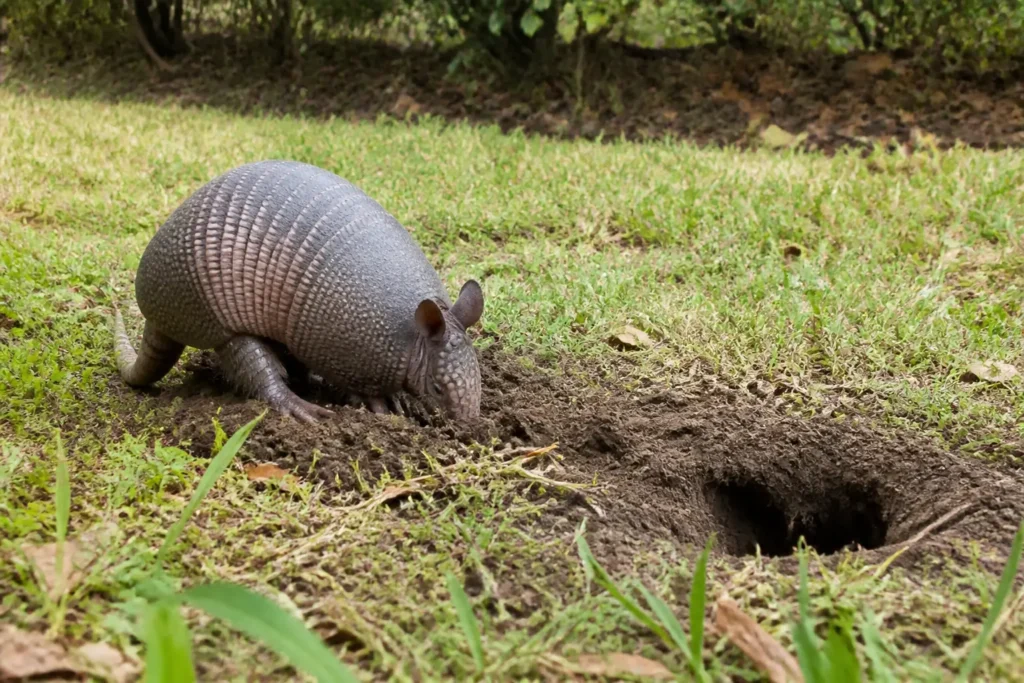
An armadillo hole, it may appear like a small tunnel or burrow in the ground. These holes are typically narrow, measuring about 3-5 inches in diameter. Armadillos dig their burrows using their strong claws, and their holes can be anywhere from a few inches to several feet deep.

The entrance of an armadillo hole is often marked by a pile of loose dirt or excavated soil, forming a mound or a ramp. This accumulation is a result of the armadillo pushing the dirt out while digging.

It is interesting to note that armadillos are known for building multiple holes within their territories, creating an interconnected network of tunnels for various purposes such as shelter, breeding, and foraging.

Differentiation between Armadillo holes and other animals’ holes

  1. Shape & Size: Armadillo holes are typically 3-5 inches wide and deep, with a half-moon shape. This distinguishes them from holes made by other critters.
  2. Location: Armadillos prefer areas with loose or sandy soil. Their burrows often have multiple entrances and exits, which they use for ventilation.

Recognizing Armadillo entry and exit points

  1. Sandy Traces: Look for sand or freshly dug soil near the hole entrances. Armadillos often leave these traces while digging.
  2. Tunnels: Once inside the hole, armadillos create a series of tunnels leading to their nesting sites. These tunnels can extend several feet underground and may have multiple branches.

Now that you know how to identify armadillo holes, it’s time to move on to the next step – getting rid of them. Remember, it’s important to do this humanely and responsibly to protect both your property and the environment.

Armadillo Holes

Preventing Armadillo Holes

Armadillos can be a nuisance when they invade your yard or garden, leaving behind unsightly and damaging holes in their wake. If you’re tired of dealing with armadillo holes, there are some preventive measures you can take to keep these critters away.

Locate Areas of Damage

The first step to getting rid of armadillo holes is to locate any areas of damage around your property. The most common area for armadillos to create burrows and holes is in flower beds, raised beds, lawns, and gardens. Look for disturbed soil, loose dirt piles or mounds, or areas where the grass appears to be damaged. If you spot any of these signs, there may be an armadillo living nearby.

To narrow down the search area, remove any natural cover like brush, woodpiles, low-lying bushes, and shrubs. Armadillos prefer to burrow in areas with ample cover so by opening up your yard they may feel less comfortable in your yard and look elsewhere.

How to get Armadillo out of hole

Getting an armadillo out of a hole can be a tricky endeavor, but with patience and the right approach, you can successfully accomplish this task.

Follow these steps to safely remove an armadillo from its burrow:

  1. Assess the situation: Before taking any action, observe the armadillo and assess its behavior. Make sure it is not injured or in distress. This will help you determine the best course of action.
  2. Create an exit route: If possible, block off any other holes or potential escape routes, leaving only one opening. This will guide the armadillo towards your desired direction.
  3. Use deterrents: Armadillos have a keen sense of smell, so using strong odors can help encourage them to leave their burrows. Ammonia-soaked rags or predator scents like coyote urine can be placed near the entrance to make the armadillo feel uncomfortable.
  4. Make noise and vibrations: Armadillos are sensitive to sound and vibrations, so creating some commotion near the hole can prompt them to come out. Use a shovel or other tool to gently tap on the ground around the burrow.
  5. Provide an alternative escape route: If the armadillo remains reluctant to leave, try placing a long plank or board inside the burrow leading towards the exit. This may entice the armadillo to walk across it and emerge from the hole.
  6. Be patient: Removing an armadillo from its hole may take time. Armadillos are nocturnal creatures, so consider attempting this process at night when they are more likely to be active.
  7. Seek professional help if necessary: If your attempts are unsuccessful or if you encounter any difficulties, it is advisable to contact a wildlife professional or animal control agency for assistance. They have the expertise and experience to handle such situations safely.

Block the Entrance to the Burrow

Once you have identified the areas affected by armadillo holes, blocking the entrances to their burrows is important. Armadillos are agile creatures and can climb and dig their way around most obstacles. To prevent them from bypassing your newly constructed fence, you should use a combination of different materials to make sure the entrance is secure.

Start by placing large rocks or cement blocks over the entrance. Make sure that these are firmly secured in the ground so that the armadillo cannot move them. If possible, add a layer of chicken wire on top of the rocks or blocks to ensure that even if the armadillo can move them, they won’t be able to escape.

You can also use landscape fabric to cover the entrance of the burrow. This will create an effective physical barrier that armadillos won’t be able to penetrate. Make sure you secure it firmly for it to be effective.

Finally, seal any gaps or cracks around the entrance with concrete or mortar. This will ensure that even if the armadillo manages to move any of the other materials, it won’t be able to escape through a small gap or crack.

By combining different materials and techniques, you should be able to block off any entrances leading into armadillo burrows successfully. This will help prevent them from gaining access to your yard and causing further damage.

Use a Castor Oil-Based Repellent

Using a castor oil-based repellent is an effective way to drive armadillos out of your yard and prevent them from returning. Castor oil is an all-natural product derived from castor beans, and it has numerous uses in repelling pests, including for armadillos.

Here’s how to use it to get rid of armadillo holes:

1. Make a homemade armadillo and mole repellent. Mix 2 parts castor oil, 1 part dish soap, and 1 gallon of water in a bucket.

2. Use a garden sprayer to apply the solution liberally around the perimeter of your property, as well as around any visible burrows or holes.

3. Reapply the solution every two weeks or so, as needed.

By using this castor oil-based repellent in combination with other methods like blocking the entrance to the burrow, using granular repellents, getting a fence, making your yard stink, using a motion activated sprinkler, filling the holes with dirt and using a live trap, you can get rid of armadillos and their pesky holes on your property for good.

What smells keep Armadillos away? Other Homemade Armadillo Repellents

Cayenne Pepper: Armadillos have a strong sense of smell, making them sensitive to certain odors. Mixing cayenne pepper with water and spraying it around the areas where armadillos frequent can help deter them. The strong scent will discourage them from entering your yard.

Garlic Spray: Armadillos dislike the smell of garlic, so creating a homemade garlic spray can be an effective repellent. Crush a few garlic cloves and mix them with water in a spray bottle. Apply this mixture onto areas where you’ve seen armadillo activity, such as burrow entrances or near plants that they may be targeting.

Predator Urine: Armadillos are easily spooked by the smell of predators. Look for commercially available predator urine, such as coyote or fox urine, and apply it around your property. Be sure to reapply after rainfall to maintain its effectiveness as a repellent.

Homemade armadillo repellents may require some trial and error to find the best method that works for your situation.

Apply Bifen LP Granules

Applying Bifen LP Granules is an effective way to help get rid of armadillo holes. This granular insecticide contains bifenthrin, a type of pyrethroid insecticide designed to target and control various types of insects.

Before applying the granules, locate areas of damage, block the entrance to the burrow, use a castor oil-based repellent, and get a fence (as outlined in the previous steps).

To apply the Bifen LP Granules, start with clean, dry equipment and a well-ventilated area. Wear gloves or long pants for safety. Shake the container before using it and then attach it to your spreader.

Make sure the granules are not too fine for your spreader. Read the instructions on the label for proper application instructions, then apply evenly over the affected area. Reapply after 14 days if necessary.

Once you have applied Bifen LP Granules to your yard, you should also consider using a product like Off! insect control to treat your lawn with insect control for up to eight weeks.

Inside the home, you can boil some water and place it in a pot or pitcher; this helps kill pests that may be nesting in your walls or ceilings. Remember that WHO is not liable for damages arising from its use.

By following these simple steps, you can effectively use Bifen LP Granules to help get rid of armadillo holes in your yard and home!

Get a Fence

If you’re looking for a more permanent solution for keeping armadillos away from your property, you might consider getting a fence. A tall, sturdy fence can be an effective way of blocking armadillos from reaching your yard and burrowing in it. Make sure the fence is at least four feet high, with no gaps or openings that an armadillo could squeeze through.

If the fence is made from wood, use galvanized or stainless steel wire mesh to reinforce it and make it harder for the armadillo to get through. Additionally, make sure to bury at least six inches of the fence into the ground to add another layer of security.

Make Your Yard Stink

Having an unpleasant smell in your yard is one of the most effective ways to get rid of armadillos. Armadillos are very sensitive to certain smells, so using a pungent odor can help drive them away.

One way to do this is by using ammonia. Simply spray it around the area where the armadillo is and let the strong smell do its work. The armadillo will be driven away by the offensive odor.

Another option is to use vinegar. The pungent smell of vinegar is a powerful deterrent for armadillos and can be used as an effective repellent. Simply spray it around the area and watch it work its magic!

You can also use garlic or other strong-smelling herbs as a natural repellent. These herbs have a strong odor that armadillos don’t like and will drive them away from your property.

By making your yard smell unpleasant, you can effectively deter armadillos from coming back and digging up your lawn. It’s an easy, cost-effective way to get rid of these pests without the need for harmful chemicals or traps.

Use a Motion Activated Sprinkler

Using a motion-activated sprinkler is an effective way to scare away armadillos. These devices are designed to be triggered when an animal comes within a certain range, and they then emit a burst of water which startles the animal and encourages them to flee.

To set up your motion-activated sprinkler, first point the sensor and sprinkler head in the direction from which armadillos are approaching. Place the device close to any burrows or holes they have created in your yard. The device should be placed on level ground and should be securely anchored, so it is not easily knocked over.

Once your motion-activated sprinkler is in place, test it out by walking past it yourself to make sure it is working properly. If you do not get a response, you may need to adjust the range on the device or check for any obstructions that may be blocking its path.

In addition to using a motion-activated sprinkler, you can also reduce attractants in your yard by removing any food sources that may be attracting armadillos, such as pet food, bird feeders, and compost piles. If you have fruit trees or vegetable gardens, make sure these areas are securely fenced off so that armadillos cannot get access to them.

Finally, if you want to take an extra measure of caution, consider installing a fence around your property to keep armadillos out of your yard entirely.

Fill the Holes with Dirt

Should I fill an armadillo hole? This is one of the few questions that generally question yourself after following the above steps. However, the answer is Yes! You should fill an Armadillo Hole. This is an important step in getting rid of armadillo holes and preventing any further damage to your lawn. How? Once you have blocked the entrance to the burrow and used a castor oil-based repellent, applied Bifen LP granules, got a fence, made your yard stink, and used a motion activated sprinkler – it’s time to fill the holes with dirt.

The best way to fill the Armadillo holes is with soil and gravel. Make sure you fill it in firmly by tamping it down with a shovel or similar tool. You can also add some grass seed to the top of the filled hole so that it blends in with the rest of your lawn.

Once you have filled in the hole, make sure to check regularly for signs of new holes or burrow activity. If you spot any new activity, repeat these steps until the armadillos have been fully removed from your property.

Use a Live Trap

These creatures can wreak havoc on your landscape, causing damage to gardens and potentially even your home’s foundation. If you’re wondering how to get rid of armadillo holes, trapping is an effective solution. Here are some key points to consider:

Choosing the right type of trap

  1. Live traps: Live traps are humane and allow you to capture the armadillo for relocation. Look for traps specifically designed for armadillos, as they have unique features to ensure successful trapping.
  2. Cage traps: Cage traps are another option that captures the armadillo without harming it. Make sure the trap is the appropriate size for an armadillo and features a sensitive trigger mechanism.

Placing and baiting the trap effectively

  1. Strategic placement: Armadillos are nocturnal animals and prefer areas with soft soil or loose dirt. Place the trap along their frequent pathways or near their burrows.
  2. Bait selection: Armadillos have a keen sense of smell. Use bait that has a strong odor, such as rotten fruit or canned fish. Place the bait at the back of the trap to encourage the armadillo to enter fully.
  3. Maintaining the trap: Check the trap regularly, ideally every morning and evening, to increase the chances of capturing an armadillo promptly. Once trapped, relocate the armadillo to a suitable habitat far away from your property.

Remember, it is essential to check local regulations and laws regarding trapping and releasing animals in your area. If you are unsure or uncomfortable with trapping armadillos yourself, consider hiring a professional wildlife removal service.

By following these tips and utilizing the appropriate traps, you can effectively get rid of armadillo holes and protect your yard from further damage.

Releasing Armadillos in suitable areas

  1. Natural habitats: When releasing armadillos, it’s crucial to ensure they are released in their natural habitats. Avoid areas with high human activity or where they may cause damage to other properties.
  2. Woodlands or open spaces: Look for woodlands or open spaces that provide suitable shelter and food sources for armadillos. It’s important to choose an area where they can thrive without causing harm or disruptions.

Remember, when dealing with armadillos or any wildlife, it’s essential to prioritize their well-being and follow local regulations. Consulting with professionals can provide valuable guidance on the best practices for armadillo removal, ensuring a safe and humane process.

With these safe and humane methods, you can effectively get rid of armadillo holes and maintain a beautiful yard without causing harm to these small creatures.

How To Use Vinegar to Get Rid of Armadillos

you might be surprised to learn that vinegar can be an effective solution. Follow these steps to utilize vinegar in your efforts to get rid of armadillos:

  1. Prepare the vinegar solution: Mix equal parts of water and vinegar in a spray bottle or a garden sprayer. White vinegar, in particular, is recommended as it has a strong odor that can deter armadillos.
  2. Apply the vinegar spray: Thoroughly spray the vinegar solution around the armadillo burrows and along their frequently visited areas. Focus on entrances and exits of the burrows, as well as areas where they dig or feed. Ensure all affected areas are well-saturated with the vinegar solution.
  3. Reapply regularly: For best results, consistently reapply the vinegar spray every few days or after rain showers. This will help maintain the strong odor that repels armadillos and discourage their return.

Remember, using vinegar to repel armadillos is not a guaranteed method and might not work for every situation.

Repairing Armadillo Damage

Armadillos may look harmless, but their burrowing habits can wreak havoc on your yard or garden. If you’re dealing with unwanted armadillo holes, don’t fret. There are steps you can take to get rid of them and restore your outdoor space to its former glory. Here’s how to do it.

Restoring your yard or garden after Armadillo activity

  1. Re-seed bare patches: Armadillo digging can leave unsightly bare patches in your lawn or garden. Start by raking the affected area to remove any debris or rocks. Then, sprinkle grass seed over the bare patches and lightly water them daily until new growth appears.
  2. Mulch and fertilize: To rejuvenate damaged flower beds or garden areas, spread a layer of mulch over the soil to help retain moisture and protect new plantings. Additionally, apply a balanced fertilizer to promote healthy growth and restore nutrients to the soil.
  3. Replace damaged plants: If armadillos have uprooted or destroyed any plants in your garden, remove them and replace them with new ones. Choose plants that are resistant to armadillo damage, such as those that have strong root systems or thorny foliage.

Maintaining a clean and unattractive environment

  1. Remove food sources: Armadillos feed on insects like ants and grubs. Eliminating these food sources by keeping your lawn free of debris and regularly treating for pests can help reduce armadillo activity.
  2. Secure trash cans: Ensure that your trash cans are tightly sealed to prevent armadillos from rummaging through them in search of food scraps.
  3. Regularly mow your lawn: Keeping your lawn well-maintained by regular mowing and trimming will discourage armadillos from burrowing as they prefer areas with tall grass.
  4. Install motion-activated lights: Armadillos are nocturnal creatures, and bright lights can often deter them from entering your property.

By implementing these prevention tips, you can successfully reduce armadillo activity and protect your yard from unsightly holes. Remember, prevention is key when dealing with these persistent burrowers.

How To Get Rid Of Armadillo Holes
Armadillo, Yellow Armadillo, Euphractus sexcinctus, Pantanal, Brazil, sleeping

Final Words

Dealing with armadillo holes in your yard can be a nuisance, but with the right approach, you can effectively get rid of them and restore your lawn to its former glory. By implementing the steps outlined above and taking proactive measures to prevent future armadillo activity, you can enjoy a pest-free and hole-free outdoor space.

Summary of steps to get rid of armadillo holes

  1. Identify the problem: Look for signs of armadillo activity, such as shallow holes and upturned soil.
  2. Remove attractants: Clear away any potential food sources, such as insects or grubs, that may be attracting armadillos to your yard.
  3. Modify the environment: Install physical barriers or fencing to prevent armadillos from accessing your property.
  4. Repellents and deterrents: Use natural or commercial repellents to deter armadillos from entering your yard.
  5. Trapping and relocation: If the problem persists, consider using live traps to catch and relocate armadillos to a more suitable habitat.
  6. Armadillo-proofing measures: Take preventative measures, such as maintaining a well-kept yard and ensuring there are no entry points for armadillos.

FAQ (Frequently Asked Questions)

Q: Are Armadillos dangerous?
A: Armadillos are generally not aggressive towards humans, but they can carry diseases such as leprosy. It is best to avoid direct contact with them.

Q: How deep do Armadillo holes go?
A: Armadillo holes are usually shallow, ranging from a few inches to a foot deep.

Q: Can I fill in Armadillo holes? A: While filling in the holes may temporarily restore your lawn’s appearance; it is important to address the underlying issue to prevent further damage.

Q: Should I hire a professional to get rid of armadillos? A: If you are unable to resolve the problem on your own or if armadillos continue to cause significant damage, it may be beneficial to consult a professional pest control service.

Q: What kills Armadillos? A: Armadillos face several perils that contribute to their mortality rate. Predation by predators, road accidents, diseases, parasites, and habitat destruction all play a role in decreasing the armadillo population.

Q: Do armadillos burrow in the ground? A: Yes, armadillos are known for their burrowing behavior. They dig burrows or tunnels in the ground using their strong claws and powerful limbs. These burrows serve as their homes and provide them with protection.

Q: Do Armadillo burrows have two entrances? A: Yes, armadillo burrows typically have multiple entrances or exits. The presence of multiple entrances allows armadillos to have alternate escape routes in case of danger. Additionally, these burrows provide a comfortable environment for them to rest, raise their young, and regulate their body temperature.

Q: Can Armadillos climb? A: No, armadillos are not known for their climbing abilities. They have short legs and large claws that are adapted for digging rather than climbing.

Q: How far do Armadillos travel from their burrow? A: Armadillos have relatively small home ranges compared to other mammals. The distance they travel from their burrow can vary depending on factors such as food availability, habitat conditions, and population densities. On average, armadillos have been observed to travel up to around 0.5 to 1.5 miles (0.8 to 2.4 kilometers) from their burrows in search of food, water, or suitable habitat. However, it’s important to note that armadillo behavior can vary depending on the species and the specific environmental conditions they are in.

Q: Does cayenne pepper keep armadillos away? A: Using cayenne pepper as a repellent can be worth a try, but it may be more effective when combined with other deterrent methods or physical barriers to provide better protection against

Leave a Reply

Your email address will not be published. Required fields are marked *