
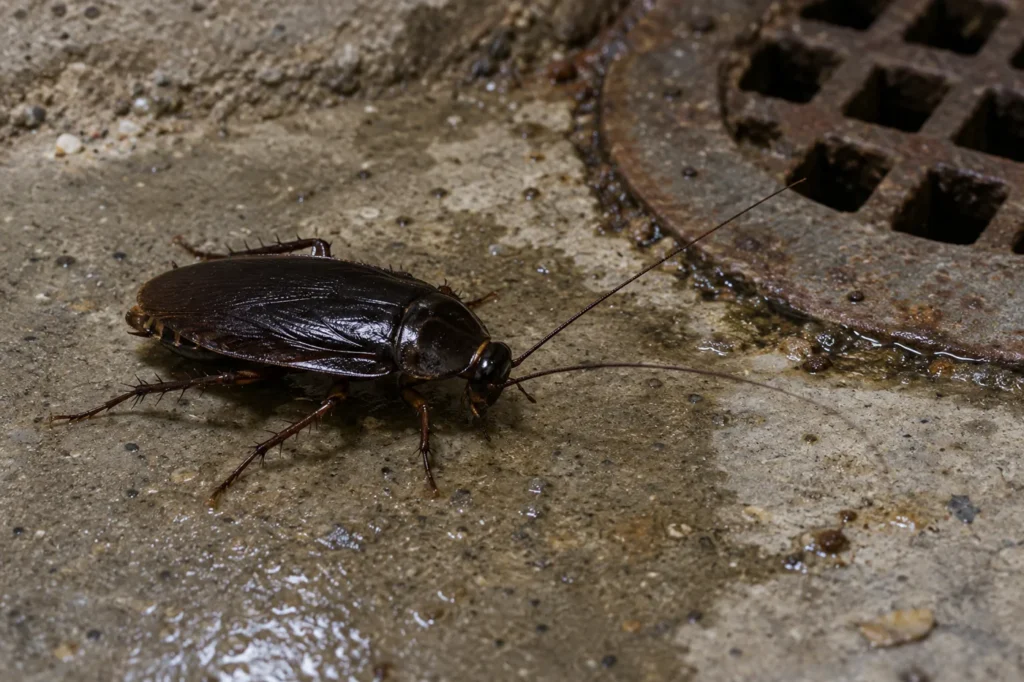
Before reaching for a spray, identify the insect. The same nickname is used for two very different animals, and confusing them leads to unnecessary pesticide use or an untreated cockroach problem.
Safety first
Do not handle a giant water bug with bare hands; it can defend itself with a painful jab. For cockroach products, use only a pesticide labelled for the insect and location, follow every direction, and keep baits and treated areas inaccessible to children and pets. Never mix pesticides or apply them to food-contact surfaces, drains, or water unless the label expressly allows that use.
Is it a cockroach or a true water bug?
An Oriental cockroach is dark brown to nearly black, roughly an inch long as an adult, and has long threadlike antennae. It often appears near basements, crawlspaces, drains, utility rooms, rubbish areas, and plumbing. Repeated indoor sightings, nymphs, egg cases, or captures on monitoring traps point to a cockroach population.
A giant water bug is an aquatic predator with a broad, flattened body and grasping front legs. University of Minnesota Extension notes that these insects live in shallow ponds and lakes, are attracted to lights, and sometimes turn up in yards or parking areas. One adult near an exterior light is usually a wanderer. It does not call for an indoor roach treatment.

Why “water bugs” appear
Moisture
Leaking pipes, damp basements, condensate, drains, and wet organic debris favor Oriental cockroaches.
Food
Crumbs, rubbish residue, pet food, and decaying organic matter support cockroaches.
Harborage
Cracks, wall voids, clutter, crawlspaces, and gaps around plumbing provide shelter.
Light attraction
Outdoor lighting can draw a true giant water bug away from its aquatic habitat.
What works for Oriental cockroaches
Methods ranked by practical evidence
- Inspection and monitoring — Strong. Sticky traps against walls and in corners show where cockroaches travel and whether activity is changing.
- Moisture, food, and harborage reduction — Strong. This removes the conditions sustaining the population.
- Sealing and repair — Strong. Caulk cracks, repair screens, fit doors, and close plumbing routes after checking for activity.
- Labelled bait in protected placements — Strong when appropriate. Small placements near harborages can work without broadcasting spray, but the product label governs placement.
- Foggers and routine broad indoor spraying — Poor fit. Extension guidance warns that foggers and residual sprays can be of little value and may disperse Oriental cockroaches.
Step 1: Inspect and monitor
Check beneath sinks and appliances, beside the water heater, around floor drains, in the basement or crawlspace, at rubbish storage, and where pipes cross floors or walls. Look for live insects, dark specks, cast skins, egg cases, and damp shelter.
Place enclosed sticky monitoring traps flush against walls or in corners, not in the middle of a room. Number or date them and check them on a regular schedule. Monitoring distinguishes a single visitor from an active population and shows where treatment should be concentrated.

Step 2: Remove moisture and food
Repair leaking supply lines, traps, drains, and condensate problems. Dry cabinets and floors, improve ventilation where needed, and correct sewage or drain defects with a qualified plumber. Do not pour insecticide into a drain as a shortcut.
Clean grease and crumbs, store food and pet food in closed containers, empty rubbish frequently, and avoid leaving food or water out overnight. Remove damp cardboard, paper bags, and unnecessary clutter. Outdoors, clear decaying organic debris close to the foundation.

Step 3: Seal routes and harborages
Seal cracks under sinks, gaps at baseboards, and openings around pipes after the area is inspected and cleaned. Repair screens and weather stripping, fit basement doors and windows, and cover appropriate drain openings with serviceable screens or drain covers that do not interfere with plumbing function.
Oriental cockroaches can move from crawlspaces and foundations along plumbing or under doors. In multi-unit housing, sightings may involve neighboring units or shared utility chases, so report the pattern to property management rather than treating only one room.

Step 4: Use bait carefully if monitoring confirms cockroaches
Cockroach baits can be effective when placed close to harborages and travel routes. Choose a product whose label covers the species and site. Apply only the labelled amount in the labelled location; more is not automatically better. Do not put bait on food-preparation surfaces, routinely washed areas, or anywhere accessible to children or animals.
Avoid contaminating bait with cleaner or repellent spray. Continue sanitation and leak repair so competing food and water do not undermine the program. If captures remain high, identification is uncertain, or safe placements are not possible, hire a licensed pest-management professional.

Seven-part control checklist
- Photograph or capture the insect for identification.
- Place monitoring traps along edges in damp utility areas.
- Repair leaks and dry the space.
- Remove exposed food, residue, rubbish, and clutter.
- Seal cracks, screens, doors, and plumbing gaps.
- If confirmed and needed, use a labelled bait in protected placements.
- Recheck monitors; escalate persistent or multi-unit activity to a professional.
What to do with a true giant water bug
Keep hands and pets away. Cover the insect with a container, slide stiff card underneath, and release it near suitable outdoor habitat if that can be done safely and local rules permit. Otherwise, contact local animal-control or extension guidance. Reduce unnecessary bright exterior lighting or use a less attractive, well-shielded fixture if repeated light attraction is the issue.
Aquatic habitat should not be sprayed simply because one insect reached a porch. Giant water bugs are predators in freshwater ecosystems, and an indoor cockroach treatment will not address why an aquatic insect flew to a light.
Myths and facts
Fast claims versus useful control
- Myth: every “water bug” came up the drain.
- Fact: Oriental cockroaches may use plumbing routes, while giant water bugs generally arrive from outdoors and may be attracted to light.
- Myth: dish soap is an instant infestation cure.
- Fact: killing one exposed insect does not remove hidden cockroaches, moisture, food, or access routes.
- Myth: a fogger reaches every hiding place.
- Fact: foggers are a poor substitute for inspection, sanitation, repair, monitoring, and targeted bait placement.
- Myth: more pesticide works faster.
- Fact: off-label or excessive application adds risk and can interfere with a bait-based program.
Frequently asked questions
Why do I see Oriental cockroaches in the basement?
They favor cool, dark, damp areas and may enter from crawlspaces, foundations, drains, or gaps around plumbing. Map captures, correct moisture, clean organic debris, and seal routes.
Can I flush a cockroach down the drain?
That does not correct the infestation and may simply move the insect. Capture or vacuum the individual, dispose of the contents safely, and address the source conditions.
When should I call a professional?
Call when monitoring shows sustained activity, insects are appearing in several rooms or units, sewage or structural moisture is involved, occupants have asthma or pesticide sensitivities, or products cannot be placed safely.
Why an instant kill is not the same as water bug control
A contact insecticide may kill an exposed cockroach when its label covers the insect, site and application. That answers what happens to one visible bug, not whether concealed insects, egg cases or continuing entry remain. A spray that misses the source can leave you repeating the same task.
For lasting control, connect the sighting to identification, monitoring and a repair plan. If your goal is fewer bugs in the bathroom, compare catches there after fixing the leak rather than judging a treatment by how quickly one insect stopped moving. No universal instant-kill recipe makes that distinction unnecessary.
Water bug, palmetto bug or German cockroach?
Water bug and palmetto bug are informal names, not reliable species identifications. In different regions people use them for large cockroaches, including Oriental and American cockroaches. A true water bug is an aquatic insect, with a different habitat and body shape. The name on its own cannot tell you which bait or repair is appropriate.
Small tan roaches concentrated around kitchen appliances may instead need a German cockroach control plan. Do not assume a large roach near a floor drain is breeding in that drain, either. Plumbing defects and damp shelter are worth investigating, but the insect may be travelling through a nearby construction gap.
Take a clear photograph from a safe distance and note size, location and time. An extension office or pest control provider can use that information. Our insect identification guide helps organize observations before treatment.
Why cockroach bait seems not to work
First check whether the insect is a cockroach and whether the product label covers the use. Then inspect placement: bait in the middle of an open room may not intersect a protected travel route. Follow the label when locating stations or gel; keep them inaccessible to children and pets.
Check whether bait is depleted, contaminated or sitting beside abundant competing food. Cleaner or repellent spray near a bait placement can interfere with the program. Do not compensate by scattering extra pesticide or mixing products. A professional can assess bait choice, inaccessible harborages and possible movement from adjacent units.
Keep a dated record of monitor catches, repairs and permitted applications. Falling catches are useful evidence, but an empty monitor is not proof that concealed spaces are clear. Rising catches after source correction justify another inspection rather than an automatic stronger dose.
Boric acid, borax and diatomaceous earth: different products, not kitchen recipes
Boric acid is an ingredient in some registered cockroach products. Borax sold for cleaning is not interchangeable with a labelled cockroach treatment. Sugar mixtures and homemade dust recipes do not supply the permitted placement, exposure precautions or amount that a pesticide label provides.
Diatomaceous earth also needs product-specific evaluation. Food-grade wording does not make airborne dust safe or authorize an indoor pesticide use. Do not open electrical outlets, spread powder over accessible floors or blow it into unknown wall cavities. A qualified provider can explain whether an authorized dust formulation belongs in a particular inaccessible site.
Essential oils, baking soda and white vinegar are not substitutes for that assessment. Avoid mixing cleaners or using flammable alcohol sprays. A strong smell is not evidence of colony control. EPA pesticide-label guidance explains why the actual product and directions matter.
Water bugs around a pool or porch light
A true aquatic insect can arrive at an outdoor light or pool without a household cockroach infestation. Observe from a safe position, do not handle a giant water bug with bare hands, and keep children and pets from investigating it. Its grasping front legs and defensive bite make grabbing it unnecessary.
For accessible pool debris, use appropriate pool-maintenance equipment and follow the equipment instructions. Do not add soap, insecticide or homemade chemicals to pool water to kill an insect. Restore ordinary pool care and ask a pool professional about persistent water-quality problems.
Reducing unnecessary outdoor lighting may reduce insect attraction, but a bulb change cannot promise departure within days. Keep lighting needed for safe access. Bugs at an outdoor lamp do not justify spraying every indoor baseboard.
Questions to ask a water bug exterminator
- Which insect was identified, and what evidence supports it?
- Were leaks, drain defects and entry gaps assessed?
- Where will monitors and labelled treatments be placed?
- Does the plan address shared walls or neighboring units?
- How will follow-up catches and repair progress be reviewed?
Ask for a written plan that separates pest treatment from plumbing or building work. A recurring spray visit alone cannot repair a damp cabinet or establish the source of an aquatic visitor.
Primary and authoritative sources
- Penn State Extension: Oriental Cockroaches — identification, monitoring, sanitation, repair, and treatment cautions.
- University of Minnesota Extension: Giant Water Bug — identification, habitat, light attraction, and defensive handling risk.
- US EPA: Smart Pest Control to Protect Your Health — integrated pest management and prevention.
- US EPA: Pesticide Labels — why the current product label governs use.
HowToRepel.com is an independent educational publisher, not a pest-control company. This guide was AI-assisted, human-edited, and source-checked. Follow current product labels and local requirements.
Publishing and affiliate notes
Some product links may be affiliate links. If you buy through them, we may earn a commission at no extra cost to you. Product picks are not lab tests. Read the legal disclaimer.