
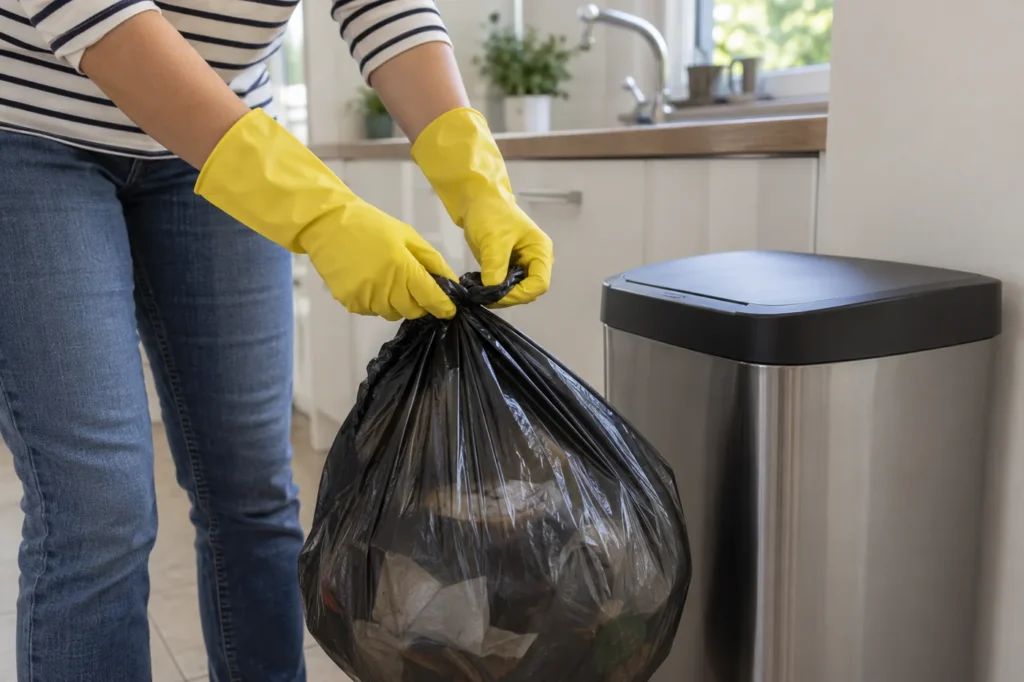
Removing visible larvae can leave the material that supported them in place. Inspection should connect the larvae with a source rather than assume they appeared spontaneously. Larvae can move away from where they developed, making the location of a sighting an imperfect guide.
What causes a maggot infestation in the house?
Follow the material that supports development
Waste and food residues
Moist organic waste can support fly development.
A concealed animal source
Some blow-fly problems are associated with a dead animal in a building void.
Migrating larvae
Mature larvae may travel away from the original material.
Identification uncertainty
Other pale larvae can look similar; confirm before choosing a product.
Ways to get rid of maggots, ranked by their role
Correct the source before increasing treatments
Breeding-source removal
First priority where the source is accessible and safe to handle.
Container cleaning and covering
Remove residual material and prevent continued fly access.
Accessible inspection
Look for missed waste or residues without moving unsafe equipment.
Qualified help
Use for inaccessible sources, sewage contamination, or larvae involving a person or animal.
How to get rid of maggots: inspection and cleanup
Check waste-bin closure
Inspect the lid and remaining waste. A tight lid is useful only alongside removal of spoiled material and routine collection. Replace a damaged container that cannot close normally.

Clean an emptied waste container
Work in a suitable outdoor area, wear gloves and use an ordinary container-compatible cleaning method. Avoid carrying or pouring boiling water, and never combine bleach with other cleaners.

Inspect accessible nearby areas
Use a flashlight around stable accessible edges. Do not pull heavy appliances, open electrical equipment or enter a contaminated void. A carcass odor or recurring larvae from a wall merits professional investigation.

Bag waste and arrange disposal
Secure household food waste and use a covered collection container according to local waste rules. Keep it away from food preparation. If ordinary cleanup cannot be done safely, arrange qualified assistance.

How long can a maggot infestation last?
Check the source and continuing activity
First inspection
Locate the likely breeding material and decide whether access is safe.
Source removal
Dispose of material appropriately and clean accessible residue.
Subsequent checks
Inspect for renewed waste, larvae or adult flies.
Recurring activity
Revisit hidden sources or seek identification; no same-day guarantee applies.
Myths and facts about killing maggots
Avoid assumptions that leave the source behind
Myth: visible larvae are the whole problem
Fact: locate the breeding material as well.
Myth: boiling water is required
Fact: source removal and suitable ordinary cleaning avoid scalding risk.
Myth: every pale larva is a household fly maggot
Fact: identification can change the response.
Myth: spray makes contaminated material safe
Fact: contamination still needs appropriate cleanup and disposal.
When pest control or an insecticide is needed
The exact label determines the permitted pest, site, amount and application method. A product for outdoor flies is not automatically suitable for kitchen surfaces, plant media or drains. Read storage, occupant and pet precautions before purchase. If the source is inaccessible, treating visible insects can obscure continuing activity without resolving the cause.
Keep a useful record
Note where activity occurs, what was cleaned or repaired and whether the same material reappears. A photograph taken without touching contaminated material can assist identification. Share observations with a qualified provider when the source remains unclear. Avoid reporting a fixed percentage or deadline as proof that the building is clear.
Where do maggots come from? Follow the larvae to the source
Maggots are the immature stage of a fly, not a separate household pest. Their presence means an adult fly reached moist organic material and laid eggs. Remove that material and the life cycle stops; killing the visible larvae while leaving the source only delays the next emergence.
Full-grown larvae often crawl away from food before pupating. A line of larvae on a dry floor can therefore lead back to a bin, spoiled food, animal waste or a hidden carcass several feet away. Check the direction of travel, nearby wall edges and the room above or below before treating the spot where they stopped.
| Where larvae appear | Source to check first | When the situation needs help |
|---|---|---|
| Kitchen or utility-room floor | Trash liner leaks, food beneath an appliance, recycling residue | Activity returns after accessible sources are removed |
| Near a ceiling, chimney or wall | Dead animal or contaminated material in a void | Odor, staining or unsafe structural access |
| Carpet or baseboard | Spill, pet accident, carried food or larvae wandering from another room | Contamination reached padding or a hidden cavity |
| Pet bedding or an animal | Soiled material, wound or matted fur | Larvae on an animal require prompt veterinary care |
| Produce or pantry package | Identify whether these are fly larvae or a stored-food pest | Uncertain identification or widespread packaged-food activity |
How to remove maggots without spreading contamination
- Isolate the area. Keep children and pets away. Put on gloves and avoid kneeling in contaminated liquid.
- Remove larvae and the source. Use disposable towels or a tool that can be cleaned, seal the waste and move it to the appropriate outdoor container.
- Wash the emptied surface. Use detergent and water compatible with the material, then dry it. Follow any disinfectant label; never mix bleach with ammonia, acids or other cleaners.
- Inspect the route. Check seams, wheels, cabinet edges and the underside of a removable bin. Do not dismantle appliances or enter a wall void.
- Monitor adult flies. Screens, a closed bin and a few well-placed traps help show whether the breeding source is gone.
Boiling water is a burn hazard and can damage floors, plumbing and plastic bins. Salt, vinegar and insecticide may kill some exposed larvae but do not remove the material supporting them. Source removal is the permanent step.
Distinguish a household cleanup from a health concern
Larvae in ordinary garbage are primarily a sanitation problem. Larvae in a wound, body opening or heavily soiled fur are different: do not apply household chemicals, oils or insecticide. Contact a medical professional or veterinarian promptly. Save a clear photograph or specimen if it can be collected without delaying care.
Food that larvae contacted should be discarded rather than rinsed and eaten. Clean nearby food-contact surfaces and replace damaged bin liners. If sewage, a decomposing animal or extensive contamination is involved, use a qualified cleanup or pest professional.
How to prevent maggots in the house
- Bag wet food waste and remove it on a schedule suited to warm weather and local collection.
- Wash residue from recycling and let containers drain before storage.
- Keep indoor and outdoor garbage lids functional; replace a can that cannot close.
- Repair screens and weather stripping where adult flies enter.
- Clean pet waste promptly and keep animal food covered.
- Investigate recurring odor, flies or larvae instead of adding fragrance or pesticide.
What do maggots look like? Identify the pest first
Maggots are the larvae of flies. Many household fly larvae look like small white worms with no visible legs, a soft body and a tapered end. A house fly, Musca domestica, and blow flies can both produce larvae in moist waste, but appearance alone does not identify the species. Photograph a larva beside a ruler and note what it was feeding on.
Pantry moth caterpillars can crawl up walls before pupating and be mistaken for maggots. Webbing in flour, grain, pet food or another dry package points toward a stored-food pest. Use our household insect identification guide if the material and insect do not fit a fly problem.
How to get rid of maggots in a trash bin
Empty the trash bin before washing it. Throw away leaking bags and rotting food in sealed waste, then collect larvae and residue from the bottom, lid rim, handles and wheels. Wash with detergent and container-compatible water, rinse where runoff can be managed, and let the bin dry before fitting a new liner.
Use a lid that closes fully and avoid leaving wet food waste in a warm container between collections. Clean spills immediately; a clean liner over old residue leaves a breeding site beneath it. If the bin is already infested with maggots, inspect the floor edges around its usual location for larvae that have wandered away.
Can you get rid of maggots naturally?
You can often get rid of maggots naturally through physical removal, source disposal, washing and fly exclusion. Those measures address the breeding site without a pesticide. They do not make contaminated food safe to eat, and they are unsuitable for larvae on a person or pet.
Will vinegar, salt or boiling water kill maggots?
Some household treatments may affect exposed larvae, but results depend on contact and conditions. Do not treat a claim to kill maggots instantly as proof that eggs, pupae and hidden food have been removed. Boiling water creates a scalding risk; salt and acidic mixtures can damage surfaces. The useful question is whether the source has been removed.
Should bleach be used to treat a maggot infestation?
Use a disinfectant only for an appropriate cleaning purpose and according to its label after visible waste is removed. Never combine bleach with vinegar, ammonia or other cleaners. Bleach is not a substitute for collecting larvae or disposing of rotting material.
Why maggots keep coming back after cleaning
Adult flies lay their eggs in suitable moist organic material. The developing larvae feed there, move away to pupate, and later emerge as flies. An apparent return can come from a missed food source or pupae left nearby. The timing varies with species and temperature.
Check old food under removable containers, pet food spills, waste liners, cleaning cloths and accessible floor edges. If maggots are gathering at the same wall joint or there is a persistent decay odor, call a pest control professional to locate inaccessible material. Avoid opening a wall or chimney yourself.
Keep a dated record of larvae and adult flies after cleanup. A falling trend is useful; one quiet day does not establish that the maggot problem has ended. Colorado State University explains fly development and source removal.
Frequently asked questions about maggots indoors
Why did maggots appear after the trash was removed?
Mature larvae may have already left the food to pupate in a drier edge or crack. Vacuum accessible edges, clean the bin location and monitor for emerging adults.
Does one maggot mean an infestation?
Not necessarily, but it justifies a source check. Several larvae, recurring adults or a persistent odor provide stronger evidence of indoor breeding.
Should I spray the whole room?
No. Broad spraying does not remove breeding material. If a pesticide is considered after cleanup, it must be labeled for the pest and exact site and used only as directed.
Publishing and affiliate notes
Some product links may be affiliate links. If you buy through them, we may earn a commission at no extra cost to you. Product picks are not lab tests. Read the legal disclaimer.