
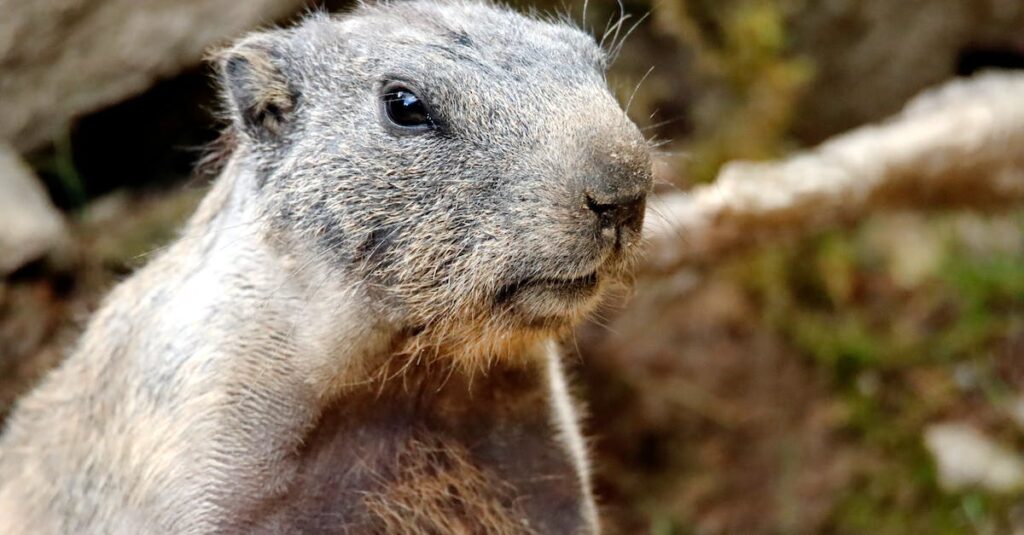
Groundhogs can browse plants and use burrows, but a hole alone does not identify the occupant. Garden protection and an opening beneath a structure are different tasks. Focus on the actual conflict and obtain help before excavation or exclusion where occupancy and building stability are uncertain.

Identification and conditions
Assess browsing, access and occupancy
Plant damage
Confirm what is being eaten and by which animal.
Gate and fence
Inspect ordinary openings and bottom weaknesses.
Burrow
A visible entrance does not show occupancy or hidden extent.
Structure
Suspected undermining warrants a building assessment.
Methods ranked by their role
Protect the vulnerable area without trapping occupants
Identify the conflict
Distinguish browsing from a structural concern.
Site-appropriate barrier
Consider climbing and digging when designing protection.
Qualified occupancy assessment
Resolve uncertain burrows before repair.
Lawful management
Use suitable experienced help and local requirements.
Inspection and prevention steps
Check the garden gate
Inspect latch and gaps while wildlife is absent. A fence design must suit terrain and the animal’s capabilities; do not promise that any buried apron alone guarantees protection.

Record an entrance without approaching it
Photograph from a safe distance. Do not probe, step onto suspect undermined soil or infer vacancy from a short period without movement. Explain occupancy concerns to a qualified wildlife provider.

Inspect the garden barrier bottom
Check an existing apron where safely accessible without exposing sharp edges. Any new excavation needs appropriate utility and site checks. A garden fence is separate from sealing a burrow under a deck.

Check qualified local guidance
Ask the relevant wildlife authority or experienced provider about permissible methods and dependent young. Describe the actual damage. Do not apply a trapping or relocation rule from another jurisdiction.

Sequence and reassessment
Assess occupancy before closing an opening
Identify
Confirm the animal and conflict.
Protect
Maintain a suitable garden barrier.
Assess
Obtain help for burrows or structural concerns.
Repair
Close suitable defects only after safe occupancy resolution.
Myths and facts
Avoid apron and burrow-treatment guarantees
Myth: every hole is an empty groundhog den
Fact: identify the occupant and assess occupancy.
Myth: castor oil reliably clears a burrow
Fact: do not pour homemade mixtures into it.
Myth: one apron design is always enough
Fact: climbing, terrain and gates also matter.
Myth: a brief paper test proves safe vacancy
Fact: dependent young and hidden occupants need assessment.
Do not repair an occupied burrow blindly
Fresh soil, tracks, feeding damage, and repeated observations help distinguish an active groundhog burrow from an old opening or another animal’s shelter. Closing an occupied route can trap wildlife or shift digging toward a structure.
Protect plants with a suitable barrier while occupancy is resolved. For burrows near foundations, decks, utilities, or public areas, ask the responsible wildlife authority or a qualified operator about lawful options.
No active burrow? If plants are browsed above ground without a nearby den entrance, compare the signs and barriers in our guide to keeping deer out of a garden.
How to get rid of groundhog damage without treating every burrow
Define the problem before choosing a method. Protecting a vegetable garden is a different job from assessing a tunnel beneath a shed. A groundhog at the far end of the property may not require removal at all. Focus spending on the plants or structure at risk rather than trying to make the entire neighborhood wildlife-free.
Groundhog, woodchuck or another garden visitor?
Groundhog and woodchuck are common names for Marmota monax. It is a stout, short-legged rodent with a relatively short tail. Observe from a distance or use a trail camera when the animal is not visible during your visits. Do not put your hand into a hole to identify its occupant. Michigan DNR recommends cameras when wildlife damage has an uncertain cause. Check Michigan’s identification and conflict guidance.
Photograph the damaged plants, the apparent route and any digging without blocking an entrance. Keep children and pets clear of uncertain ground. A useful record distinguishes a fresh change from an old hole that has remained unchanged for months. Multiple animals can use a property, so do not attribute every clipped stem to the first visitor you see.
Garden fencing: plan for climbing, digging and gates
Groundhogs can climb and dig. A neat fence above the soil can therefore fail at its top, bottom or gate. Walk the entire boundary before buying more repellent: the weak point may be a single gap where the gate meets uneven ground. Leave room to maintain the fence without stepping into the crop.
Use a source-backed design, not a universal apron promise
Rutgers describes a garden barrier extending 3–4 feet above ground, with buried wire 12 inches deep and a further 12-inch outward bend below ground. It also describes an outward or unstable upper section to discourage climbing. These are design principles for suitable sites, not proof that every fence with those dimensions will exclude every animal. See the Rutgers groundhog-management illustrations.
Check underground utilities before excavation. Choose material suitable for the soil, weather and maintenance you can provide, and handle cut wire safely. At a gate, preserve the below-ground protection without creating a trip hazard or making the gate impossible to use. If you cannot install a continuous safe boundary, ask a qualified installer to assess the location.
- Bottom: inspect digging, loose edges and gaps that appear after rain.
- Top: look for an easy climbing route, including adjacent objects.
- Gate: test the closed position and check both corners, not just the latch.
- Maintenance: recheck after ground movement, gardening work or damage.
Electric fencing is a specialized alternative, not the default for a shared family yard. Obtain advice on equipment, grounding, warnings and lawful installation. Do not improvise a powered wire from household mains electricity. A fence must suit everyone who uses the space, including children, pets and visiting workers.
Groundhogs under a shed, deck or foundation
Hibernation and dependent young change exclusion timing
Groundhogs hibernate, and females raise young in burrows. A winter pause in visible activity does not make a tunnel safe to close. During the breeding and rearing period, an adult leaving through a one-way device may still leave dependent young behind. Ask local wildlife experts to assess timing and occupancy before arranging exclusion, especially beneath a porch or outbuilding. Protecting vegetables does not require sealing the animal’s shelter.
Stop before sealing. The important questions are whether animals are present, whether dependent young may remain, and whether the ground or structure needs assessment. A blocked entrance can leave an animal inside; a tunnel may also have another opening you have not seen. A short paper-plug test is not a reliable basis for closing an uncertain burrow.
Ask a qualified wildlife professional for an occupancy assessment and an exclusion plan. Where appropriate, a professional may use a one-way exit and later secure access, but seasonal biology and site conditions govern that decision. Do not copy a fixed timetable from another property. Keep an unobstructed escape route until the chosen method has established that closure is appropriate.
When does burrowing become a structural concern?
Visible subsidence, damaged paving or digging close to load-bearing supports needs a separate qualified assessment. Wildlife removal does not repair undermined soil or certify a foundation. Photograph changes from a safe position and keep people off unstable surfaces. Avoid excavating around footings simply to see where the tunnel ends.
Repellents, sprinklers and trapping: understand the limits
A motion-activated sprinkler can interrupt a visit in a suitable open area, but it should not block an occupied burrow or wet a public path. Check its coverage, water supply and effect on other users. If fresh browsing continues, do not assume adding more devices will compensate for an open garden gate.
What about castor oil, predator urine or strong smells?
Repellents do not replace a maintained barrier. Where a product is legally sold for the purpose, read the label for sites and edible-plant restrictions. Do not pour castor oil, detergent, ammonia or other mixtures into tunnels. That does not establish safe removal and creates an avoidable exposure problem.
Some commercial deterrents aim to discourage approach or make plants less palatable. Results can depend on the situation, particularly when an animal already knows a food source. Treat any permitted repellent as a monitored supplement, not a permanent eviction guarantee. Mothballs are not outdoor wildlife repellent; household availability does not make an off-label use appropriate.
Is live trapping and relocation the humane solution?
Not automatically. Capture creates responsibilities for the animal’s welfare, inspection, transport and disposition. Relocation rules differ by jurisdiction and may prohibit a release you assumed was harmless. A nearby park or another person’s property is not a default release site. Ask the local wildlife agency or a licensed provider what is permitted before setting a trap.
Frequently asked questions about woodchuck control
What should I do first when vegetables are disappearing?
Confirm the visitor, photograph fresh damage and inspect the garden boundary. Protect a small high-value planting while you decide on a durable barrier. This gives you an observable goal—less new damage—rather than an unverifiable promise that every groundhog has left the area.
Can I fill the hole once I stop seeing the animal?
Absence during your visits does not establish vacancy. Have uncertain occupancy and structural risks assessed before filling or exclusion. Inactive openings can be used by other wildlife, and a groundhog’s seasonal activity changes; observation alone must be interpreted in context.
Will cutting weeds make groundhogs leave?
Tidy access can make fence inspection easier, but vegetation removal is not a dependable eviction method. Groundhogs can use surrounding habitat and still reach your garden. Invest effort in the specific entry route and crop protection instead of clearing unrelated habitat.
How should I judge whether the work succeeded?
Compare fresh plant damage, new digging and camera observations after the repairs. Keep the boundary usable and maintained. If damage continues, investigate the route before changing methods: climbing, a gate gap and another browsing species call for different corrections.
Publishing and affiliate notes
Some product links may be affiliate links. If you buy through them, we may earn a commission at no extra cost to you. Product picks are not lab tests. Read the legal disclaimer.