
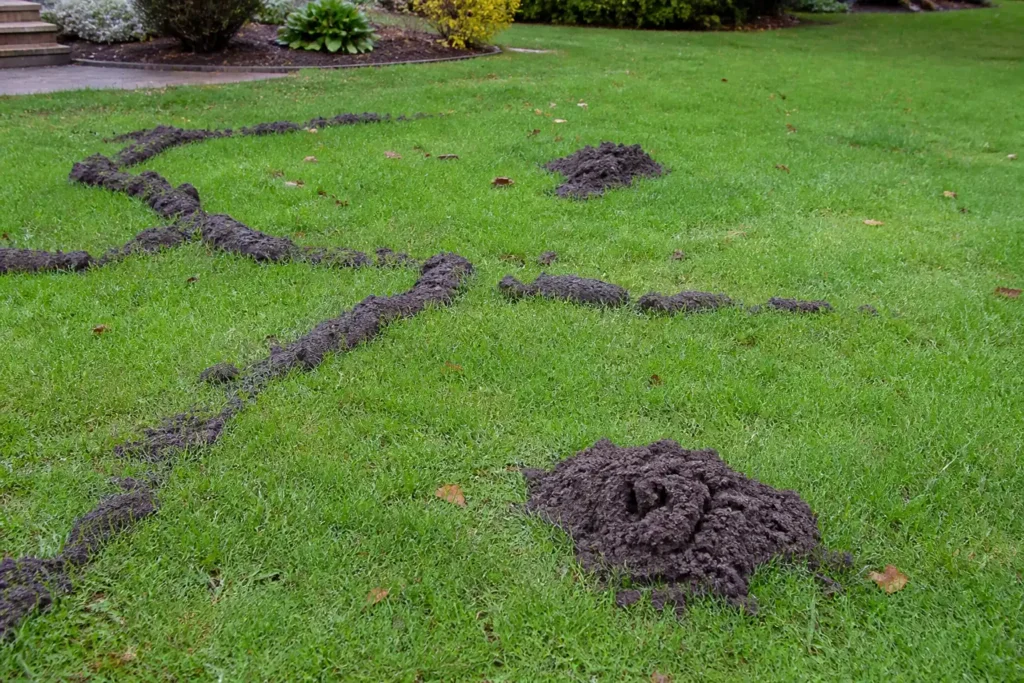
Moles tunnel for soil-dwelling food; similar-looking damage can also come from other animals. A ridge records activity but does not provide a reliable property-wide animal count. Separate the cosmetic lawn issue from plant damage or a possible problem near a structure.

Identify moles in your yard before choosing control
Distinguish tunnelling from other damage
Ridge pattern
Record surface tunnels and their locations.
Mound shape
Use it as a clue, not sole proof of species.
Fresh activity
Compare observations without a universal 24-hour test.
Plant or structural concerns
Assess the actual damage and other possible causes.
How to get rid of moles: compare control options
Identify and assess before choosing control
Identification
Distinguish moles from voles, gophers and other causes.
Monitoring
Record fresh signs and the affected area.
Targeted protection
Assess feasible protection of a vulnerable bed.
Qualified lawful control
Choose appropriate options for the confirmed species and site.
Inspection and prevention steps
Record an accessible raised ridge
Photograph the lawn surface without digging into an unknown hole. Compare where ridges occur with the actual damage. One photo does not establish the number of animals.

Mark observations where safe
A small ordinary flag can record a shallow ridge away from utilities and traffic hazards. Recheck suitable observations over time. A fixed next-day response is not a universal proof of occupancy or successful control.

Compare a ridge and mound
Seek local identification if the pattern is uncertain. Other burrowing animals can require a different response. Do not use mole advice for all holes or attribute every dying grass patch to the tunnel.

Inspect a vulnerable garden boundary
Check a suitable barrier without placing traps. Below-ground protection may require site-specific design and safe utility clearance. Obtain help for continuing damage or unsafe excavation.

Sequence and reassessment
Use fresh evidence and proportionate options
Identify
Confirm the animal and damage.
Record
Compare suitable fresh signs.
Assess
Discuss practical lawful protection or control.
Recheck
Review activity and repair damage when safe.
Myths and facts
Avoid soil-drench and animal-count claims
Myth: a ridge gives the number of moles
Fact: it is evidence of tunnelling, not a census.
Myth: killing grubs removes all mole food
Fact: moles can use other soil-dwelling prey.
Myth: homemade castor oil guarantees departure
Fact: do not substitute a recipe for a supported suitable plan.
Myth: every tunnel receives the same trap
Fact: identification, site safety and law must be considered.
Use fresh tunnel evidence carefully
Raised ridges and soil mounds help locate activity but do not identify every burrowing animal by themselves. Flattening a short section and checking later can support an assessment without opening or flooding the tunnel.
Compare new damage before choosing control. Extensive turf loss, uncertainty about the animal, or treatment near utilities and irrigation is a good reason to seek local identification and professional advice.
Mole, vole or pocket gopher?
Moles are insect-eaters that leave raised surface ridges and deeper runs. They do not normally eat bulbs or roots, although their digging can disturb plants. Voles are rodents that may leave narrow surface runways and gnaw plants; pocket gophers usually create fan- or crescent-shaped soil mounds and feed on vegetation. Confirm the animal before buying a control product.
Photograph fresh damage from above and from the side. Note the mound shape, whether a raised ridge connects it, plant injury and the time it appeared. Local extension or wildlife-control staff can often identify the pattern from good photographs.
Find an active mole runway before acting
Flatten a short section of several raised ridges without collapsing the whole system. Recheck after a day or two. A ridge that is repeatedly repaired is a better candidate for control than a random tunnel. Deep, straighter runs along a fence, sidewalk or landscape edge are often reused; shallow feeding ridges may be temporary.
Activity can shift with soil moisture and prey. One mole may create extensive visible damage, so mound counts do not equal animal counts. Map fresh repairs before deciding the yard is heavily populated.
| Option | Evidence-based role | Main caution |
|---|---|---|
| Tolerate and repair ridges | Low damage or short seasonal activity | Press soil back carefully to protect roots |
| Trap an active runway | Most dependable direct control in extension guidance | Check legality, placement and child/pet safety |
| Castor-oil repellent | May shift activity when a locally registered label permits | Results vary; movement may be temporary |
| Grub treatment | Use only for a confirmed turf-grub problem | Moles also eat earthworms, so it is not a reliable mole cure |
| Sonic devices or home remedies | No dependable control role | May waste time or damage soil and wildlife |
Use traps lawfully and protect bystanders
Wildlife rules and allowed trap types differ by location. Before trapping, check state and local requirements. Follow the trap manufacturer’s placement and checking instructions, keep devices inaccessible to children and pets, and never place one where irrigation, utility lines or landscape wiring may be damaged.
If you are not comfortable identifying an active runway or handling a captured animal, use a qualified wildlife-control professional. Ask how the species was confirmed, which runs are active, what follow-up is included and how traps will be secured.
Why common mole remedies fail
Flooding a tunnel rarely reaches the entire system and can damage soil or force activity elsewhere. Gasoline, exhaust, bleach, lye, broken glass, mothballs and similar materials are hazardous and may violate pesticide or environmental law. Fumigants can be dangerous and are often ineffective because moles can isolate parts of a burrow.
Poisoned grain does not match a mole’s insect-based diet. Broad insecticide use also removes beneficial organisms and still leaves earthworms and other prey. Treat a verified turf pest for its own damage threshold, not as a shortcut to mole control.
Repair the lawn after activity declines
Press raised turf back into contact with moist soil, fill only collapsed areas with compatible soil, and reseed bare patches during the appropriate local season. Avoid heavy rolling on wet soil, which can cause compaction. Continue marking fresh ridges so old cosmetic damage is not mistaken for new activity.
Decide whether control is actually necessary
Mole tunnelling can be unsightly, but moles also consume soil invertebrates and aerate soil. On a large or low-use property, tolerating activity and repairing ridges may be more proportionate than repeated control. Prioritize intervention where tunnelling undermines a path, repeatedly uproots young plants or prevents safe mowing.
Set a practical threshold before acting: for example, fresh repairs in a defined high-use lawn after several observation checks. This prevents old tunnels from driving repeated treatment. Reassess after major rain or irrigation because moisture changes where prey and moles travel.
Compare service proposals carefully
A useful proposal identifies the animal, maps active runs, names the control method, explains legal compliance and specifies follow-up. Be cautious with guaranteed whole-yard eradication, automatic grub treatment without a turf-pest diagnosis, or large pesticide packages that do not explain the target. Ask whether lawn repair is included and who is responsible for checking secured traps.
Why mole tunnels appear after rain or watering
Visible mole activity changes with soil conditions. UC IPM notes that fresh surface tunneling often increases after rainfall or watering, when digging is easier. Moles can remain active throughout the year even when drought, extreme heat or cold makes surface signs less obvious.
Record irrigation or rainfall beside your tunnel observations. New ridges after a wet spell do not automatically mean a new animal arrived, and a quiet period during dry weather does not establish that control succeeded. Recheck marked routes when comparable conditions return. Correct overwatering for the lawn’s needs, not as a promise to starve or remove moles.
Moles are mammals, but they are not rodents
Moles have a pointed snout, dense fur and broad digging forefeet. Their food includes earthworms and other soil invertebrates. Voles and pocket gophers are rodents with different feeding patterns. This distinction is why a rodent grain bait or a general grub treatment should not be assumed to fit a mole problem. Use signs and qualified identification without trying to handle the animal.
Frequently asked questions about yard moles
How many moles are in a damaged lawn?
Often fewer than the tunnel network suggests. A single animal can maintain a large system, so use fresh activity tests rather than counting mounds.
Do ultrasonic stakes repel moles?
Extension guidance does not consider vibration or electromagnetic devices proven control. Evaluate results by marked active tunnels, not by a quiet day.
Will killing grubs remove moles?
Not reliably. Moles eat earthworms and other soil animals as well as grubs and may dig more while searching when one food declines.
When should I hire a professional?
Hire help when species identification is uncertain, legal rules are unclear, traps cannot be secured, damage is extensive or repeated attempts on confirmed active runs fail.
Publishing and affiliate notes
Some product links may be affiliate links. If you buy through them, we may earn a commission at no extra cost to you. Product picks are not lab tests. Read the legal disclaimer.