
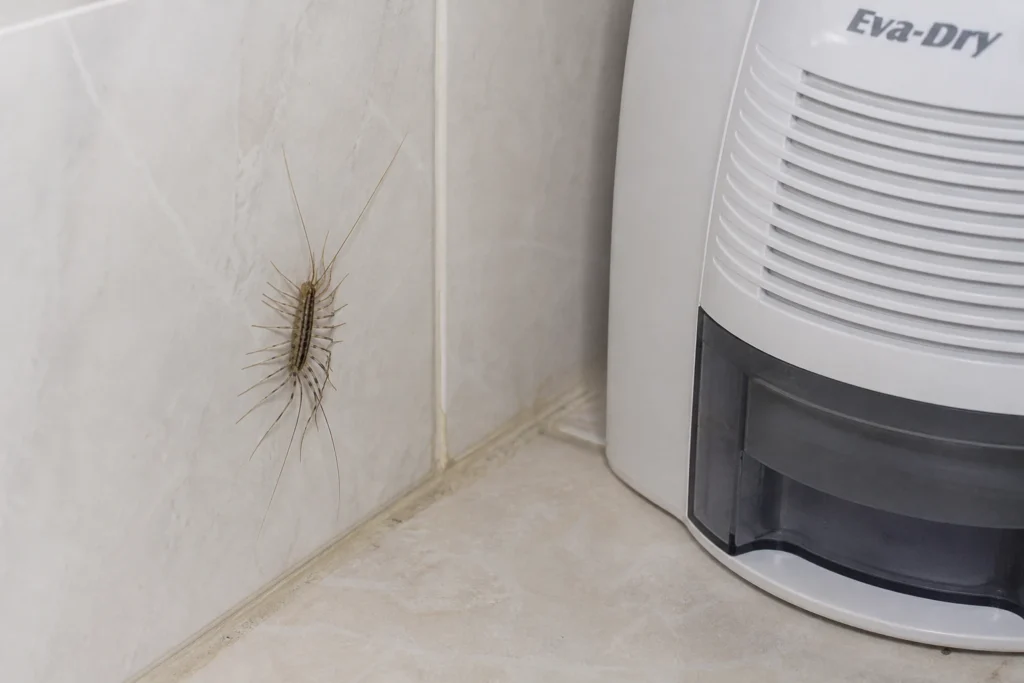
Fast movement can make a house centipede alarming, but its presence also invites a look at moisture and other insects. Start with the room and route where sightings occur. A stable inspection and repair plan is more useful than a promised overnight result from a repellent recipe.

What attracts house centipedes into your home?
Inspect the setting and access routes
Damp conditions
Inspect accessible bathrooms, basements and leak-prone areas.
Other arthropods
House centipedes prey on other small animals found around buildings.
Entry routes
Door edges and suitable exterior gaps deserve inspection.
Misidentification
Millipedes and other elongated animals require a different assessment.
Ways to get rid of house centipedes, ranked by role
Match the method to the identified condition
Moisture-source correction
Repair leaks and address the underlying damp condition.
Entry maintenance
Repair appropriate accessible gaps and door seals.
Prey and clutter inspection
Look for recurring insect activity and improve accessible storage.
Qualified help
Request identification or an inaccessible moisture investigation when needed.
Prevent centipedes: moisture and entry repairs
Observe bathroom conditions
A humidity meter can help record conditions but does not identify the cause. Use ventilation equipment according to its instructions and investigate water that repeatedly returns. Do not assign a universal humidity threshold as a guaranteed clearance measure.

Repair an accessible leak appropriately
Check a visible sink joint for dripping. Perform only maintenance you understand and that the fixture permits; seek a plumber for uncertain fittings, hidden damage or continued leakage. Keep water away from electrical equipment.

Clean an accessible basement corner
Use ordinary suitable cleaning on a dry, uncontaminated surface. Do not vacuum rodent droppings or unknown hazardous debris. Organized storage can make repeated sightings easier to inspect without promising that cleaning removes every animal.

Inspect the exterior door seal
Check from stable ground for damaged weather stripping. Fit a compatible repair and confirm normal door operation. Preserve necessary drainage, ventilation and equipment clearance.

Monitor centipedes in your home after repairs
Track repairs and continuing observations
Initial observation
Confirm the animal and record its location.
Source correction
Address the identified leak or maintenance defect.
Continued inspection
Check dampness, entry repairs and other insect signs.
Persistent activity
Seek identification or building assessment before adding treatments.
House centipede myths and facts
Avoid promises that leave the source unchanged
Myth: house centipedes feed on the building
Fact: they are predators of other arthropods.
Myth: one sighting proves an infestation
Fact: evaluate repeated observations and conditions.
Myth: a scent replaces leak repair
Fact: correct the moisture source.
Myth: more indoor spray is always necessary
Fact: use identification and source assessment before considering a labeled product.
When a centipede insecticide or pest control service fits
Check whether the animal is identified and whether maintenance addresses the problem. If a product is considered, its exact directions determine the permitted pest, site and method. Do not substitute an outdoor formulation for indoor use or invent a mixture from cleaners, oils or other products. Read occupant, pet, storage and reentry precautions before purchase.
Keep a useful maintenance record
Note where sightings occur, which defects were repaired and whether moisture or insect activity recurs. This supports a focused follow-up rather than treating every room on a fixed schedule. Share the record with a qualified provider if accessible inspection does not explain continuing activity. No success percentage or guaranteed clearance date is implied.
Use sightings as a moisture map
House centipedes often appear where prey and damp shelter are available. Removing individual animals does not correct a leak, condensation, clutter, or the smaller arthropods supporting them.
Record rooms and times, compare humidity or moisture conditions, and correct accessible defects. Frequent daytime sightings, continuing prey insects, or moisture inside walls deserves a broader building and pest assessment.
What do house centipedes look like?
The house centipede, Scutigera coleoptrata, has a slender, striped body, long antennae and very long legs. Adults have 15 pairs of legs, giving them a much wider outline than their body alone. They move quickly across walls and floors, often disappearing into a dark crevice when disturbed. Younger individuals do not have the full adult leg count.
Compare that shape with a millipede: a slower, more cylindrical animal with short legs close to its body, often curling when disturbed. Other centipedes have different proportions. Do not identify every many-legged animal as a house centipede or apply the same treatment to all of them. A clear photograph from a safe distance can help an extension office or pest control provider identify it.
The Penn State house centipede fact sheet describes identification and management. Our household pest identification guide can help you compare other indoor visitors.
Centipedes eat other pests, not your house
House centipedes are predators of small arthropods, including cockroaches, silverfish and spiders. They do not chew framing like termites or feed on stored flour like pantry pests. Finding one near a pantry does not mean it was eating the food.
Repeated sightings deserve a check for another pest problem, but a centipede does not identify its prey for you. Look for the actual insect, droppings, shed skins or repeated monitor catches. Do not treat for bed bugs, termites or cockroaches solely because a centipede appeared.
For confirmed prey pests, use a species-specific plan: silverfish moisture and storage management and German cockroach inspection and control address different sources. Reducing prey can help make the home less suitable for centipedes without spraying every room.
How to get rid of centipedes in damp areas
Bathrooms: find water that stays after use
Look at the room after an ordinary shower rather than inspecting only when everything is dry. Note condensation on pipes, water around the tub and damp material beneath a sink. Check whether the exhaust fan is working and discharging where it should. A fan cannot repair a plumbing leak.
Keep a short record of moisture readings in the same place at similar times. Relative humidity helps describe conditions, but no single reading proves that centipedes will leave. If a cupboard or wall stays wet, obtain a moisture investigation instead of applying caulk over the symptom.
Basements and crawl spaces: address the water source
Inspect accessible floor edges, stored boxes and visible pipe joints. Move sound, dry items into organized storage so wall edges remain visible. Damp cardboard is a reason to examine the storage conditions, not simply to move the stack to another corner.
A dehumidifier can support indoor drying when it is sized and operated for the space. Follow drainage and electrical instructions and empty or maintain it as required. Recurring seepage, a failed sump or wet insulation needs building or plumbing work; drying the room air alone may not resolve that source.
Outside: reduce shelter without blocking drainage
Inspect accessible foundation joints and ground-level doors. Remove accumulated leaf litter against the building and keep firewood storage inspectable. Repair compatible door sweeps and weather stripping where gaps exist. Do not pack soil, foam or mesh into drains, combustion openings or ventilation routes.
University of Minnesota Extension discusses damp habitat, clutter and entry management. Repairs should fit the construction, not a universal gap size or quarterly spray schedule.
Use sticky traps to assess a centipede infestation
Protected sticky insect monitors can show where house centipedes and prey insects travel. Put them along an accessible wall edge in the room where activity was seen, away from children, pets and places where wildlife could become caught. Follow the monitor instructions.
Label each monitor with its location and date. Compare catches over consistent intervals rather than moving every trap after one quiet night. Record the animals separately: a roach catch and a centipede catch answer different questions. Replace dusty or saturated monitors.
There is no universal rule that five centipedes per week proves a serious infestation. Room use, species, water conditions and continuing prey activity matter. A rising pattern after repairs is a reason for a broader inspection. Empty traps also do not establish that every concealed space is clear.
Spray, diatomaceous earth and natural repellent limits
Moisture and entry correction are the foundation of getting rid of house centipedes. A registered insecticide may have a role in persistent, confirmed activity, but its label must cover the pest, indoor or outdoor site and application method. A product sold for gardens is not automatically suitable for baseboards.
Diatomaceous earth and other dusts are pesticide options only when the actual product and use are authorized. A food-grade designation does not justify spreading dust beside beds, opening outlet covers or creating airborne powder. Do not invent a dose, application frequency or re-entry time.
A vinegar, alcohol or essential-oil spray bottle is not a substitute for a labelled pest-control plan. Alcohol introduces a fire hazard; scented mixtures can affect surfaces and expose pets. No scent can fix a leaking joint. See EPA guidance on pesticide use indoors before deciding whether treatment is necessary.
Frequently asked questions about house centipedes
Do house centipedes bite?
House centipede bites are uncommon, especially when the animal is left alone. Centipedes use venom to subdue prey, so avoid grabbing an unidentified animal. Do not assume that every species has the same bite risk. Seek medical advice for concerning symptoms rather than diagnosing a skin mark from a pest photo.
Why do I suddenly see centipedes at night?
House centipedes are often noticed when they move from shelter to hunt. A new sighting pattern can reflect access, damp conditions or other arthropod activity. Record the room and inspect those conditions; one night does not establish population size.
Will they go away after I repair a leak?
A leak repair changes one supporting condition, but hidden damp material, prey and other access routes can remain. Monitor the same rooms after repair and verify that surfaces are drying. Persistent activity calls for another source check, not a guaranteed two-week deadline.
When should I call an exterminator?
Ask for help when identification is uncertain, activity continues in several rooms, prey pests are confirmed or moisture is inaccessible. Request an inspection report describing the conditions found, repairs recommended and the reason for any treatment. An unexplained recurring spray plan is not the same as a diagnosis.
Publishing and affiliate notes
Some product links may be affiliate links. If you buy through them, we may earn a commission at no extra cost to you. Product picks are not lab tests. Read the legal disclaimer.