
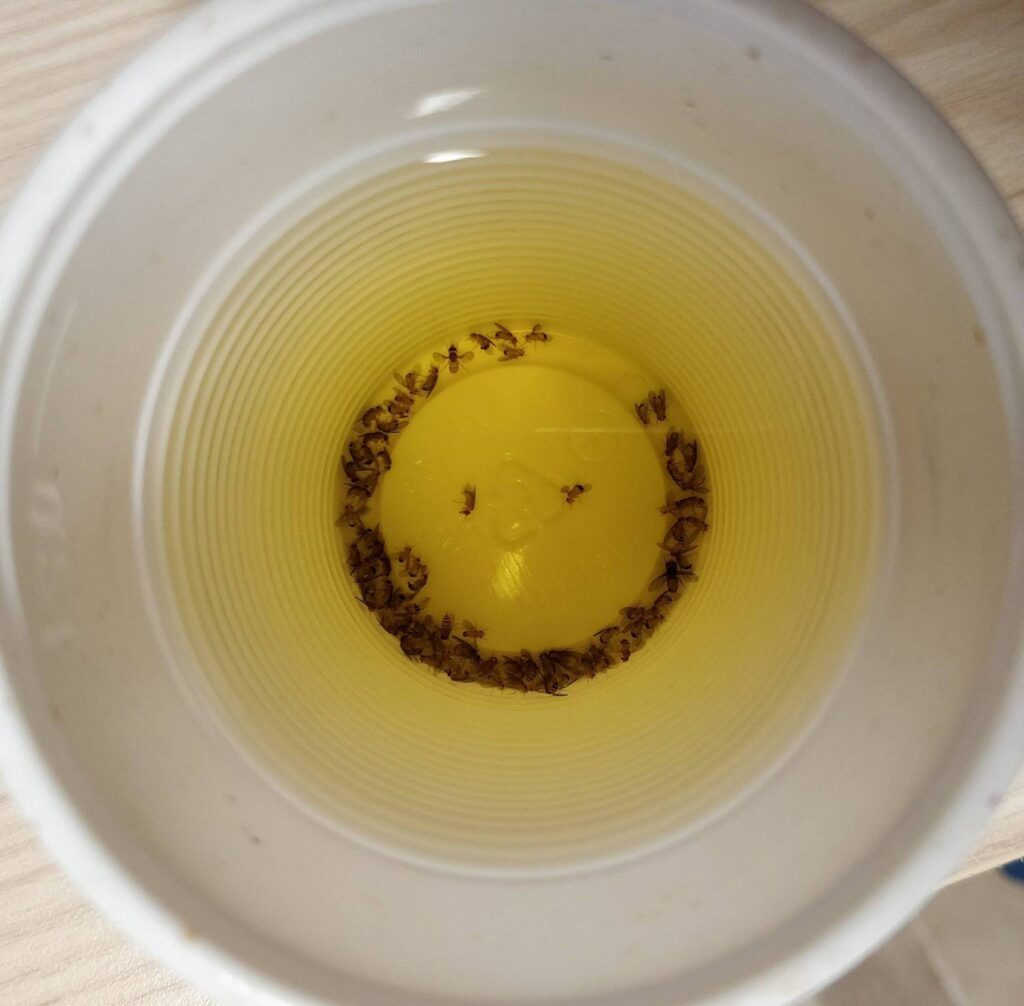
Small size does not make every indoor fly a fungus gnat. A kitchen, bathroom or plant collection can contain different species, and each can persist while its food or wet breeding material remains. Start with observations of appearance and location, then inspect likely sources.

Where do small flies and gnats in your house breed?
Follow the material that supports development
Produce and residues
Small fruit flies can develop in fermenting materials.
Plant media
Fungus gnats are associated with moist growing media and fungi.
Wet plumbing
Moth flies and some other small flies can develop in wet organic deposits.
Unclear source
A professional identification can help when these checks do not explain the activity.
Ways to get rid of small flies by breeding source
Correct the source before increasing treatments
Identification and source correction
Choose the plan that fits the insect and material.
Food and waste hygiene
Remove spoiled material, clean residue and cover waste.
Plant or plumbing maintenance
Match the work to confirmed conditions rather than treat both blindly.
Adult monitoring
Use a suitable trap to observe activity while continuing source investigation.
Get rid of fruit flies, fungus gnats and drain flies
Inspect stored produce
Look under bowls and containers for damaged or forgotten fruit. Discard spoiled material and store sound produce appropriately. Cleaning the visible bowl while leaving residues nearby can miss the source.

Check growing media before watering
Inspect the pot and saucer. Adjust watering only within the plant’s needs; avoid a universal drying schedule for every species. Continuing flies around a pot warrant confirmation before adding an insecticide.

Inspect accessible drain residues
Check whether fuzzy moth-like flies are present and whether wet buildup remains. Use fixture-compatible maintenance. Do not pour a product into a drain unless its directions permit that application.

Clean beverage recycling
Empty containers and remove sticky residues with ordinary cleaning methods, then dry and store them appropriately. Inspect covered waste and the bottom of the recycling container as well.

When a small fly infestation needs another inspection
Check the source and continuing activity
Initial inspection
Describe the fly and likely source location.
Source work
Correct the confirmed material or maintenance problem.
Repeated checks
Compare sightings and trap catches without assigning a success percentage.
If unresolved
Request identification or investigation of inaccessible moisture.
Myths and facts about fruit flies and gnats
Avoid assumptions that leave the source behind
Myth: every small fly is a gnat
Fact: different small flies have different breeding materials.
Myth: a vinegar trap treats plant media
Fact: choose monitoring and maintenance for the identified insect.
Myth: all houseplants should dry completely
Fact: watering changes must suit the plant.
Myth: pesticide replaces source removal
Fact: source correction remains central to management.
Before choosing an insecticide
The exact label determines the permitted pest, site, amount and application method. A product for outdoor flies is not automatically suitable for kitchen surfaces, plant media or drains. Read storage, occupant and pet precautions before purchase. If the source is inaccessible, treating visible insects can obscure continuing activity without resolving the cause.
Keep a useful record
Note where activity occurs, what was cleaned or repaired and whether the same material reappears. A photograph taken without touching contaminated material can assist identification. Share observations with a qualified provider when the source remains unclear. Avoid reporting a fixed percentage or deadline as proof that the building is clear.
Use fly type to choose the source inspection
Fruit flies, drain-associated flies, and fungus gnats can overlap indoors but develop in different moist materials. A trap catch can support identification; it does not prove which drain, food item, or pot is producing them.
Remove or correct one suspected source at a time and track adult activity. Persistence after cleanup suggests another breeding site, a plumbing defect, or a misidentification that needs closer inspection.
Fruit flies and gnats: identify the flying insect first
“Gnats” can mean several unrelated flies. Their breeding sites differ, so the room and flight pattern are often more useful than color. Capture a few adults on a sticky card or in a clear container and photograph them beside a ruler.
| Likely fly | Useful clue | Source to inspect |
|---|---|---|
| Small fruit or vinegar fly | Tan body; often hovers around produce or beverage residue | Overripe fruit, recycling, mop residue, spills and fermenting material |
| Fungus gnat | Dark, delicate, mosquito-like adult near plant soil or windows | Moist potting mix, algae and decaying plant material |
| Moth or drain fly | Broad, fuzzy wings; rests near sinks or wet equipment | Bacterial film in continuously wet plumbing or another wet organic site |
| Phorid fly | Humped profile; often runs in short bursts | Food waste, damaged plumbing, a dead animal or other moist decay |
| Outdoor invader | Appears mainly at windows or seasonally without an indoor source | Screens, door gaps and outdoor lighting |
A vinegar trap may catch small fruit flies but does not identify every tiny fly and does not remove larvae. Put monitoring traps beside suspected sources rather than scattering them through the house.
Run a source-specific test
Get rid of fruit flies in produce and recycling
Refrigerate suitable ripe produce, discard spoiled items, rinse containers and clean sticky residue beneath appliances and bins. Check potatoes, onions and forgotten reusable bags. Keep the area dry and compare adult captures over several days.
Control fungus gnats in potted plants
Let the top 1–2 inches of growing medium dry between waterings when the plant tolerates it. Remove decaying leaves and empty standing water. Yellow sticky cards monitor adults; they do not treat larvae. If cultural control is insufficient, use only a biological or pesticide product whose label authorizes fungus-gnat larvae in houseplant growing media.
Remove drain flies from sink drains and wet plumbing
Place a clear container or adhesive cover over a suspect opening without blocking a drain that must remain usable, then check for adults. Mechanically remove accessible film with a suitable brush and use a compatible enzyme or microbial drain cleaner if needed. Bleach, boiling water and quick pour-through treatments do not reliably remove the gelatinous breeding layer.
For phorid flies or an unexplained sewage odor
Running adults, recurring activity across rooms or a sewage smell can indicate hidden decaying material or damaged plumbing. Do not open floors or walls based on guesswork. A plumber or pest professional can trace the source safely.
Choose a fruit fly trap or gnat monitor for the right source
Sticky cards show where activity is concentrated. A small fruit-fly lure can reduce adults while the fermenting source is removed. Light traps may help in some commercial settings but are not a substitute for sanitation. Count captures at the same interval and location; falling numbers after source correction are the useful result.
Do not rely on an uncovered bowl of sugary liquid where it can spill, attract pets or create another food residue. Aerosol foggers and routine room sprays miss larvae in soil, drains and fermenting material while adding exposure.
Prevent small flies from returning
- Adjust plant watering as seasonal growth and indoor drying conditions change.
- Clean beverage recycling before residue ferments.
- Repair leaks and investigate damp cabinets, wall voids and floor drains.
- Use fitted screens and weather stripping for seasonal invaders.
- Keep a short monitoring record instead of switching remedies every day.
How to make a fruit fly trap with apple cider vinegar
For confirmed fruit flies, a vinegar trap can collect adults while you clean. Put a small amount of apple cider vinegar in a stable jar with a paper funnel above it; keep the funnel tip above the liquid. Place the trap near the fermenting source, away from children, pets and food preparation. Empty it and renew the lure regularly.
Another common homemade trap uses plastic wrap secured with a rubber band; poke a few small holes so flies can enter. A drop of dish soap in an open liquid trap reduces surface tension, but open traps are easier to spill. Choose a contained setup suited to your household. A trap count is a monitoring result, not evidence that larvae in food or drains have been treated.
If you don’t have apple cider vinegar, wine or another suitable fermenting lure can attract small fruit flies. None is a general treatment for fungus gnats in damp soil. Penn State describes a vinegar and paper-funnel trap.
Where do fruit flies come from if the fruit bowl is clean?
Fruit flies also breed in overlooked fermenting residues. Inspect beverage bottles, the recycling-bin base, compost containers, wet cleaning cloths and food lodged around a garbage disposal. Follow the appliance’s cleaning directions and disconnect it as required before accessing removable parts.
Overripe fruit and vegetables can introduce a breeding source, but the name does not mean fruit is the only source. Refrigerate suitable ripe fruit, throw away spoiled material, wash sticky residue from the counter and inspect forgotten produce bags. Cleaning the bowl alone can leave a fruit fly infestation going.
Get rid of gnats around houseplants without damaging roots
Fungus gnats, often Bradysia species, develop in moist growing media. Their larvae feed on fungi and decaying material and sometimes plant roots. Adult gnats flying around your houseplants can accumulate at windows, so a window sighting does not prove the source is outdoors.
Check drainage, standing water and whether the potting soil stays wet longer than the plant requires. Adjust watering as winter growth slows, inspect new plants and remove decaying leaves. Yellow sticky cards near the soil monitor adults. For persistent larvae, a labeled Bacillus thuringiensis israelensis product or appropriate biological control can support the plan; follow its instructions rather than using a universal drench recipe.
Our indoor gnat guide covers diagnosis, and CSU explains fungus gnat management.
Can small flies disappear overnight?
Removing the breeding ground can reduce activity, but eggs, larvae and pupae develop on different schedules. Adult flies may continue emerging after cleaning. Keep the same trap locations and inspect the source again rather than changing treatments every night.
If numbers stay level or rise, look for a missed drain, food residue, overwatered plant or a different fly species. Persistent phorid flies or a sewage smell warrant a plumbing and pest control investigation. The drain fly guide explains source checks for wet plumbing.
Frequently asked questions about small indoor flies
Why are tiny flies still present after cleaning the counter?
The larval source may be in a drain, plant pot, recycling container or hidden spill. Existing pupae can also produce adults after the original food is removed.
Are fungus gnats and fruit flies the same?
No. Fungus gnats develop mainly in moist growing media; small fruit flies develop in fermenting material. Their adults and control plans differ.
When should I call a professional?
Get help when activity persists after a documented source-control attempt, several rooms are involved, sewage or decay is suspected, or access would require opening a structure.
Publishing and affiliate notes
Some product links may be affiliate links. If you buy through them, we may earn a commission at no extra cost to you. Product picks are not lab tests. Read the legal disclaimer.