
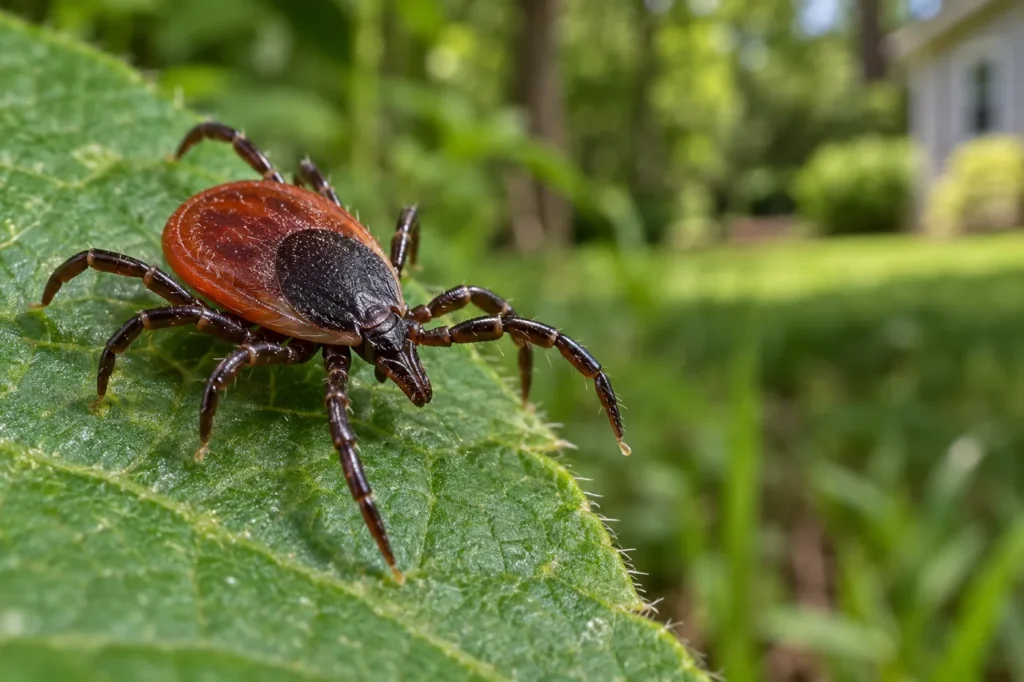
Ticks wait on grass, brush, and leaf litter, then climb on when you or a pet brush past—most exposure starts outdoors or when a pet brings a hitchhiker inside. This is a practical U.S. household guide, not a diagnosis. Rash, fever, or a severe reaction after a bite: see a clinician. For mite itch after tall grass rather than an attached tick, see how to repel chiggers. Deer browse and woods-edge habitat also raise tick contact—pair yard work with garden barrier planning when relevant.
Medical and veterinary safety
Contact a healthcare professional about illness after a tick bite or about post-exposure treatment questions; symptoms and recommendations vary by disease and location. Contact a veterinarian if a pet becomes lethargic, loses appetite, develops lameness, fever, weakness, or another concerning change after tick exposure. Cats are highly sensitive to several chemicals: never use a dog flea-and-tick product on a cat, and do not apply any tick preventive to a cat without veterinary advice.
Where yard and pet exposure begins
Four exposure routes
Brush and leaf litter
Shaded, humid edge habitat supports several tick species and their hosts.
Wildlife hosts
Deer, rodents, birds, and other animals move ticks through the landscape.
Pets
Dogs and cats can acquire ticks outdoors and carry unattached ticks inside.
People and gear
Clothing, footwear, packs, and time in tall vegetation create opportunities for contact.
Brown dog ticks deserve special attention because they can infest homes and kennels. Repeated indoor ticks, ticks on walls or in cracks, or persistent pet infestation calls for veterinary and pest-management help rather than routine outdoor spraying.
Tick-control methods ranked
Use complementary controls
- Daily checks and prompt removal — Strong. This directly reduces attachment time and helps prevent ticks from moving between pets and people.
- Veterinarian-selected pet prevention — Strong. Product choice depends on species, weight, age, health, local ticks, and other medicines.
- Habitat modification — Strong. Mowing, leaf-litter removal, brush management, and moving play areas away from wooded edges reduce contact with favorable tick habitat.
- EPA-registered repellents and treated clothing — Strong when label-directed. The product must match the person, clothing, gear, and intended use.
- Targeted yard acaricide — Conditional. It may reduce ticks in selected areas but should follow local recommendations and the label; indiscriminate property-wide treatment is not the starting point.
Check and remove ticks correctly
After time in brush, woods, tall grass, or leaf litter, check the body, clothing, gear, children, and pets. Showering soon after outdoor activity can remove unattached ticks and creates an opportunity for a careful body check. Inspect warm or concealed areas such as the scalp, behind ears, waist, groin, backs of knees, and under arms.
For an attached tick, CDC recommends fine-tipped tweezers. Grasp the tick as close to the skin as possible and pull upward with steady, even pressure. Do not twist, crush, burn, paint, or smother it. Clean the bite area and hands afterward. Record the date and location and seek medical advice if illness develops.

Protect dogs and cats
Check outdoor pets every day, especially around the ears and eyelids, under collars and front legs, between toes and back legs, and near the tail. Remove attached ticks promptly. CDC advises watching for changes in behavior or appetite after a suspected bite because signs of tickborne illness may take time to appear.

Ask a veterinarian to select prevention. Use the exact species, age, and weight range on the label and the prescribed schedule. Never divide a large-dog dose, combine products without veterinary direction, or assume a plant-derived ingredient is safe for cats. Keep the package and registration information. If a reaction occurs, follow the label’s first-aid directions and contact the veterinarian promptly.

Make the yard less favorable to ticks
Mow regularly, remove leaf litter and brush, trim vegetation to increase light and airflow, and keep frequently used areas away from wooded or brushy boundaries. A wide strip of gravel or wood chips between lawn and the edge can mark a lower-contact zone. Move play equipment, seating, and pet runs toward sunnier maintained areas.

Discourage rodents from living beside the home by sealing structural entry points and removing accessible food and clutter. Do not use wildlife feeding or deer-attracting plantings next to play or pet areas. Habitat work reduces exposure but cannot guarantee zero ticks.
Clothing, repellents, and laundry
Use an EPA-registered repellent suitable for the user and follow the label. CDC lists DEET, picaridin, IR3535, oil of lemon eucalyptus/PMD, and 2-undecanone among options for exposed skin; age limits and application directions differ. Permethrin is for clothing and gear only when the product label says so—not for applying directly to skin.
Check clothing and gear before bringing them through the home. Follow CDC’s current dryer and washing instructions for potentially tick-exposed clothing; water temperature and whether clothes are damp affect the required process.

After-outdoor checklist
- Check clothing, packs, shoes, children, and pets.
- Remove attached ticks promptly with fine-tipped tweezers.
- Shower and complete a full-body check.
- Process clothing according to current CDC dryer and washing guidance.
- Record bites and watch for illness in people or pets.
- Maintain the yard edge and pet-prevention schedule.
- Escalate repeated indoor ticks or heavy pressure to qualified professionals.
Myths and facts
Avoid tick-control shortcuts
- Myth: burn or smother an attached tick.
- Fact: prompt mechanical removal with fine-tipped tweezers is the recommended approach.
- Myth: a natural pet product is automatically safe.
- Fact: natural origin does not establish safety, especially for cats.
- Myth: spraying the whole yard eliminates the risk.
- Fact: no yard can be guaranteed tick-free; exposure reduction requires habitat, personal, and pet controls.
- Myth: dog and cat preventives are interchangeable.
- Fact: some dog products can seriously harm cats.
How to get rid of ticks on clothing after outdoor time
Keep exposed clothing separate from clean laundry until you inspect and process it. CDC gives different instructions depending on whether clothing is dry or damp:
- Dry clothing: tumble dry on high heat for 10 minutes to kill ticks after coming indoors.
- Damp clothing: additional dryer time may be needed; do not count the same ten minutes as sufficient for every load.
- Clothing that needs washing first: CDC recommends hot water. Cold or medium-temperature water will not kill ticks.
Check fabric-care instructions before using heat. If an item cannot tolerate that process, do not damage it or assume a cold wash makes it tick-free; seek an appropriate alternative from current public-health guidance.
Check the bag and shoes, not only the clothes
Inspect coats, daypacks and pets before leaving them near bedding or upholstered furniture. An unattached tick can enter on an item and attach later. Laundry treatment does not replace a full-body tick check or checking the animal that came indoors with you.
Frequently asked questions
Should I save a removed tick?
A clear photograph and recorded date/location can be useful. Local health departments differ on testing and identification, so follow their guidance rather than delaying medical advice.
When should a yard be treated?
Consider treatment after local risk, species, property layout, and nonchemical steps are assessed. Use a licensed professional or a product specifically labelled for the site, and protect pollinators, water, children, and pets as directed.
Can a tick infestation live indoors?
Most tick encounters begin outdoors, but brown dog ticks can establish indoors. Multiple indoor life stages or repeated wall and kennel sightings warrant professional identification and coordinated pet/environment treatment.
Related guides
Chiggers (mites)—not ticks · Keep deer out of a garden · Fleas in the house and yard · In the yard hub
Start with the tick, the host and the exposure site
A tick found on a person, dog or cat does not by itself prove that the lawn is infested. Note where outdoor exposure occurred, photograph the tick and record whether it was crawling or attached. Tick species, life stage and local disease patterns vary, so use a state health department, extension service or veterinarian for identification when it would change a medical, veterinary or yard decision.
Keep the priorities separate: prompt removal and symptom awareness protect the person; veterinary prevention protects the pet; habitat work reduces encounters in frequently used parts of the yard. One product should not be expected to do all three jobs.
Build a tick-safe yard in the places people use
Concentrate work where lawn meets woods, brush, stone walls or dense groundcover. Remove leaf litter, cut tall grass and brush, keep play equipment and seating away from wooded edges, and stack firewood neatly in a dry place. A roughly three-foot-wide strip of wood chips or gravel between lawn and woodland can create a drier boundary and make the edge easier to inspect.
Do not strip an entire property of vegetation. Target the transition zones and the routes used by children and pets. Discouraging deer and rodents may help in some settings, but wildlife control must follow local rules and should not involve loose poison or improvised bait.
| Layer | What it addresses | What it cannot guarantee |
|---|---|---|
| Daily body, clothing and pet checks | Finds ticks after exposure | Does not reduce the yard population |
| Habitat and edge maintenance | Reduces humid shelter in priority areas | Cannot make an outdoor property tick-free |
| EPA-registered skin repellent or treated clothing | Reduces bites during exposure when used as directed | Does not replace checks |
| Veterinarian-selected pet preventive | Protects the labeled animal species and weight range | Dog products may be dangerous to cats |
| Targeted yard pesticide | May reduce ticks in treated areas | Should not be the only prevention measure |
Remove an attached tick without folklore
Use clean, fine-tipped tweezers. Grasp the tick close to the skin and pull upward with steady, even pressure. Do not twist, crush, burn, paint or smother it. Clean the bite area and your hands afterward. If mouthparts remain, do not dig aggressively; obtain medical guidance if they cannot be removed easily.
Record the date and likely exposure place. Follow current public-health advice about saving or photographing the specimen. Seek medical advice for a concerning rash, fever or other symptoms, and use urgent care for severe symptoms. Do not wait for an online identification if someone is unwell.
When yard treatment is worth considering
Consider a professional inspection when repeated ticks are confirmed in the same high-use zone despite habitat correction, or when the property has extensive woodland edges that cannot be managed safely. Ask where monitoring found ticks, what area will be treated, which pest and life stage appear on the label, and what weather, re-entry and pet restrictions apply.
Broadcast spraying on a calendar without inspection can expose more of the property than necessary. CDC guidance notes that pesticides can reduce ticks but should not be the only line of defense. Local health or agricultural officials can advise on timing and permitted products.
A two-week household tick log
For each tick, record the date, person or animal, attached versus crawling, likely activity, body location and yard zone. Mark the same zones on a simple map. The pattern may point to a trail edge, dog route, woodpile or off-property exposure and helps a professional avoid treating blindly.
Frequently asked questions about tick control
Can ticks live in a mowed lawn?
They can be transported across it, but shaded humid edges, leaf litter and brush are generally more favorable. Focus inspection on transitions rather than assuming every blade of grass is equally risky.
Should I use permethrin on skin?
No. Permethrin products intended for tick protection are used on clothing and gear only as their labels direct. Choose an EPA-registered skin repellent for exposed skin and follow age and application restrictions.
Will one yard spray solve the problem?
No treatment makes outdoor exposure impossible. Combine any justified pesticide application with checks, personal protection, pet prevention and habitat work.
Primary and authoritative sources
- CDC: Preventing Tick Bites — checks, repellents, clothing, and removal.
- CDC: Preventing Ticks on Pets — pet checks and veterinary prevention.
- CDC: Preventing Lyme Disease — yard habitat and exposure reduction.
- US EPA: Controlling Fleas and Ticks on Your Pet — label, species, dose, and adverse-reaction safety.
HowToRepel.com is an independent educational publisher, not a medical or veterinary provider. This guide was AI-assisted, human-edited, and source-checked. Use current labels and obtain professional advice for illness or pet-product decisions.
Publishing and affiliate notes
Some product links may be affiliate links. If you buy through them, we may earn a commission at no extra cost to you. Product picks are not lab tests. Read the legal disclaimer.