
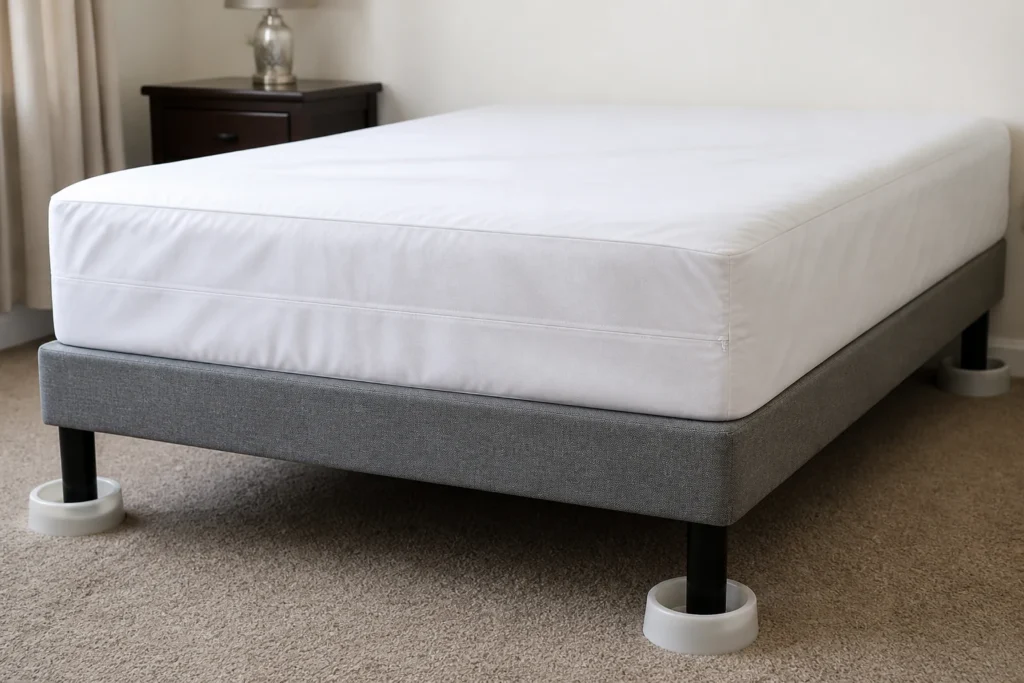
The aim during treatment is to limit contact while control and follow-up work continue. Avoid the old promise that a bed becomes an island bugs cannot reach. Discuss the sleeping arrangement and preparation plan with your provider, particularly where children, pets or medical concerns affect the household.

Identify the places that need attention
Follow infestation evidence and contact routes
Activity on or near the bed
Bugs may already be in the frame or nearby hiding sites.
Alternate access routes
Bedding touching the floor or adjacent furniture can bridge a monitoring setup.
Unprotected clean items
Clean textiles can be exposed again if stored with untreated belongings.
An incomplete treatment
Exposure management must accompany control of the infestation.
Methods ranked by their role
Use preparation, control and monitoring together
Coordinated control plan
Treat confirmed activity and arrange follow-up.
Bed setup and encasements
Maintain suitable devices and avoid alternate contact routes.
Clean-item containment
Keep treated laundry separate from suspect belongings.
Medical advice for symptoms
Seek appropriate care for concerning reactions; pest-control devices do not treat skin symptoms.
Step-by-step management plan
Check the encasement closure
Confirm the cover fits, the zipper is fully closed and no tear is present. Follow the product and provider instructions. A damaged or partly open cover cannot be assumed to contain bugs.

Check interceptor placement
Use devices suitable for the bed legs, follow their maintenance directions and keep bedding from touching the floor. Record findings rather than treating an empty cup as proof of absence.

Protect cleaned laundry
After suitable treatment, put clean items into closed clean storage until needed. Keep this storage distinct from suspect bags and avoid transferring contents back to an untreated container.

Reinspect accessible frame joints
Use a flashlight to record new evidence for your provider. Do not dismantle electrical fittings or apply room pesticides to skin. Continued activity calls for reassessment of treatment and preparation.

Sequence and follow-up
Check progress without a clearance promise
During preparation
Agree on the bed setup and safe household arrangements.
During treatment
Observe all application and reentry directions.
Between visits
Maintain covers, interceptors and clean-item separation.
At follow-up
Review new evidence with the provider; no device promises immediate freedom from bites.
Myths and facts
Keep protection claims within their limits
Myth: interceptors promise no bites tonight
Fact: they support monitoring and management but are not a guarantee.
Myth: mosquito repellent treats bed bugs on skin
Fact: EPA says no pesticides or repellents are registered for human-skin use against bed bugs.
Myth: skin marks prove continuing infestation
Fact: assessment should include insect evidence and medical evaluation when appropriate.
Myth: more frequent spray solves persistent bites
Fact: do not exceed label directions; reassess the infestation plan.
What to discuss with a provider
Ask how the pest was identified, which areas will be inspected and which items need preparation. Request written treatment and follow-up instructions that fit the household. Tell the provider about occupants, pets and material-care limitations before work begins. Report continuing evidence with dates and locations so the plan can be reassessed.
Related guides
Whole-home bed bug plan · Bed bugs on a mattress · In the house hub
Judge protection as part of a full treatment plan
Encasements, interceptors, laundry handling, and bed placement can reduce contact and improve monitoring, but none establishes eradication alone. Bite-like marks are also not enough to confirm bed bugs.
Track verified insects and trap findings rather than symptoms alone. Continued evidence, spread to another room, or treatment in multi-unit housing calls for coordinated professional assessment.
Bed bug bites while sleeping: confirm the pest before changing treatment
Itchy marks can create the impression that every night brings a new bite. Their appearance alone cannot identify bed bugs or establish exactly when contact occurred. Look for verified insect evidence and obtain medical advice for symptoms that persist, worsen or concern you. CDC explains bed bug reactions and identification limits.
Common bed bugs, Cimex lectularius, use hiding places near where people rest. A mattress is only one possible site. A provider should assess the frame, nearby furniture and surrounding spaces rather than conclude that a new mattress cover has dealt with the entire infestation.
Keep a record that separates symptoms from findings
Record the date and location of a verified bug, an interceptor finding or a newly observed sign. Keep a separate note about skin symptoms. This makes the follow-up discussion useful without pretending that a line of marks proves which piece of furniture needs pesticide.
A safely obtained insect photograph or identified specimen can help an assessor. Do not repeatedly apply spray in response to an uncertain mark. Follow the agreed treatment plan and report new evidence; treatment changes should be based on the actual situation.
Why bed bugs can still bite despite a mattress encasement
An encasement contains what it encloses and simplifies some inspection. It does not surround the bed frame, headboard, adjacent furniture or room. Check its fit, closure and condition, and tell the provider if it has torn or shifted. A bedding protector sold only for spills is not necessarily a bed bug encasement.
Include a box spring where the treatment plan calls for one. Follow the encasement’s directions and the provider’s advice about how long it stays in place. Removing a cover early to see whether the bugs are gone can defeat its purpose.
Interceptors need a suitable setup, not just a purchase
Check whether each device is compatible with the furniture leg and can support normal use safely. A cup beneath one leg does not account for the others. Follow the actual maintenance instructions, and do not add loose powder, oil or pesticide unless that precise use is authorized.
Inspect alternate bridges: a sheet touching the floor, a blanket draped across another chair or furniture pressed against the wall can bypass a leg-mounted device. Correct those conditions as part of the plan. An empty interceptor is still a limited observation, not proof that the room is clear.
Laundry and clutter: prevent clean items from being exposed again
Agree on the preparation sequence before moving belongings. Separate suspect items from cleaned ones, and label containers so that you know what has been treated. Avoid carrying loose textiles into another room merely to clear space around the bed.
For items that tolerate it, an appropriate clothes-dryer treatment is part of EPA’s nonchemical guidance. Read the care instructions and obtain advice about the treatment needed for that load; washing alone is not an automatic clearance step. Move treated items directly into clean, closed storage. EPA discusses laundry containment and prevention.
Prepare without throwing away everything
Ask which items can be treated and which require a different approach. Unnecessary disposal is expensive and can spread the problem if furniture is moved through shared areas or taken by another household. Do not offer an infested item for reuse as if it were merely unwanted.
Clutter reduction should improve inspection access, not redistribute suspect belongings. Maintain a clear distinction between a bag awaiting treatment and one containing clean clothes. If a preparation instruction conflicts with disability access, material care or household needs, ask the provider to adapt the plan.
What does not reliably stop bed bugs from biting you?
Room pesticides are not body repellents. Do not apply rubbing alcohol, insecticide or a homemade essential-oil mixture to your skin or bedding to create a nightly barrier. A product’s label must permit the actual surface and use; a treatment authorized elsewhere in the room is not permission to spray a pillow.
Do not use a thermostat, fireplace or improvised space heater as whole-room bed bug treatment. Professional heat work is a different process with equipment and control requirements. EPA describes treatment limitations and dangerous shortcuts.
Should I move to the sofa?
Discuss sleeping arrangements with the provider instead of moving untreated bedding to another room. Another resting place may need assessment, and the change can complicate monitoring. The appropriate arrangement depends on treatment, reentry requirements and the household’s needs; this guide does not promise that one room is safe.
When should continuing bites lead to reassessment?
Report verified activity, a failed cover, altered interceptor setup or spread to another location promptly. In multi-unit housing, involve the property manager so inspection can be coordinated. Ask how follow-up will distinguish missed activity from new introduction. Do not shorten a pesticide interval or increase its dose yourself.
Who treats the skin reaction?
A clinician or pharmacist can advise on symptom care appropriate for the person. Pest-control equipment does not treat an allergic reaction. Seek urgent medical care for severe symptoms rather than waiting for the next pest-control visit.
Publishing and affiliate notes
Some product links may be affiliate links. If you buy through them, we may earn a commission at no extra cost to you. Product picks are not lab tests. Read the legal disclaimer.