
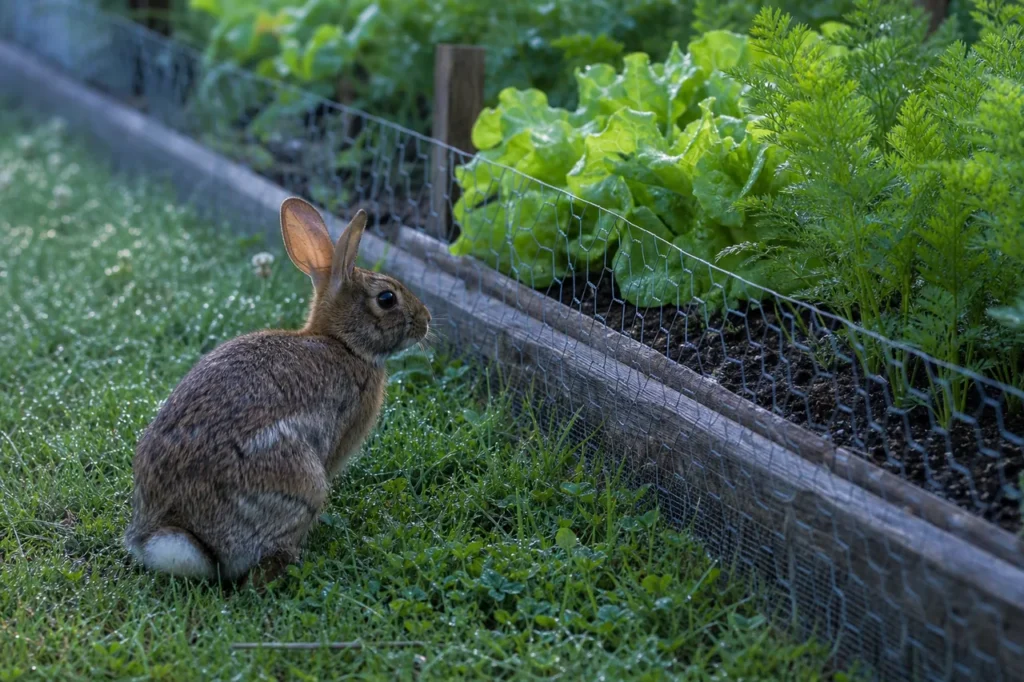
Clipped plants and bark injury can guide investigation, but damage can have other causes. Protect the area that matters instead of promising to remove every rabbit from the landscape. A fence can fail through a gate gap, uneven ground or an unsuitable mesh even when the rest appears sound.

Rabbit damage, fence gaps and tree guards
Inspect damage and barrier weak points
Damage evidence
Examine browsing and bark injury without assuming the cause.
Ground contact
Check uneven bottom gaps and soil conditions.
Gate opening
A loose latch can defeat an otherwise suitable fence.
Tree protection
Guards must fit without rubbing or constricting bark.
Ways to deter rabbits: barriers and repellent limits
Protect the plants with appropriate barriers
Identification
Confirm the damage source.
Suitable fence
Match height, mesh and bottom treatment to the site.
Individual guards
Protect vulnerable trunks without restricting growth.
Conditional repellent
Use only a suitable labeled crop and site treatment.
Garden fence and plant-guard inspection steps
Check the fence bottom
Measure accessible gaps and ask local extension about a suitable rabbit barrier for the terrain and species. A generic height or buried apron dimension is not guaranteed everywhere. Inspect corners and uneven ground as well.

Maintain the garden gate
Check that the latch closes securely and the bottom fits the surrounding barrier. Keep the gate usable for people and maintain the seal after ordinary garden work.

Inspect a roomy tree guard
Use an appropriate guard with clearance from the bark and account for growth, mulch and local snow conditions. Recheck for rubbing or constriction. A guard protects a specific plant; it does not clear the whole property of wildlife.

Compare plant damage
Inspect accessible leaves and shoots and obtain identification if uncertain. Record whether new damage continues after barrier repair. Do not approach or handle an animal visible beside the garden.

Sequence and reassessment
Protect the vulnerable area and maintain access
Confirm
Identify the damage source.
Protect
Fit a site-appropriate barrier or guard.
Inspect
Check gates, bottom gaps and tree clearance.
Reassess
Compare new damage and adjust the plan as needed.
Myths and facts
Avoid fence and repellent guarantees
Myth: one fence specification fits every garden
Fact: terrain, species and local conditions matter.
Myth: a closed gate needs no bottom check
Fact: openings can remain beneath it.
Myth: repellents are suitable for every edible crop
Fact: check the exact labeled use.
Myth: tree guards need no maintenance
Fact: recheck fit as the tree grows.
Match protection to the vulnerable plant
Young plants, low shoots, tree bark, and an entire vegetable bed do not need the same barrier. A fence that protects one bed can fail at the gate, lower edge, or an unprotected adjacent row.
Inspect new feeding and tracks, then reinforce the specific weak point. Maintain enough clearance around trunks and stems to avoid rubbing, girdling, or trapping wildlife.
Not rabbit damage? Hoofprints, torn leaves higher off the ground, and missing shoot tips point to deer. Use the deer garden barrier and repellent guide to choose the right fence or plant protection.
Confirm rabbit damage before changing the garden
Rabbits typically browse close to the ground and leave clean, angled cuts on tender stems. Small round droppings, tracks and bark gnawed from young woody plants strengthen the diagnosis. Deer often leave rougher torn ends higher up, while voles work near the soil line and may travel beneath snow or mulch.
Inspect at dawn or dusk from a distance, but don’t rely on seeing the animal. Map the beds, fence corners and lower branches with fresh damage. This prevents you from buying a rabbit solution for insects, deer or a plant-health problem.
Choose protection by plant and season
| Plant or area | Best first layer | Maintenance check |
|---|---|---|
| Vegetable bed | Fine-mesh fence or supported row cover appropriate to the crop | Close the gate and inspect the bottom edge after soil work |
| Young fruit or ornamental tree | Roomy hardware-cloth cylinder | Allow trunk growth and extend above expected snow depth |
| Individual transplant | Temporary cage or cloche with ventilation | Remove or enlarge it before growth is restricted |
| Large mixed border | Perimeter barrier plus protection for highest-value plants | Check corners, gates and buried or pinned edges |
A guard should stand away from bark rather than rubbing it. Make sure rabbits are not trapped inside before closing a perimeter. Check supports after storms, mowing and freeze-thaw movement.
Rabbit pressure changes through the year
Protect spring seedlings before the first bite establishes a feeding route. In summer, irrigation and dense cover can keep a bed attractive even when other food is available. During fall and winter, young bark, buds and low branches become more vulnerable; snow can raise the effective browsing height above a fence or trunk guard.
Seasonal inspection is more reliable than a one-time installation. Clear brush piles and dense hiding cover near the garden where practical, but avoid removing habitat or vegetation outside your property or where local rules protect it.
Repellents: when they help and why they fail
A commercial rabbit repellent can supplement a physical barrier on suitable ornamental plants. Check that the product label permits the plant, site and—in a food garden—the edible crop. Rain, irrigation and new growth can reduce coverage, so follow the stated reapplication instructions rather than a generic schedule.
Soap, coffee grounds, hair, urine products and strong kitchen mixtures do not provide dependable perimeter protection. Some can injure foliage, contaminate harvest areas or attract pets and other wildlife. Marigolds and “rabbit-resistant” plants may be browsed when pressure is high.
When a labeled treatment may fit
Use a registered repellent only for the role and plants named on its label. Do not apply mothballs, indoor pesticides or homemade pepper mixtures around edible beds. A repellent changes taste or odor; it does not remove shelter, close a fence gap or make every plant rabbit-proof.
Use row covers without creating a crop problem
A supported row cover can protect low seedlings while also moderating wind and light frost, but it must match the crop and season. Hold fabric above tender leaves, secure every edge against entry, and provide the ventilation recommended for the material. Remove or open it when pollination is required unless the crop is self-pollinating or you provide another suitable pollination plan.
Check beneath covers for heat stress, slugs, disease and trapped wildlife. A torn or loosely weighted edge becomes a doorway. Row cover is most useful as temporary plant protection while a durable perimeter or individual guard is repaired.
A seven-day rabbit-control reset
- Photograph fresh cuts and confirm the likely animal.
- Protect the most vulnerable seedlings or trunks immediately.
- Repair the bottom edge and gate of the main barrier.
- Remove nearby hiding cover you can manage safely and lawfully.
- Choose a label-permitted repellent only if exposed plants still need support.
- Recheck after rain, irrigation and garden work.
- Compare new damage with the original photographs.
Frequently asked questions about garden rabbits
How high should a rabbit fence be?
Use the specification recommended for the rabbits, snow conditions and materials in your area. The bottom edge matters as much as height: secure it against the ground or install it as local extension guidance recommends.
Do marigolds keep rabbits away?
No plant creates a dependable rabbit barrier. Use marigolds for their garden value, not as a substitute for fencing or individual guards.
Will coffee grounds or soap repel rabbits?
Evidence for lasting control is weak, and repeated household-material applications can affect soil, pets or edible areas. Spend that effort on the gate and lower fence edge.
When should I call a wildlife professional?
Get help when rabbits are entering beneath structures, local rules are unclear, trapping is being considered, or a large landscape cannot be protected safely with ordinary barriers. Ask for exclusion and habitat recommendations, not just removal.
Chicken wire, hardware cloth and the garden fence bottom
Wire openings matter as much as the fence’s overall height. Chicken wire is inexpensive and flexible; welded hardware cloth is easier to hold in a rigid cage. Either needs supports, secure joins and a lower edge that follows the soil rather than bridging over hollows.
Iowa State recommends mesh no larger than 1 inch and describes a 2-foot growing-season barrier, pinned tightly or shallowly buried. UC IPM gives a deeper buried-wire design and discusses taller barriers for jackrabbits or snow. These are regional design examples, not competing universal guarantees. Ask local extension which suits your animal and terrain.
Before digging, check for irrigation and buried services. A pinned edge can make a temporary vegetable garden easier to maintain, but inspect it after weeding or soil movement. Don’t leave sharp wire ends where children, pets or gardeners reach. Test the closed gate at its corners, not just beside the latch.
Rabbit-resistant plants are not a repellent fence
Choose plants for the site as well as browsing tolerance. Rabbits can eat marigold flowers; a ring of marigolds around lettuce is not dependable protection. Peas, beans and tender seedlings still need their own barrier when damage is recurring.
A less-preferred shrub can be useful in a mixed border, but regional feeding pressure changes the result. Keep a simple record of which plants are browsed and protect valuable replacements before planting. Don’t turn the entire bed into a trial of fragrant herbs while leaving vulnerable vegetable plants exposed.
Motion-activated sprinklers and scent deterrents
A sprinkler is a disturbance device, not exclusion. Consider available water, pathways, freezing weather and whether repeated visits continue. Owl ornaments and other stationary scare devices should not carry the job. Barriers provide a clearer physical boundary than an assumed fear response.
Commercial repellents containing putrescent egg solids or dried blood have a different evidence basis from a homemade cayenne pepper, garlic or soap spray. Check the exact repellent label rather than treating a kitchen ingredient as an interchangeable substitute. Concentrated odors are not proof of effective or safe crop protection.
What to do after rabbits gnaw tree bark
A guard prevents further feeding; it cannot repair bark already removed. Photograph the damage and ask an extension office or arborist to assess a valuable young tree. A continuous ring of bark loss can girdle it. Wound paint or wrapping is not a replacement for living bark.
Some damaged shrubs can regrow from their base, while a severely girdled tree needs a different decision. Assess the plant before replacing it and keep the new guard clear of the trunk. After snow accumulates, check the effective protection height again.
Publishing and affiliate notes
Some product links may be affiliate links. If you buy through them, we may earn a commission at no extra cost to you. Product picks are not lab tests. Read the legal disclaimer.