
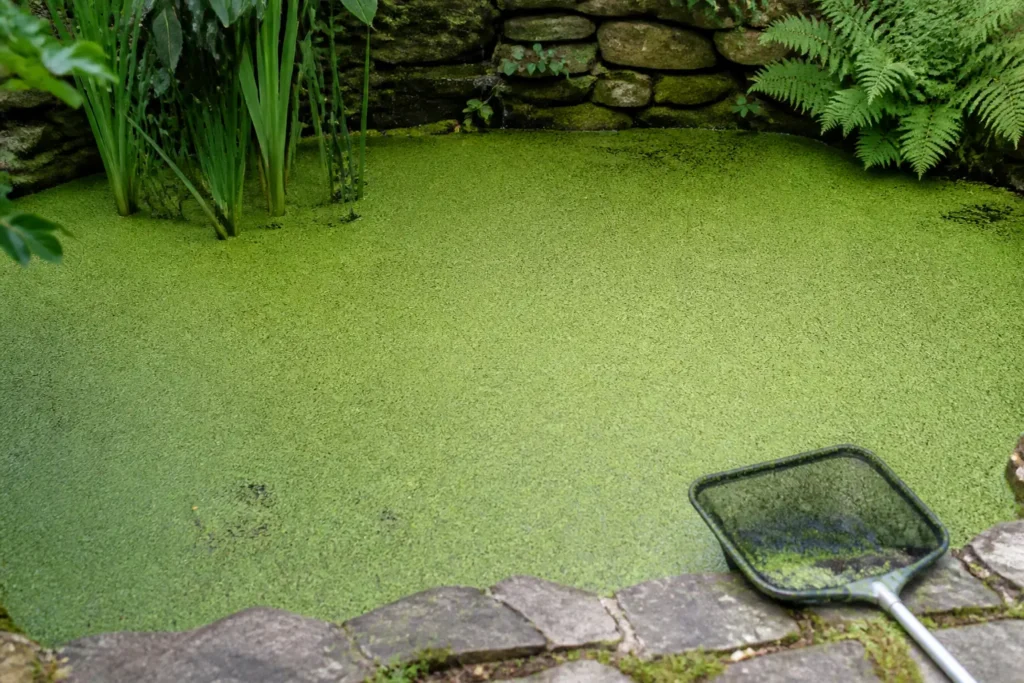
Floating plants can provide habitat and food, so some cover is not automatically a problem. Management depends on plant identity, pond use, extent of growth and nutrient sources. A garden pond and a wetland or connected waterway may have different permissions and ecological concerns.

Identification and conditions
Identify the source and conditions
Plant identity
Distinguish floating plants from algae.
Nutrient inputs
Check suitable runoff and fertilizer sources.
Extent of cover
Assess the actual ecological or use conflict.
Oxygen risk
Dense decay can threaten fish.
Methods ranked by their role
Choose management for the actual problem
Identification and assessment
Decide whether management is necessary.
Nutrient prevention
Address appropriate runoff sources.
Mechanical removal
Use feasible safe access and appropriate disposal.
Qualified aquatic management
Assess treatments and permissions for severe problems.
Inspection and prevention steps
Skim manageable floating growth safely
Use a suitable net from stable footing without overreaching. Check for wildlife and dispose of removed material appropriately; do not transfer it into another waterbody or assume all material is safe fertilizer.

Inspect the runoff edge
Assess fertilizer and nutrient pathways without disturbing occupied banks. Buffer design depends on the site; a universal ten-foot strip is not a guarantee of control.

Consult a qualified pond provider
Bring plant photographs and describe fish, water use, cover and any connections to other waters. Confirm local approvals and exact aquatic product restrictions before treatment.

Reassess partial removal and pond conditions
Mechanical removal may need repetition. Aeration can have a role in pond management but is not a guaranteed plant cure. Avoid a whole-pond treatment recipe that ignores decay and oxygen risks.

Sequence and reassessment
A sequence for ongoing management
Identify
Confirm the target and damage.
Prevent
Address the relevant access or growing conditions.
Manage
Use appropriate mechanical or label-permitted methods.
Monitor
Check recurrence and obtain local advice when needed.
Myths and facts
Correct common management assumptions
Myth: all surface cover is algae
Fact: identify the plant.
Myth: ripples permanently stop duckweed
Fact: address nutrients and suitable management.
Myth: ordinary weedkiller is suitable for ponds
Fact: aquatic uses need specific permission.
Myth: rapid total kill has no fish risk
Fact: decay can reduce dissolved oxygen.
Read the pond before removing more plants
Growth returning after skimming often signals that favorable nutrients and water conditions remain. It does not mean that every floating plant must be removed or that a stronger chemical treatment is automatically appropriate.
Track surface coverage, runoff, fish behavior, and water connections. Large ponds, connected waterways, recurring fish distress, or any proposed aquatic herbicide deserve advice from a qualified pond professional and the responsible local authority.
How to get rid of duckweed without killing fish
Start with plant identification and the pond’s condition. A surface covered in tiny floating growth can contain duckweed, watermeal, algae or a mixture. The appropriate response depends on what is present, how much cover exists, the pond’s use and what may be driving regrowth. The safest plan is not necessarily the fastest visible clearing.
Duckweed, watermeal or algae?
Duckweed commonly has small floating fronds with roots hanging beneath; watermeal is smaller and lacks those visible roots. At a distance, both can look like a green film. Collect an accessible sample only from stable ground and photograph it beside a size reference for identification. Do not wade into an uncertain pond to obtain a better picture. Purdue’s duckweed and watermeal guide illustrates the difference.
The common duckweed name covers several related plants, including Lemna species. Plant identity matters because an algae product is not automatically suitable for a floating flowering plant. If the growth does not match reliable photographs, ask extension or a pond professional before selecting an aquatic treatment.
Mechanical removal and regrowth: make a repeatable plan
Skim accessible surface growth with a suitable fine net or equipment appropriate to the pond. Work from a stable position and avoid overreaching. Small repeatable sessions can be more practical than trying to clear every corner in one unsafe attempt. Keep children away from the water edge and do not assume a shallow-looking margin is firm ground.
Why duckweed returns after netting
Removal does not necessarily change the conditions supporting growth. Material left in a sheltered corner can remain, and nutrients may continue arriving from runoff. Record where the plant accumulates after wind or rain so you can distinguish a new source from growth that shifted across the surface.
Take comparison photographs from the same safe point. The useful question is whether coverage and the actual pond conflict are improving, not whether one patch looked clear immediately after skimming. Ask for advice when removal repeatedly fails to keep pace or the growth is beyond safe reach.
Dispose of removed plants without spreading them
Keep collected growth away from drains and connected water where it can be carried back or spread. Follow local disposal advice, especially if the plant is invasive or came from a connected waterway. Do not move pond plants, fish or equipment to another pond as a shortcut to disposal.
Nutrient inputs, runoff and pond maintenance
Review what reaches the water: fertilizer runoff, eroding soil, excessive feed or other organic inputs. A visible plant problem can be a symptom of pond management rather than a shortage of herbicide. Inspect the surrounding catchment with the person responsible for it, not just the pond edge.
- After rain: note where runoff enters and whether disturbed soil is carried in.
- Near lawns: review fertilizer practices and prevent avoidable direct entry into water.
- Fish feeding: discuss quantities and uneaten feed with the pond adviser.
- Recurring growth: consider water testing and a longer-term management plan.
Vegetated buffers and appropriate catchment management can address inputs, but they need to fit the site. Do not dig, drain or redirect a connected waterway without the required advice and permissions. The Penn State pond-management resources explain why water quality and pond use belong in the assessment.
Dissolved oxygen: why rapid plant die-off can threaten fish
Dense plant growth and its decomposition can affect dissolved oxygen. Killing a large amount of vegetation at once can leave a pond looking clearer while decay increases oxygen demand. Fish survival is therefore a separate issue from visible surface clearance. Penn State warns about this risk in severe duckweed and watermeal infestations. Read the management cautions.
Does aeration remove duckweed?
Aeration is not a guaranteed duckweed-removal method. The equipment, depth and pond conditions influence its role. Ask a qualified adviser what the proposed system will accomplish, where it will operate and how its performance will be checked. Do not replace plant identification and nutrient management with an aerator purchase alone.
Fish gasping, unusual mortality or a sudden pond change deserves urgent qualified advice. Do not add chemicals while trying to diagnose distress. Keep notes on recent weather, feeding, plant removal and any treatment because the sequence can help identify the problem. Avoid handling electrical pond equipment or entering water to investigate a fault.
Aquatic herbicides and biological options
An ordinary lawn weed killer is not an aquatic herbicide. Any chemical option must be suitable for the plant, water body and intended use, with applicable permissions. Water connections, fish, irrigation and other uses can affect the decision. Ask a pond professional to calculate and explain a treatment plan rather than estimating the dose by surface appearance.
Check the label and local permissions before application
Read treatment area, rate, timing and water-use restrictions separately. Never increase the dose because a floating patch remains. Where substantial growth is present, staged management may be needed to reduce oxygen risks; the actual plan must follow the label and site assessment. Penn State discusses aquatic plant management.
Do not introduce fish, ducks or other animals as an automatic biological cure. Species suitability, stocking permissions and the effects on the pond must be assessed. “They eat plants” is not proof that they will manage this growth without creating another water-quality or ecological problem.
Frequently asked questions about duckweed control
Do I need to remove all floating plants?
Not necessarily. Some cover can provide habitat and serve pond functions. Identify the actual conflict and set a management goal with suitable advice. A decorative garden pond and a wetland do not have identical ecological or legal requirements.
Will vinegar or salt clear it safely?
Do not pour household mixtures into water. These are not a substitute for an assessed aquatic-management plan and may harm the habitat or interfere with water uses. Keep “natural” marketing separate from fish-safe, permitted use.
Why does growth collect in one corner?
Wind and water movement can concentrate floating plants. Check whether the patch moved rather than assuming all that growth appeared overnight. Include sheltered corners in the observation plan where they are safely accessible.
When should I hire a pond professional?
Get help for extensive or rapid regrowth, uncertain plant identity, fish distress, connected waters or any proposed aquatic herbicide. Ask for the diagnosis, oxygen-risk assessment and monitoring plan, not just a product name and a promised clearing date.
Publishing and affiliate notes
Some product links may be affiliate links. If you buy through them, we may earn a commission at no extra cost to you. Product picks are not lab tests. Read the legal disclaimer.