
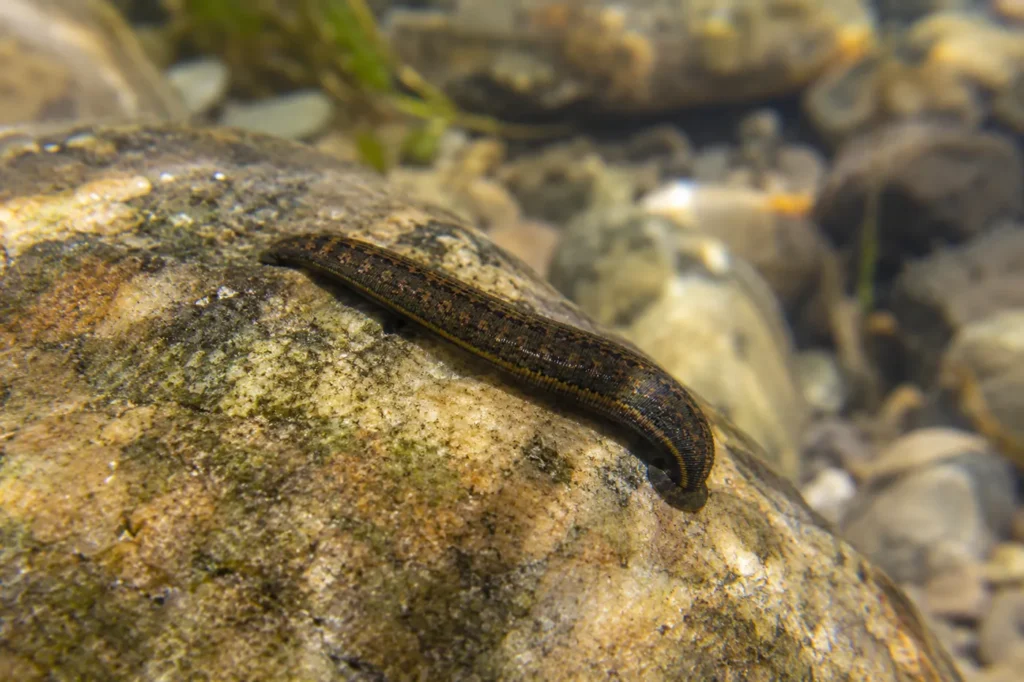
Leech species and habitats vary; not every wormlike animal is a leech and not every leech feeds on people. A recurring damp-area sighting needs identification and inspection. The response to an unattached animal differs from first aid for a bite.
Identification and conditions
Identify the conditions before choosing a response
Identification
Confirm the animal without handling it.
Ordinary dampness
Inspect leaks and drainage safely.
Equipment
Check wet outdoor gear before bringing it inside.
Entry defects
Inspect compatible door seals without blocking drainage.
Methods ranked by their role
Match each method to its purpose
Identification
Avoid treating a misidentified animal.
Moisture repairs
Correct suitable ordinary defects.
Equipment and entry prevention
Maintain dry storage and compatible seals.
Health guidance
Separate bites from environmental management.
Inspection and prevention steps
Inspect damp ground from a safe place
Document recurring sightings and ordinary water accumulation. Do not reach into concealed areas or assume every damp patch contains leeches. Qualified identification helps select a proportionate response.

Check accessible downspouts
Clear only manageable ordinary obstructions with safe tools and footing. Drainage design depends on the building and site; a fixed distance or gravel strip is not a universal cure.

Dry and inspect outdoor equipment
Clean and dry equipment according to its care directions before storage. Inspect visually without handling an unidentified animal. Do not spread disinfectant or pesticide mixtures as a leech repellent.

Maintain a compatible door seal
Repair suitable fitting defects while preserving drainage and operation. For an attached animal, obtain health guidance rather than using a household pest product or copying an improvised removal method.

Sequence and reassessment
Check, prevent and reassess
Identify
Confirm the concern and relevant conditions.
Prevent
Address suitable access or exposure conditions.
Respond
Follow specific product or health guidance.
Reassess
Seek suitable help when the concern persists.
Myths and facts
Avoid unsupported shortcuts
Myth: every wormlike animal is a leech
Fact: confirm identification.
Myth: a gravel strip guarantees exclusion
Fact: assess actual moisture and access.
Myth: pest spray is first aid
Fact: never apply household insecticide to a bite.
Myth: prolonged bleeding is always harmless
Fact: seek urgent care when bleeding persists or symptoms develop.
When moisture repair is not enough
A single animal carried inside on wet gear is different from repeated sightings near the same drain, door, or saturated area. Continued activity after drying and entry repairs can indicate a misidentification or a water problem outside the inspected area.
Keep a photograph and location record. Ask a local extension, museum, or pest professional to identify the animal before treatment; use medical care rather than pest products for any attached leech or persistent symptoms.
Why leeches appear near a house
Leeches are segmented worms in the subclass Hirudinea. Aquatic species live in freshwater; terrestrial species occur in persistently damp environments in some regions. A leech near a doorway usually points to wet ground, flooding, drainage movement, transported outdoor gear or nearby suitable habitat—not an indoor breeding infestation.
Record where and when they appear. Check for overflowing downspouts, leaking irrigation, blocked drains, saturated mulch, standing water and gear brought home from wetlands. Correct the moisture route without draining natural habitat or applying chemicals to water.
Habitat correction and barriers compared
| Action | Useful for | Limit |
|---|---|---|
| Repair leaks and redirect lawful drainage | Persistent damp ground beside the structure | Professional grading or plumbing may be needed |
| Clean compatible gutters and downspouts | Roof water overflowing near doors | Do not climb or work on unsafe roofs |
| Door sweep and screen maintenance | Reducing accidental indoor entry | Does not change outdoor habitat |
| Dry boots, mats and outdoor equipment | Preventing transport indoors | Inspect folds and storage bins |
| Salt, bleach or pesticide spread outdoors | Not a sound landscape treatment | Can damage soil, plants, water quality and other organisms |
Remove an attached leech safely
Guidance differs by jurisdiction, so follow local public-health advice. Do not burn an attached leech or tear it away forcefully. If practical, allow it to detach, or use the removal method recommended by your health service. After detachment, wash the bite with soap and clean water and apply firm pressure with clean gauze if it continues bleeding.
Leech saliva interferes with clotting, so oozing can continue after removal. Seek medical care for bleeding that will not stop, a bite in the eye, mouth or another sensitive site, marked swelling, dizziness, allergic symptoms, increasing redness or warmth, fever, or signs of infection. People taking anticoagulants or with a bleeding disorder should obtain prompt medical advice.
Protection near ponds, trails and wet gardens
Wear closed footwear, long trousers and gloves when working in wet vegetation, and inspect skin, socks, pets and equipment afterward. Keep children from handling leeches. Repellents intended for biting insects are not automatically labeled or proven for leeches; check the exact product and local guidance rather than improvising concentrated oils or chemicals.
When moisture repair is not enough
Ask a drainage, plumbing or landscape professional to investigate recurring saturation, sewage concerns, erosion or water entering the building. Contact local environmental or vector-control authorities before treating a pond, ditch, wetland or stormwater feature. Broad pesticide treatment is unlikely to correct the water problem and may affect non-target aquatic life.
Separate a house problem from a pond-management question
A few leeches in natural water do not justify draining or chemically treating the pond. Leeches are part of aquatic food webs, and many species do not feed on people. If swimming access is a concern, ask the local environmental or health authority about the specific water body, posted advisories and lawful maintenance.
For an ornamental pond, remove decaying debris only as the pond design and local guidance allow, maintain pumps and filters according to their instructions, and avoid introducing fish or chemicals as an improvised control. Introduced species can create a larger ecological problem.
Build a simple recurrence log
Record rainfall, irrigation, the exact sighting location and whether wet footwear or equipment had just entered the home. Photograph the specimen without handling it. After drainage or door repairs, compare sightings across similar wet periods. This helps distinguish a corrected entry route from a regional seasonal event.
If the organisms are repeatedly found in plumbing fixtures, obtain proper identification and have the plumbing route assessed. Do not pour salt, bleach or pesticide into drains.
Frequently asked questions about leeches
Can leeches live permanently inside a dry house?
A dry living space is generally unsuitable. Repeated entry suggests a moisture route or transport on wet gear that should be investigated.
Should I pour salt around doors?
No. Repeated salt application can injure plants and soil and does not repair drainage or door gaps.
Why does a leech bite keep bleeding?
Leech saliva contains anticoagulant substances. Apply clean pressure and seek care if bleeding persists or you have a relevant medical condition.
Who should investigate a recurring problem?
Start with drainage or plumbing assessment. Use environmental authorities for natural-water concerns and medical professionals for bite complications.
Publishing and affiliate notes
Some product links may be affiliate links. If you buy through them, we may earn a commission at no extra cost to you. Product picks are not lab tests. Read the legal disclaimer.