
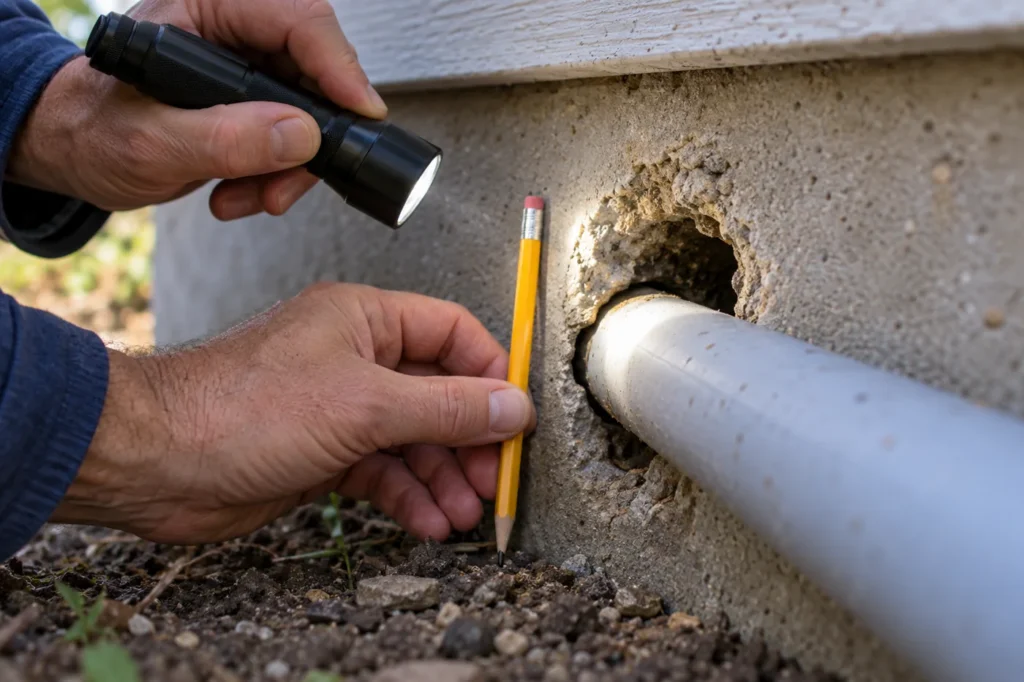
Cooler nights push mice toward warm buildings, so autumn is a practical window for exclusion—not a universal September deadline. Walk the perimeter, measure real gaps, and repair doors, vents, and pipe penetrations before you find droppings indoors. Pair sealing with food storage and, if activity is already inside, humane monitoring and trapping.
Mouse entry points, nesting material and food sources
Inspect the route, resources and signs
A small opening
Inspect doors, vent edges and utility openings. CDC gap-size guidance
Food or waste
Stored food, animal feed and unsealed garbage can support activity.
A concealed route
Look at accessible cabinets, basement edges and attached garages; leave unsafe or inaccessible spaces to a professional.
Activity already indoors
Fresh signs call for control and safe cleanup as well as exclusion. CDC
Mouse-proofing methods and rodent control priorities
Choose the right role for each method
Exclusion repairs
First prevention priority: suitable durable materials matched to the opening. CDC
Food and waste storage
Reduce accessible resources with tight-lidded hard containers.
Snap traps for existing activity
Use the right trap and its instructions; keep it inaccessible to children and pets. CDC
Rodenticides
Conditional on a persistent problem and the exact product directions; assess exposure risks and seek qualified help when needed. EPA
Pipe gaps, garage doors and vent inspection steps
Inspect accessible pipe gaps
Look around utility penetrations without touching gas, electrical or hot equipment. Use an actual measurement rather than pushing a coin into a gap. Record the location and suitable repair material.

Maintain vent protection and airflow
Inspect a vent frame and its existing screen. A barrier must be durable and compatible with the required airflow, drainage and equipment clearance; do not plug a working vent with foam.

Check doors and garage seals
Look for damage along the bottom and corners. After repair, confirm that the door closes and latches normally. A new sweep does not replace the rest of the perimeter inspection.

Secure food, feed and waste
Use hard containers with tight lids for dry food and animal feed. Remove spills, keep waste covered and clear accessible clutter that makes signs difficult to inspect.

When to reassess
Follow repairs and fresh signs
Before seasonal maintenance
Inspect and record accessible defects; do not wait for a fixed national deadline.
During the repair
Match the barrier to the opening and preserve required building functions.
After repair
Check door operation, repaired joints and any ongoing indoor signs.
During monitoring
Check traps daily if used and re-inspect new signs. A week without captures and new signs is CDC’s monitoring benchmark, not a guarantee against future entry.
Myths and facts
Keep prevention and proof separate
Myth: if a dime edge fits, a mouse fits
Fact: coin thickness and mouse-sized opening width are different measurements.
Myth: bare foam is a complete durable barrier
Fact: match the opening to appropriate metal, screening, cement or other suitable repairs. CDC
Myth: September is the deadline everywhere
Fact: season and local conditions vary; inspection is useful whenever activity or damage appears.
Myth: sealing makes indoor monitoring unnecessary
Fact: mice may already be inside, and missed or new defects can remain.
Use rodent-resistant materials, not steel wool alone
Steel wool is often suggested for mouse-proofing, but loose fibers can rust, shift or be pulled aside. Use a durable repair suited to the opening and building material, such as corrosion-resistant metal mesh combined with an appropriate sealant or solid patch. Do not block required vent airflow, drainage or utility access. CDC recommends sealing holes and checking common entry points.
Autumn inspection is useful because mice seek protected sites as outdoor conditions change, but proofing is not a one-day seasonal task. Recheck repaired gaps, door sweeps and food storage after weather changes and whenever fresh droppings or gnawing appear.
When to call a professional
Get help for repeated activity despite appropriate control, inaccessible routes, damaged utility areas or heavy contamination. If you become ill after rodent exposure, tell a healthcare provider about that exposure. CDC.
Confirm whether the signs point to mice or rats
Small droppings, shredded nesting material, gnaw marks and light scratching do not all point to the same animal. House mice (Mus musculus) commonly use kitchens, garages, wall voids and attics. Deer mice may enter cabins, sheds and vehicles, while rats leave larger signs and need different trap sizes and route assessments. Do not handle an animal or dry debris to identify it. Photograph the signs and use location, scale and repeated activity together.
If you cannot distinguish mouse activity from rat, squirrel or bat activity, get an identification before buying hardware or placing traps. A repair designed for the wrong route can leave the real opening untouched. This matters around rooflines and attics, where several animals may use different gaps and where exclusion timing may be regulated for wildlife.
Run a fall envelope inspection from the ground up
Foundation and utility penetrations
Walk the exterior in daylight with a flashlight and notes. Check where water, gas, electricity, cable and air-conditioning lines enter; the joint between foundation and siding; damaged masonry; crawlspace access; and gaps beneath steps or additions. Compare the outside location with signs indoors. Do not seal a ventilation opening or work near live electrical equipment.
Doors, garage and attached storage
Close each exterior door and inspect the threshold, bottom corners and weather stripping. Daylight at a garage-door corner deserves attention because garages often contain seed, pet food and stored nesting material. Choose a fitted door sweep or seal made for that door instead of packing a moving joint with loose material. Recheck the fit after temperature changes and ordinary wear.
Vents, roofline and upper openings
Inspect accessible attic, soffit, gable, crawlspace and dryer-vent covers for damaged screening or flaps. Preserve required airflow and appliance clearances. Never reduce a dryer exhaust opening with improvised mesh that can collect lint. Use the correct replacement cover or ask a qualified contractor to repair an elevated or unfamiliar assembly.
Match the repair material to the opening
Small stationary gaps may accept a compatible seal reinforced with a corrosion-resistant barrier. Larger holes often need hardware cloth, sheet metal, mortar or another structural repair appropriate to the surface. Steel wool by itself can loosen, rust or be pulled away. Expanding foam alone is easy to gnaw and should not be treated as a durable mouse barrier. The finished repair should resist movement without trapping moisture or damaging a pipe or cable.
The familiar pencil-width check is a practical inspection prompt, not permission to fill every joint identically. CDC’s rodent exclusion guidance recommends checking small gaps and using materials suited to small and large openings. When the building envelope is complex, ask for photographs of every proposed repair and confirmation that vents, drainage and fire-safety functions remain intact.
Seal and trap in the right sequence
If there are no indoor signs, complete the envelope repairs before cold weather drives more activity inside. If mice are already present, combine exclusion with protected snap trapping so an animal is not simply confined in a wall or room. Place mouse-size traps along confirmed travel edges and keep them inaccessible to children, pets and wildlife. Follow the device directions; do not improvise exposed trap boxes.
Keep a simple log of locations, catches, fresh droppings and repaired openings. If activity shifts after a repair, inspect the adjacent route rather than scattering traps throughout open rooms. Rodenticide is not a substitute for exclusion. If it is considered after other measures, the current EPA label and tamper-resistant station requirements control where and how it may be used.
Prepare food, storage and the landscape for winter
Move bird seed, grass seed, pet food and dry pantry goods into hard-sided containers with tight lids. Clean spills beneath shelving and feeding areas, close rubbish and compost containers and avoid leaving pet food overnight. Reduce dense cover beside the foundation and relocate manageable firewood or stored material so the wall can be inspected. These steps do not repel mice by smell; they remove the resources that reward repeated entry.
Verify the work through the heating season
After repairs, watch for fresh droppings, new gnawing, trap activity and renewed sounds rather than assuming one quiet night means success. Reinspect door sweeps and exterior seals after storms, freezing weather or utility work. Clean rodent waste using the current CDC wet-cleanup procedure—never by dry sweeping or vacuuming. Persistent signs, a heavy contaminated area, inaccessible HVAC activity or unsafe structural work justify professional help.
Frequently asked questions
How small an opening should I inspect?
CDC describes mice using a pencil-width opening of about 1/4 inch or 6 mm. Actual measurement and a suitable repair are more useful than a coin-edge test.
Will sealing instantly remove mice already inside?
No. Monitor and address existing activity alongside prevention.
Do I need a pesticide?
Not for every situation. Ask what remains unresolved after prevention and appropriate trapping, and follow the exact directions for any pesticide product.
What makes a repair durable?
Suitable materials, installation and maintenance matter. Inspect after damage or building work and ask a qualified contractor about unfamiliar openings.
Related guides
Get rid of mice humanely (exclusion and monitoring) · Rat identification and control · Repellent evidence database
Mouse-proof storage areas without hiding fresh signs
A high shelf is not a rodent barrier: house mice climb. Move edible supplies into intact hard-sided containers, then arrange shelving so you can inspect the wall and floor behind it. Check cardboard boxes before bringing seasonal decorations into the house. Shredded packing material or gnawed corners deserve investigation, not another storage box over the top.
UC IPM describes how shelter and food support house mice. Decluttering makes an inspection easier, but cleanliness alone cannot clear a mouse infestation. Photograph suspicious nesting material before disturbing it and follow the wet-cleanup precautions above.
Can peppermint or ultrasonic devices keep mice away?
Don’t use peppermint-soaked cotton balls or electronic repellers as proof that an opening is protected. UC IPM finds high-frequency electronic devices ineffective. A mouse-proof repair must physically close the route; a smell does not change a gap around a pipe.
If droppings continue after repairs, compare their locations with your repair log. New signs can indicate a missed route, a failed seal or mice already inside. Adding another scent product does not distinguish those possibilities. Keep the existing rodent control and monitoring plan under review.
Mouse-proofing apartments, rentals and attached garages
In a rental, send the owner dated photographs of accessible gaps, damaged weatherstripping and repeated signs. Ask who will inspect shared service chases and adjacent units. Don’t dismantle a wall, alter a fire-rated door or seal a communal utility opening without the responsible building manager and an appropriate contractor.
An attached garage needs its own inspection even when the door into the kitchen fits tightly. Check the exterior garage doors, stored bird seed and service penetrations. In a detached shed, keep feed secure and assess its envelope too; sealing the house does not automatically protect every outbuilding.
What to ask a professional pest control service
Request an itemized scope separating inspection, exclusion repairs, indoor control and cleanup. Ask for before-and-after photographs, access limitations and the maintenance conditions of any warranty. A bait-only visit is not the same job as repairing the building envelope. Compare the proposed work, not an unsupported promise of permanent freedom from mice.
Publishing and affiliate notes
Some product links may be affiliate links. If you buy through them, we may earn a commission at no extra cost to you. Product picks are not lab tests. Read the legal disclaimer.