
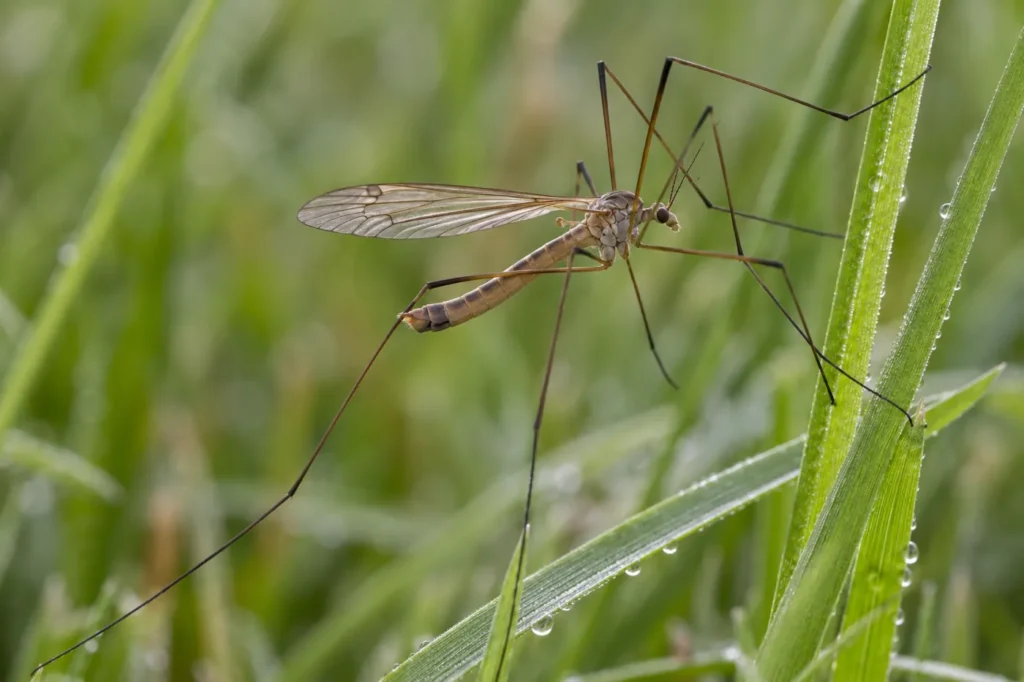
Only some crane-fly species are important turf pests. Poor drainage, disease, other insects or ordinary lawn stress can also cause patches. Inspect evidence in damaged and healthier turf before connecting flying adults with every bare spot.
Identification and conditions
Distinguish the fly from the turf problem
Adult identification
Crane flies differ from biting mosquitoes.
Larval evidence
Inspect the cause of damage rather than infer it from adults.
Turf condition
Moisture, drainage and other stress can affect grass.
Local context
Species, region and lawn condition shape treatment decisions.
Methods ranked by their role
Diagnose before choosing a lawn treatment
Identify and inspect
Compare damaged and healthier areas.
Maintain suitable irrigation
Correct the watering problem actually found.
Use local thresholds
Obtain region- and turf-specific guidance.
Conditional treatment
Choose a suitable labeled or qualified method only when justified.
Inspection and prevention steps
Inspect a small turf sample
Follow appropriate local sampling guidance and identify any larvae found. Replace manageable turf after inspection. Do not equate every soil larva with crane flies or use 25 per square foot as a universal action threshold.

Check irrigation suitability
Inspect ordinary accessible sprinkler function and watering patterns. Adjust according to the turf and local conditions. Both unnecessary wetting and unsuitable drying can harm lawns; a fixed “dry it out” rule does not fit every site.

Compare the damaged patch
Check nearby grass and record when damage developed. Ask local extension for diagnosis if the cause is uncertain. Photos alone may not establish whether insects, disease or moisture caused the patch.

Maintain the window screen
Repair a removable screen on a table to reduce accidental indoor entry. This household barrier is separate from turf treatment. Flying adults at a porch do not establish a need to spray the lawn.

Sequence and reassessment
Connect treatment to diagnosis and local timing
Identify
Distinguish the adult and inspect turf evidence.
Assess
Use local guidance for larvae, damage and thresholds.
Maintain or treat
Choose the justified turf-specific response.
Recheck
Compare grass recovery and activity without a universal deadline.
Myths and facts
Avoid mosquito and lawn-treatment myths
Myth: crane flies eat mosquitoes
Fact: the nickname is not a control function.
Myth: adults prove lawn infestation
Fact: diagnose the cause of damage.
Myth: one larval count applies everywhere
Fact: use local species and turf guidance.
Myth: every lawn needs late-summer nematodes
Fact: establish need and method suitability first.
Adult flies do not prove damaging larvae
Crane-fly adults around lights may be conspicuous even when turf treatment is unnecessary. Thin or brown grass can also reflect irrigation, disease, compaction, or other insects.
Inspect a suitable small turf sample and use local thresholds and seasonal guidance. Correct irrigation and turf stress first; treat only when the diagnosis and product label support it.
How to get rid of crane flies: separate the house from the lawn
An adult crane fly on the wall and damaged turf outside are two different problems. For an occasional indoor visitor, repair the entry route and avoid unnecessary spraying. For a lawn concern, establish whether damaging larvae are present before buying treatment. Seeing many adults does not answer that question.
Write down what you want to improve: fewer flies entering when a door opens, or healthier grass in a particular patch. That keeps household exclusion from becoming an unnecessary whole-lawn pesticide program. The first job is usually simpler than the second.
Crane fly, mosquito hawk or daddy longlegs?
Crane flies resemble large mosquitoes, with slender bodies and long legs, but they do not bite people. “Mosquito hawk” is a misleading nickname: crane flies do not provide mosquito control. “Daddy longlegs” is also used for unrelated animals, so it is not a reliable identification by itself. UC IPM explains the common-name confusion.
Do not identify an insect solely by how large it looks in a photograph. Include the location and a clear view of the body and wings when asking extension for help. If actual bites are occurring, investigate biting insects separately instead of assuming the most conspicuous fly is responsible.
Crane fly larvae and the lawn life cycle
Larvae are often called leatherjackets. Some species, including the European crane fly Tipula paludosa, can damage turf, while many other crane flies are not a lawn-control concern. Adult emergence and larval feeding are different stages; treating the flying adults is not equivalent to managing the larvae in soil.
Why a brown patch needs diagnosis
Watering faults, shade, disease and other pests can weaken turf. Compare the affected patch with nearby healthier grass and record when the decline appeared. You need a cause that fits the evidence, not just an insect that happens to be present. UC IPM notes that significant leatherjacket damage is geographically limited in California. Use UC IPM’s lawn-insect diagnosis resource.
Take a suitable sample only where access and tools are safe. Follow local advice on sample area and depth, identify what you find and replace the manageable turf afterward. A raw count without a known sample area is difficult to interpret. Several unidentified larvae are not grounds for choosing a crane-fly insecticide.
Why there is no universal treatment threshold
The species, region, turf condition and stage of the season change the decision. An established vigorous lawn may tolerate activity that a stressed lawn cannot. Ask local extension how to interpret the sample, rather than copying a count from a different climate. Keep the diagnosis with your lawn-care notes so it informs the next year’s inspection.
Prevent indoor crane-fly nuisance without a repellent recipe
Inspect screens and how doors are used around lights. Repair torn mesh and gaps where a screen fits poorly. During noticeable adult activity, avoid leaving an unscreened opening beside a brightly lit room. A practical barrier is more useful than hoping a cotton ball soaked in oil will discourage every visitor.
- Window: check both mesh and frame fit.
- Door: keep normal operation intact after a seal repair.
- Porch: review whether an open doorway makes accidental entry easy.
- Indoor visitor: avoid spraying food or belongings for one harmless fly.
Skin repellents are not a necessary response to a nonbiting crane fly in the room. Do not copy mosquito-prevention advice merely because the insect looks similar. Essential oils and fragrant plants do not establish that the lawn contains damaging larvae, and their use should not distract from an obvious screen defect.
Lawn maintenance, nematodes and insecticides
Correct irrigation and drainage without stressing the grass
Start with the watering fault actually found. A leaking sprinkler and a lawn that is drying out call for different corrections. Avoid over-irrigation, but do not withhold all water as a blanket pest treatment. Inspect drainage and choose grass care suited to your site. Oregon State Extension emphasizes vigorous turf in well-drained soil as the starting point. Read OSU’s crane-fly management guide.
Review thatch and mowing with the same care: improve conditions that support healthy grass rather than undertaking aggressive renovation solely because adult flies appeared. If a patch has several stresses, address those alongside any justified insect treatment. A pesticide cannot correct a failed irrigation head.
Are beneficial nematodes a reliable natural option?
Ask which nematode species, target larval stage and application conditions are appropriate. Living biological products depend on storage, handling and soil conditions. Do not buy an unspecified “beneficial nematode” mixture and assume it covers every lawn pest. Follow the supplier’s directions and region-specific evidence; a general claim of natural control is not enough to choose a treatment.
When does a labeled insecticide fit?
Consider it only after diagnosis and a justified treatment decision. Check that the pest and turf use are listed, and follow timing, rate and re-entry restrictions. Do not spray flying adults repeatedly to compensate for uncertainty about larvae. The regional UC IPM turfgrass guidance is a useful example of why local species and timing matter, not a universal schedule for every home.
Frequently asked questions about leatherjackets and crane flies
Do crane flies eat mosquitoes?
No. Do not buy or preserve them as a mosquito-control method. If mosquitoes are entering your house, inspect screens and water-holding sources and use the separate mosquito guidance.
Will they harm children or pets indoors?
Crane flies do not bite or sting people. The presence of one does not justify applying pesticide to surfaces a child or pet contacts. Keep insect identification and chemical-exposure decisions separate.
Can the lawn recover without treatment?
It may, especially when damage is limited and suitable grass care corrects the underlying stress. Compare recovery and ongoing damage with local advice. Do not assume every larva must be removed before the lawn can improve.
When should I ask a lawn professional for help?
Get help when damage is extensive, diagnosis remains unclear or sampling and treatment cannot be done safely. Ask for the identified pest, sampling basis and reason for treatment. A proposal based only on adult flies around a porch needs further explanation.
Publishing and affiliate notes
Some product links may be affiliate links. If you buy through them, we may earn a commission at no extra cost to you. Product picks are not lab tests. Read the legal disclaimer.