
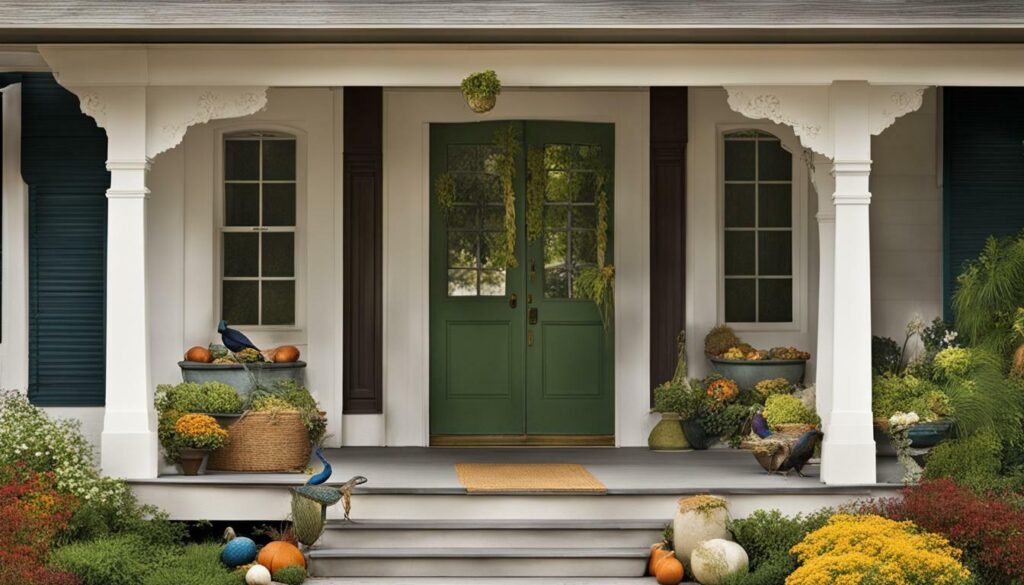
Many common lizards feed on insects and can be useful garden residents. Species and local protections vary, so outdoor sightings alone do not establish a need for removal. A lizard indoors, an injured animal or uncertain identification deserves appropriate local advice rather than rough handling.

Identification and conditions
Inspect entry and shelter rather than treat the animal
Outdoor visitation
A garden sighting does not establish damage.
Door gap
Ordinary fitting defects can allow accidental entry.
Screen condition
Inspect suitable window and vent barriers.
Stored material
Orderly accessible storage improves inspection.
Methods ranked by their role
Use nonchemical household prevention
Leave beneficial visitors
Avoid unnecessary interference outdoors.
Repair appropriate seals
Maintain compatible doors and screen frames.
Organize storage
Reduce inaccessible porch clutter without disturbing occupants.
Qualified indoor help
Seek suitable advice for trapped, injured or uncertain animals.
Inspection and prevention steps
Inspect a porch door sweep
Check ordinary fitting defects while no animal occupies the gap. Use a compatible seal without blocking drainage or egress. A nominal gap size is not a universal guarantee for every lizard species.

Repair a removable screen
Work on a stable table and reinstall the screen appropriately. Preserve required ventilation. Repair protects indoor access rather than removing outdoor wildlife from the garden.

Organize porch storage
Inspect visually and move only manageable unoccupied items. Do not reach into concealed shelter or scatter an animal with chemicals. Leave occupied or uncertain spaces undisturbed and seek advice if they create a conflict.

Observe a garden wall from a distance
Use the opportunity for identification without capture. Do not approach, feed or grab a lizard. An outdoor visitor ordinarily calls for coexistence, while an indoor trapped animal may need suitable local assistance.

Sequence and reassessment
Maintain entry barriers and leave outdoor wildlife alone
Observe
Distinguish a visitor from an indoor conflict.
Repair
Maintain compatible seals and screens.
Organize
Improve safe accessible storage.
Consult
Seek advice for trapped or uncertain animals without a fixed departure promise.
Myths and facts
Avoid lizard-capture and lighting guarantees
Myth: cold water makes capture harmless
Fact: avoid spraying or rough handling.
Myth: a bulb change clears lizards within days
Fact: it does not establish lasting exclusion.
Myth: every garden lizard needs removal
Fact: many provide insect predation.
Myth: sticky traps only catch the intended pest
Fact: avoid harmful nonspecific traps around wildlife.
Why chemical lizard repellents are not recommended
A porch lizard is wildlife, not an insect infestation. Spraying the animal or surrounding surfaces will not repair the door gap, torn screen or sheltered storage that brought it close to your home.
Avoid these products around porch lizards
- Mothballs: these pesticides are commonly labelled for fabric pests inside tightly closed containers, not for scattering on a porch or repelling wildlife.
- Bleach or ammonia: the fumes and residues create unnecessary exposure without providing a lasting entry barrier.
- Homemade essential-oil sprays: concentration and surface safety are uncertain, and a strong smell does not establish reliable exclusion.
- General insect sprays: use them only for a pest and application site allowed by the complete product label.
When insect treatment may be appropriate
If an inspection confirms a separate insect infestation, use an appropriate labelled treatment or qualified pest service for that insect. Reducing prey may indirectly reduce lizard visits, but it is not direct lizard control.
The practical fix: intact screens, a properly fitted door sweep, compatible gap repair and orderly storage address the access route without exposing people, pets or wildlife to an unnecessary chemical.
Keep indoor exclusion separate from outdoor habitat
A lizard outdoors on a wall or porch is not automatically a household infestation. Repeated indoor entry usually calls for screen, door-sweep, and gap maintenance rather than chemical repellents.
Record the entry location and repair compatible defects while preserving drainage and ventilation. If a lizard is trapped, injured, or potentially protected, use local wildlife guidance instead of glue traps or improvised chemicals.
Lizard on the porch or lizard entering the house?
A lizard basking on an exterior wall is not the same situation as repeated entry through the porch door. Describe the actual conflict before choosing a fix. If the animal stays outdoors and creates no problem, ordinary observation is usually more appropriate than an attempt to remove every reptile from the yard.
Geckos, fence lizards and other species have different behavior and local status. A common name, size or color cannot establish that every species is harmless or that the same relocation advice applies everywhere. If identification is uncertain, use a safe photograph and local wildlife guidance without approaching or handling the animal.
What do lizards eat, and does insect control change visits?
Many common lizards eat insects and other small invertebrates. That can make them useful outdoor residents. A separate insect problem should be identified on its own merits; eliminating every insect around the porch is neither a realistic goal nor a necessary lizard-prevention plan. UC IPM discusses lizards, their benefits and building entry.
If confirmed insect activity needs management, address its source and use appropriate pest guidance. Do not treat a general insecticide as a direct lizard repellent or infer that a lower insect count will force outdoor lizards to leave on a schedule.
Porch inspection: follow the actual indoor entry route
Record where the animal was last seen and which door or window was open. Inspect ordinary defects in daylight when the area is unoccupied: worn lower seals, loose screen frames and suitable stationary joints. A photograph of a visible gap is more useful for a repair request than a general statement that the porch attracts lizards.
A fitted door sweep addresses the bottom edge, not every jamb corner or adjoining opening. Check normal door operation after repair and keep drainage and emergency egress functional. A screened porch likewise needs sound frames and a working entrance, not simply a piece of new mesh.
Storage should be inspectable, not stripped of every outdoor habitat
Keep manageable porch belongings orderly so that you can see the accessible floor and door edges. Do not reach behind an occupied stack or dismantle a wildlife shelter to prove it is clear. Ask for help where the area is hidden, heavy or difficult to access.
Separate the household threshold from the garden. Organizing shoes and boxes beside the door does not require clearing every rock or shrub outside. The goal is reducing accidental indoor entry and unwanted encounters while retaining ordinary outdoor habitat.
Lighting and scent claims: make practical changes without promises
If porch lights stay on unnecessarily, review timers, shielding and the lighting needed for safe access. A light change may alter local insect activity, but it does not close a gap or certify that lizards will stop visiting. Keep paths safely lit rather than making the porch dark solely to discourage wildlife.
There is no need to keep rotating garlic, eggshells, pepper or essential-oil recipes while a screen remains torn. A scent’s strength is not evidence of lasting exclusion. Avoid products used off label and household mixtures that expose people, pets or wildlife.
What if a lizard gets trapped indoors?
Keep children and pets away and avoid chasing it behind appliances or into another room. Seek local guidance appropriate to the species and situation, especially for an injured or unfamiliar animal. Do not grab the tail, dismantle electrical equipment or use a glue trap to resolve the encounter.
After the immediate situation is resolved, review the observed route and suitable repairs. Repeated indoor sightings deserve better assessment; they do not justify a progressively stronger homemade spray.
Porch-lizard questions
Does Irish Spring soap keep lizards away from a porch?
Don’t depend on a bar of soap to keep lizards away. The extension guidance used for this article supports keeping lizards out through door and screen repairs; it does not establish Irish Spring soap as a reliable lizard repellent. A scented bar cannot close an entry point, and a lizard walking past it does not tell you whether your door seal works.
Which smell keeps lizards away?
There is no dependable scent recommendation in the sources reviewed here for keeping a porch free of lizards. Garlic, pepper and essential-oil suggestions are not substitutes for exclusion. Before buying a spray, check whether its label actually covers the animal and the place you intend to use it. Don’t spray the animal or experiment with mixtures around children, pets or doorways.
Can I get rid of porch lizards permanently?
You can reduce repeated entry into your house, but you cannot promise that an outdoor porch will stay lizard-free. Treat those as different goals. Recheck door corners, screen edges and the threshold after a repair, and keep stored items easy to inspect. If indoor sightings continue, find the remaining route rather than switching to a stronger-smelling repellent.
Do droppings prove a lizard infestation?
Droppings alone do not reliably identify an animal or establish the number present. Obtain identification help if uncertain and avoid handling waste bare-handed. Reptile contact environments warrant hygiene precautions; keep cleaning equipment away from food-preparation areas. CDC explains reptile-related hygiene.
Can my cat deal with the lizard?
Do not use a pet as a wildlife-control method. Keep the animals separated and consult a veterinarian after a concerning encounter. Preventing a contact is preferable to relying on chasing, biting or a tail injury to remove the visitor.
How will I know whether the repairs helped?
Compare indoor sightings at the same entry area and inspect the repair’s condition. An outdoor lizard remaining on a garden wall is not proof that a door repair failed. Document a new defect or repeated indoor route and arrange further assessment without promising a completely lizard-free property.
Publishing and affiliate notes
Some product links may be affiliate links. If you buy through them, we may earn a commission at no extra cost to you. Product picks are not lab tests. Read the legal disclaimer.