
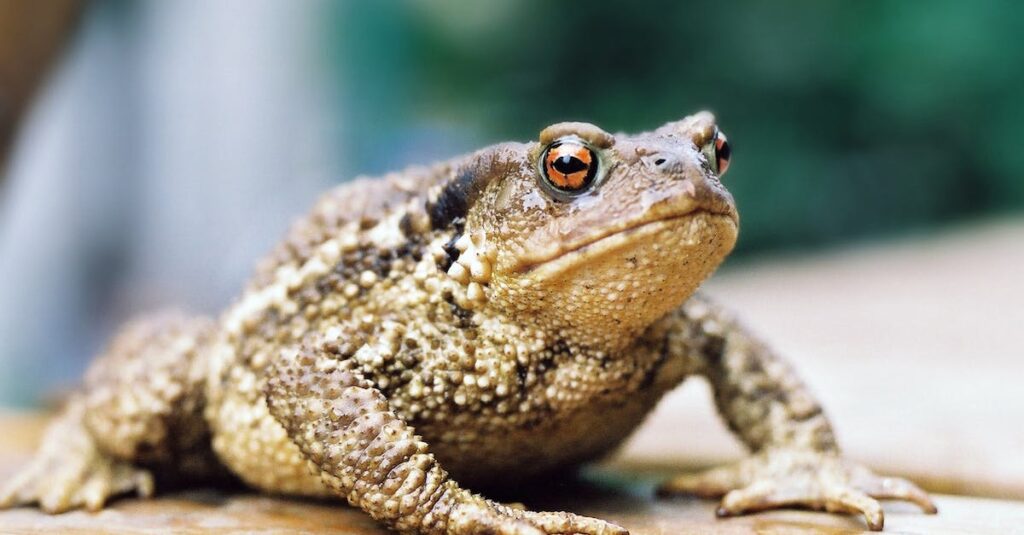
Frogs and other amphibians can be beneficial residents, and local species or invasive-status rules affect appropriate intervention. An animal near a pond is different from one trapped indoors. Seek relevant local help for a trapped, injured or uncertain animal instead of giving every household the same capture and release procedure.

Why frogs gather around your house and yard
Distinguish habitat from accidental indoor entry
Outdoor habitat
A frog beside a pond is not automatically a household pest. Separate normal outdoor habitat from a repeated entry problem; focus household repairs on the door or screen where the animal gets inside.
Door fit
With the exterior door closed, look for daylight at the threshold and damaged seals. Repair the door fit with compatible parts rather than placing a scent spray across the entrance.
Screen defects
Check screen mesh for tears and the frame edges for gaps. Repair the defective barrier without blocking required ventilation or emergency access; a sound screen still needs to fit its opening.
Ordinary containers
Inspect ordinary rain-filled containers before emptying them. If you find frogs, eggs or tadpoles, leave the occupied container undisturbed and seek local wildlife guidance; do not treat it like an empty bucket.
Ways to keep frogs away from household entry points
Maintain household barriers without harming habitat
Leave suitable habitat
Leave healthy outdoor frogs and suitable habitat alone. If frogs gather at your entrance, review the porch lighting and insect attraction discussed below rather than clearing the whole yard.
Repair entry defects
Prioritize the entry point where sightings repeat: the door threshold, torn screen or loose frame. Check that no animal is trapped before closing a route, and keep necessary airflow and access intact.
Safe water maintenance
Repair household leaks and empty unoccupied, unnecessary containers where suitable. This is routine property maintenance, not a reason to drain a pond or remove a frog breeding site.
Qualified animal advice
Ask a local wildlife agency or qualified rehabilitator about a trapped or injured frog, or a species you cannot identify. Native and invasive species can require different responses; avoid improvised relocation.
Door seals, screens and water checks: your prevention steps
Inspect a ground-level door seal
Check fitting defects while the area is unoccupied. Install a compatible repair that allows drainage, operation and emergency access. Do not seal an opening around an animal.

Check an ordinary flowerpot saucer
Only empty plain collected rainwater after confirming there are no frogs, tadpoles or other wildlife inside. The illustration depicts an unoccupied saucer. If wildlife is present, leave it undisturbed and ask appropriate local advice rather than pour it out.

Repair a removable insect screen
Inspect mesh and frame on a stable table and fit the repair securely. Preserve ventilation and egress. Ordinary household barriers reduce access without requiring chemicals against amphibians.

Observe the pond from a distance
Do not catch or relocate a frog from suitable habitat. For an animal trapped indoors or an uncertain species, contact relevant local wildlife help and follow identification-specific instructions. A fixed 50-foot release instruction does not fit every situation.

Prevent indoor frog entry without disturbing occupied habitat
Check occupancy before maintenance
Identify the concern
Separate outdoor habitat from indoor entrapment.
Inspect
Check fitting defects and unoccupied ordinary containers.
Maintain
Make compatible repairs without chemical wildlife treatment.
Consult
Seek suitable local advice when an animal needs assistance.
Frog repellent myths and facts
Avoid frog-removal and survival promises
Myth: every frog must be moved away
Fact: leave suitable outdoor habitat undisturbed.
Myth: salt is an ordinary deterrent
Fact: do not apply it to amphibians or their habitat.
Myth: release 50 feet away is always appropriate
Fact: species and local requirements matter.
Myth: a fixed indoor survival time applies
Fact: obtain help based on the actual animal and conditions.
Find why the animal entered
A frog found after heavy rain or beside an open door may be an accidental visitor. Repeated indoor sightings point to a low gap, damaged screen, damp entry, or another accessible route.
Repair ordinary defects after confirming no animal is trapped. Leave outdoor habitat undisturbed where possible, and seek local wildlife advice for injured, protected, or repeatedly trapped amphibians.
Identify frogs and toads before trying to repel them
A small tree frog on the window, a toad beside a flower bed and a bullfrog near a pond are not the same management problem. Record where you found the animal, its approximate size and visible markings. Take a photograph without grabbing it or moving closer to test its skin or toes.
Tree frogs often have expanded toe pads that help them climb. Toads are a type of frog, and many familiar North American toads have a more ground-dwelling appearance. Color alone is a poor species test. Ask a local extension office or wildlife service when identification affects what you can do.
A native frog eating insects outdoors can be left alone. The goal is to keep it from becoming trapped in the house, not to remove every amphibian from the yard. A sighting does not establish a household infestation.
Cuban tree frog and cane toad concerns are location-specific
The Cuban treefrog, Osteopilus septentrionalis, is invasive in Florida and some other areas. It can be confused with native tree frogs. UF/IFAS provides species-identification guidance; don’t identify an invasive animal simply because it looks large or brown.
Cane toads, Rhinella marina, present a separate concern for pets in affected regions. Keep a dog from mouthing an unidentified toad and contact an emergency veterinarian promptly after suspected toxic exposure. Do not chase frogs with a dog as a control method.
For a suspected invasive species, ask the relevant authority about identification and permitted management. Catching it and releasing it at a pond can spread the problem. Species-specific advice from Florida is not a universal instruction for every frog elsewhere.
Porch lights attract insects, and insects can attract frogs
If frogs sit near your front door each evening, check the lighting before buying a repellent. Insects gathering around a lamp provide an easy feeding opportunity. Oregon State Extension recommends reducing unnecessary porch lighting for this kind of conflict.
Try switching off an unneeded light or using a compatible motion-activated fitting. Keep lighting needed for safe access and security. The objective is to avoid keeping a feeding station lit all night, not to make the entrance unsafe.
Compare the same door over several evenings and record both insects and frogs. A bulb change cannot guarantee that every frog will leave within a fixed number of days. Weather, shelter and surrounding habitat still matter.
Keep frogs out of the house: follow the entry route
Inspect a ground-level doorway after rain and during ordinary use. Does the door close against its seal? Is the screen seated properly? Does a pot or garden chair brought indoors have a hidden passenger? These observations make repairs more specific than spraying the whole foundation.
- Repair a damaged door sweep or weather strip with a compatible part.
- Fit removable screens securely and repair tears.
- Check pots, stored outdoor items and furniture before bringing them inside.
- Keep necessary drains, ventilation and emergency exits working.
- Obtain qualified help for inaccessible roof vents or equipment openings.
Do not reach into a pump, electrical enclosure or air-conditioning unit to retrieve an animal. A wildlife provider and equipment technician may both be needed. Likewise, a frog appearing in a bathroom deserves inspection of the actual route rather than chemicals poured into the toilet.
After a repair, note whether an animal enters through the same gap or whether a frog that was already indoors is being seen again. That distinction helps you decide where to inspect next.
If your porch visitor is a lizard rather than a frog, use our porch-lizard entry-prevention guide for that animal.
Repeated frog sightings in a bathroom
Note the room, time and whether the animal appears again after being dealt with. Start with accessible doors, window screens and items brought indoors; a bathroom sighting alone does not establish the entry route.
UF/IFAS documents roof plumbing-vent entry by Cuban treefrogs in affected areas. That is a species-specific possibility, not proof that every frog came through a toilet. For repeated unexplained sightings, ask a plumber or suitable building professional to inspect the route and any compatible barrier. Do not climb onto the roof, reach into equipment or block a vent or drain with an improvised plug. Keep the animal-identification question separate from the building repair.
Water and shelter: correct a household defect, not the whole habitat
Repair an ordinary plumbing leak and check irrigation that leaves a doorway persistently wet. Inspect rain-filled containers before emptying them: tadpoles, eggs or an adult frog change the decision. Seek local advice about occupied water rather than tipping it onto the ground.
A functioning pond is not equivalent to a forgotten bucket. Draining a pond or removing every log and native plant to discourage frogs can damage habitat without solving an open door. Maintain a clear, inspectable entrance while leaving appropriate outdoor habitat undisturbed.
For a swimming pool, maintain the water and equipment according to the pool instructions. If an animal is trapped, contact suitable wildlife help about safe removal before using chemicals or changing the cover. Do not add extra chlorine as a frog-killing treatment.
Why salt, vinegar and coffee grounds are poor frog repellents
Salt, concentrated cleaners and improvised chemical sprays are not a harmless way to create a frog-free perimeter. Amphibian skin and aquatic habitat can be affected by exposure. Don’t apply bleach, vinegar or an essential-oil mixture to an animal or its shelter.
Coffee grounds, garlic, citronella plants and plastic predator decoys are often suggested to keep frogs away. They should not be presented as dependable household exclusion. A strong scent does not close a gap, and a plant beside the door does not substitute for an intact screen.
Treat a separately confirmed insect problem on its own merits. Mosquito prevention, for example, starts with appropriate water-source checks and personal protection, not blanket spraying to deprive frogs of all food. Our yard mosquito guide explains that distinction.
If a registered treatment is proposed for a specific pest or equipment site, its label and local wildlife guidance must support the use. Do not assume a garden insecticide is a frog repellent. Start with the entry defect; it is the more direct fix.
What to do when a frog is already indoors
Keep children and pets away, note the animal’s location and prevent it from being chased into inaccessible spaces. Contact an appropriate local wildlife service, extension office or rehabilitator for identification-specific advice when the animal is trapped, injured or unfamiliar.
Don’t set a sticky trap, trap it in a sealed container or use a vacuum as a general frog-removal tool. Those methods can injure the animal. There is also no universal instruction to release it 50 feet away or a dependable two-day indoor survival deadline.
After contact with an animal environment, wash your hands and keep contaminated items away from food preparation. CDC explains amphibian-associated hygiene precautions. Healthy-looking animals can still carry germs; that is a reason for sensible hygiene, not panic.
Who can help with a frog problem?
Describe the animal, location and immediate concern before arranging a visit. Ask whether the service handles your situation; not every wildlife office or rehabilitator accepts routine nuisance-removal calls.
| Your situation | Useful first contact | What to provide |
|---|---|---|
| Uncertain species or suspected invasive frog | Local extension office or wildlife agency | A photograph taken from a safe distance, approximate size and location |
| Injured or trapped animal | Wildlife agency or authorized rehabilitator that accepts amphibians | Condition and location; request instructions before handling |
| Recurring access through a vent, doorway or equipment | Qualified building/equipment technician; wildlife service when an animal is present | Repeat-sighting record and the suspected opening |
| Possible toxic contact involving a pet | Veterinarian or emergency veterinary service | What happened, when, and a safe photograph if available |
Do not move an unidentified frog elsewhere while waiting. Identification and local requirements determine the next step.
Frequently asked questions about frogs around the home
How do I stop frogs leaving droppings on my porch?
First confirm the visitor instead of identifying the animal from droppings alone. If frogs repeatedly feed beside the light, use the lighting and entry checks above to reduce that feeding opportunity. Cleaning yesterday’s marks does not remove tonight’s attraction.
Keep children and pets away from contaminated surfaces. For a small, confirmed mess on a hard porch surface, remove the waste without spreading it, then clean with a surface-compatible product as directed. Keep cleaning supplies out of food-preparation areas and wash your hands afterward. CDC’s amphibian hygiene guidance explains that contact with an animal’s environment can spread germs; its pet-habitat advice is not a frog-dropping-specific disinfectant recipe.
If disinfection is needed, CDC recommends cleaning first and following the disinfectant label, including surface compatibility and contact time. Keep animals away during cleaning; do not apply products to frogs or let wash water enter a pond. For extensive accumulation or uncertain wildlife waste, obtain identification and cleanup advice instead of assuming routine frog cleanup is appropriate.
Why are frogs here when I have no pond?
Some frogs spend much of their time away from breeding water. Insects at lights and suitable sheltered conditions can explain a porch visitor. The absence of a pond does not prove the frog was released by a neighbor.
Will frogs attract snakes into the yard?
Frogs are prey for some wildlife, but seeing one frog does not predict a snake infestation. Assess an actual snake sighting separately and keep a safe distance. Do not destroy amphibian habitat on the strength of that assumption.
How do I stop croaking at night?
First establish whether the sound comes from your entry area or a neighboring wetland. Reduce a local lighting or leak problem where appropriate. For persistent disturbance or an invasive-species concern, seek local guidance; poisoning the water is not a noise remedy.
Can frogs be kept away permanently?
No repair guarantees that outdoor wildlife will never return. Maintain doors and screens and reassess the route after storms or damage. Successful prevention means fewer trapped indoor animals, not a sterile yard.
Publishing and affiliate notes
Some product links may be affiliate links. If you buy through them, we may earn a commission at no extra cost to you. Product picks are not lab tests. Read the legal disclaimer.