
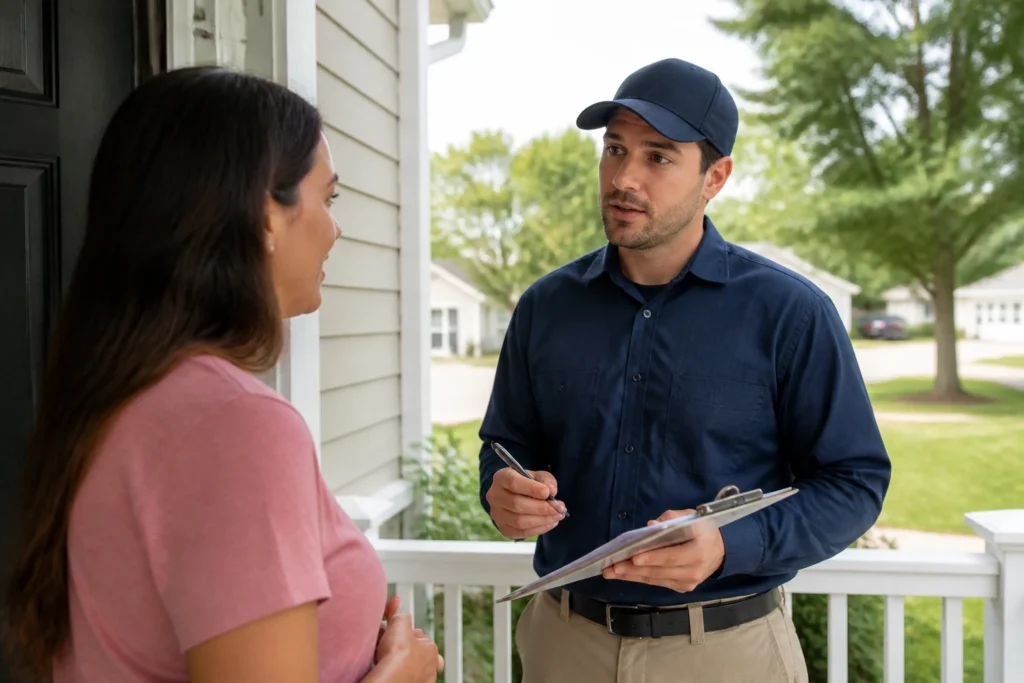
A treatment visit and a building-repair project are different purchases. Comparing their headline prices can hide the work that your property actually needs. Use the checklist below to make each quote answer the same questions; it does not present unverified national price ranges as a current market survey.

Scorpion pest control cost: define the inspection scope
What a quote should explain
Observed activity
Where were scorpions seen, and what did the inspection establish?
Accessible entry defects
Which openings can be repaired, and by whom?
Shelter and moisture
Which changes are the owner’s responsibility? Extension priorities
Treatment scope
Which product, site and application method are proposed? Label requirements
Scorpion exterminator services: inspection, sealing and treatment
Compare proposals by the job they do
Inspection and written findings
First priority: understand what is being addressed. Ask for photos or a location list.
Specified exclusion repairs
Compare the named openings and materials, not the phrase whole-home sealing.
Habitat and leak corrections
Agree on which tasks are included and which need another contractor.
Labeled treatment and follow-up
Conditional on the findings. Check service frequency, terms, product information and technician qualifications. EPA selection advice
Practical steps
Ask for an inspection before a package
Walk the accessible perimeter with the provider. Ask how each proposed task relates to observed activity. A sighting is not proof that every wall cavity requires pesticide.

Separate doors and screens from structural work
Ask which seals, screen frames and door corners are covered. Structural, roof, drainage and ventilation details may require an appropriately qualified contractor.

Define every utility-opening repair
Ask for the proposed material, location and limitations. Do not accept a promise to fill all openings: required drainage, airflow and equipment clearances must remain functional.

Record completion and follow-up terms
Keep before-and-after records. Clarify how a missed opening, material failure or continued sighting is handled, and whether further visits cost extra.

When to check progress
Use checkpoints rather than an elimination promise
Before selecting a company
Collect several written estimates and check relevant licensing or certification.
Before signing
Confirm inclusions, exclusions, cancellation terms and any warranty in writing.
After the work
Record completed locations and obtain product or maintenance information.
At follow-up
Review sightings and repair condition against the agreed criteria, rather than assuming a fixed elimination deadline.
Myths and facts
Check the claim before acting
Myth: the lowest monthly fee is the cheapest plan
Fact: compare the total term, initial visit, additional work and cancellation terms.
Myth: sealing is a permanent guarantee
Fact: missed openings, weather and building movement can require inspection and maintenance.
Myth: every home needs the same pesticide schedule
Fact: findings and the exact product directions should determine the proposal.
Myth: a warranty covers every future sighting
Fact: read its actual remedy, exclusions, duration and maintenance conditions.
What changes a scorpion exterminator quote?
The price should reflect the work, not just the word “scorpion.” Important cost factors include the size and construction of the property, number of accessible harborage areas, evidence of prey insects, door and utility gaps, treatment method, visit frequency and whether sealing is included. A low initial price can cost more if inspection, repairs or follow-up are separate.
Ask each provider to separate inspection, pest-control service, exclusion repairs and recurring visits on the written estimate. Confirm which scorpion species or risk level the proposal addresses, what products and sites are covered, and what happens if activity continues. EPA recommends checking credentials, scope and pesticide information before hiring a pest-control service.
When to get professional help
Use a qualified provider for inaccessible or unfamiliar work and repeated indoor activity. Do not let a sales deadline prevent you from comparing the written scope. EPA recommends evaluating competence and value, obtaining several estimates and asking about applicator qualifications. EPA service-selection guidance.
Compare equal scopes before comparing prices
Two “scorpion treatments” can describe completely different jobs. One estimate may cover inspection and a limited exterior application; another may include door adjustments, screens, utility penetrations, habitat recommendations and several follow-up visits. Put every proposal into the same categories before deciding that one is cheaper. If a company will not separate treatment from repair work, ask for clarification in writing.
A useful quote identifies the property, areas inspected, evidence observed, work included, work excluded, responsible contractor, products or materials, number of visits and total contract commitment. It should also explain what happens when activity continues. EPA’s pest-control service guidance recommends obtaining several estimates and considering competence and value rather than price alone.
Cost factors a written estimate should explain
Property size and construction
Square footage matters less than the amount and complexity of work. A simple single-story perimeter differs from a home with attached garages, masonry interfaces, roof access, numerous utility openings and extensive landscaping. Ask the provider to identify which areas are accessible and which defects require a roofer, electrician, plumber or general contractor.
Inspection findings and activity level
Repeated indoor sightings, nursery or bedroom concerns, activity in inaccessible voids and a property surrounded by favorable habitat may justify a broader plan than one isolated outdoor sighting. A black-light inspection can help map activity in suitable conditions, but the quote should explain when and where inspection occurred. A sales photograph from another property is not evidence about yours.
Exclusion materials and labor
Door sweeps, weather stripping, screen repair and sealing around compatible penetrations are different tasks with different materials. Required drainage, ventilation and equipment clearances must remain functional. Ask for each repair location, material and limitation instead of accepting “whole-home seal” as a complete specification.
Treatment method and follow-up
If pesticide treatment is proposed, request the product name, EPA registration information, intended sites, preparation, reentry instructions and visit schedule. Ask what monitoring determines whether another application is needed. UC IPM notes that scorpions can be difficult to control with insecticides because they shelter in cracks and crevices, so habitat modification and exclusion remain part of the plan.
Separate one-time work from recurring service
A low advertised monthly price may require an initial fee, a minimum contract term or separate charges for call-backs and repairs. Calculate the full commitment through the earliest cancellation date. Then list which inspections, applications and follow-ups occur during that period. A one-time exclusion project can cost more initially yet address entry defects that a spray-only plan leaves unchanged.
Recurring service is not automatically unnecessary, but it should respond to continuing evidence and local conditions. EPA advises that routine household pesticide applications generally are not appropriate unless pests remain a constant problem and nonchemical methods have failed. Ask whether a scheduled visit is an inspection first or an automatic application regardless of findings.
Questions to ask every scorpion-control company
- What scorpion evidence did you find, and can you show the locations?
- Which prevention, exclusion and habitat tasks are included?
- Which repairs are excluded or require another licensed trade?
- What pesticide would be used, where, and under what label directions?
- How should children, pets, aquariums and sensitive occupants be protected?
- How many visits and inspections are included in the quoted total?
- What triggers a call-back, and is there an additional charge?
- What does the warranty cover, and what maintenance can invalidate it?
- Who holds the required state or local license, certification and insurance?
Watch for sales claims that weaken a quote
Be cautious with pressure to sign immediately, secret-formula claims, guaranteed permanent elimination and unexplained package pricing. No contractor can control neighboring habitat or guarantee that a building will never develop a new gap. A reliable provider should discuss limits, show credentials, provide pesticide labels when relevant and allow time to compare proposals.
Do not accept invented efficacy percentages or a claim that one named chemical is always required. Scorpion species, hiding sites, building conditions and registered products vary. Utah State University Extension recommends habitat reduction and sealing doors, windows and foundation cracks; pesticide use is conditional when populations become intolerable and must follow the label.
Check the completed work, not just the invoice
Keep the original findings, marked locations, product information and repair list. After service, photograph completed exclusion work and note monitoring or sighting dates. Confirm that door movement, screens, drainage and ventilation still function. At follow-up, compare new evidence with the same locations rather than relying on a general assurance that the treatment is “working.”
If something was missed, use the written scope to determine whether it is a call-back, new work or a task assigned to another contractor. Report suspected pesticide misuse to the company and, when appropriate, the state pesticide regulatory agency. Continue ordinary habitat maintenance by removing debris and firewood from the foundation, correcting accessible moisture and reducing prey-insect attraction.
Calculate the full scorpion exterminator cost
Use the same comparison period for every estimate. Ask the company to complete this calculation with its actual figures, rather than comparing a one-time price with an advertised monthly payment:
Total commitment = initial inspection or treatment fee + required recurring charges + separately quoted exclusion repairs + other disclosed fees.
- Billing frequency: how often you pay, and the minimum number of payments.
- Service frequency: how often a technician actually inspects or treats the property.
- Call-back terms: which continuing sightings qualify for an included return visit.
- Renewal and cancellation: when the commitment ends and which fees continue.
A monthly bill does not necessarily buy a monthly visit. Get both schedules in writing. A treatment-only plan and a plan including specified entry-point repairs should remain separate rows in your comparison.
Will general pest control also cover scorpions?
Ask explicitly. A general insect package may not include scorpion inspection, exclusion labor or the same follow-up terms. UC IPM emphasizes shelter reduction and exclusion alongside conditional insecticide use. The estimate should explain those jobs, not simply rename a routine spray visit.
Frequently asked questions
How much should a scorpion exterminator cost?
Ask for a property-specific written estimate. This source review does not establish a reliable universal price; the useful comparison is the total price for the same work.
Is a monthly spray plan necessary?
Not automatically. Ask how the proposed schedule relates to the inspection findings and product directions.
Does sealing replace every other action?
No. Outdoor shelter, moisture, overlooked openings and existing indoor animals may also need attention.
What should I ask about pesticides?
Request product names, intended sites, application details and the safety information relevant to your household.
Related guides
Home-sealing checklist · UV inspection guide
Before comparing quotes: review the scorpion exclusion, monitoring and prevention plan so each company prices the same scope.
Publishing and affiliate notes
Some product links may be affiliate links. If you buy through them, we may earn a commission at no extra cost to you. Product picks are not lab tests. Read the legal disclaimer.