
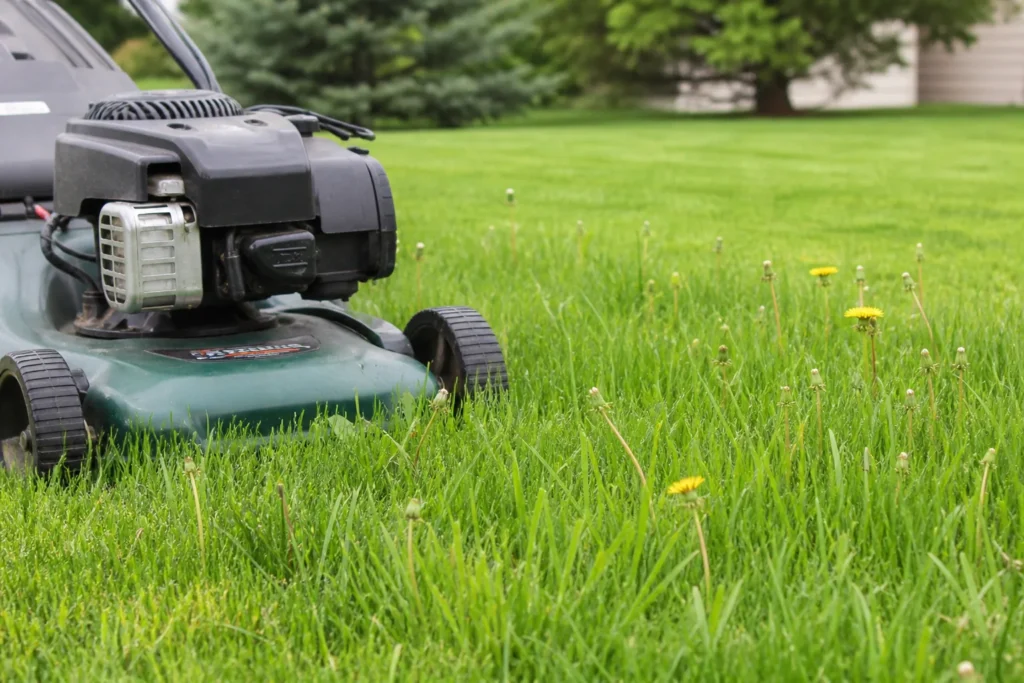
A lawn can tolerate some weeds. Persistent patches may relate to thin turf, shade, compaction or other conditions, but a weed sighting alone does not diagnose a nutrient deficiency. Match maintenance to the actual grass, site and soil information rather than using one nationwide height or calendar.

Identification and conditions
Identify the source and conditions
Weed identity
Distinguish annual, perennial, grassy and broadleaf weeds.
Grass identity
Care depends on the turf species.
Site conditions
Inspect shade, drainage and compaction.
Product suitability
Confirm target weed and compatible turf.
Methods ranked by their role
Choose management for the actual problem
Identification
Choose a suitable response.
Targeted hand removal
Manage small suitable patches.
Appropriate lawn care
Support turf suited to the site.
Label-permitted treatment
Consider targeted use only when needed.
Inspection and prevention steps
Remove a manageable weed carefully
Use a suitable hand tool without damaging nearby turf or hidden equipment. Perennial roots and seedbanks may require follow-up; one pull is not guaranteed permanent control.

Identify the plant before treatment
Use photographs and local extension guidance. An uncertain grassy weed may require a different response from a broadleaf weed. Do not infer lawn fertility from one species alone.

Check irrigation and mowing practices
Match water and mowing height to the grass, soil and season. Do not prescribe three-and-a-half to four inches for every lawn or water a fixed amount regardless of rain.

Read product directions and local guidance
Confirm the weed, grass compatibility and allowed use. Chelated iron products may have a role but are not harmless universal weed control. Corn gluten is not a guaranteed substitute for suitable maintenance or correctly timed control.

Sequence and reassessment
A sequence for ongoing management
Identify
Confirm the target and damage.
Prevent
Address the relevant access or growing conditions.
Manage
Use appropriate mechanical or label-permitted methods.
Monitor
Check recurrence and obtain local advice when needed.
Myths and facts
Correct common management assumptions
Myth: one mowing height suits every grass
Fact: identify the turf and regional needs.
Myth: iron only feeds grass and kills weeds
Fact: product performance and injury risk vary.
Myth: one flower bloom sets every treatment date
Fact: target biology and regional timing matter.
Myth: every lawn must contain zero weeds
Fact: assess the actual problem and tolerance.
Treat the plant and site you actually have
A weed-control plan can fail when the plant is misidentified, the turf species is unsuitable for the product, or mowing, shade, compaction, and irrigation continue to favor weeds.
Photograph leaves, stems, flowers, and growth habit before removal. For widespread or recurring weeds, use local extension guidance to match turf care and any labeled treatment to the identified plant and season.
How to get rid of weeds without killing grass naturally
For a small patch, start with identification and careful hand removal, then repair the conditions that left space for weeds. For a lawn-wide problem, decide whether you want fewer weeds, a renovated lawn or a lower-input mixed lawn. Those goals require different amounts of work. “Natural” does not mean a spray can distinguish a dandelion from your grass.
Annual, perennial and grassy weeds need different follow-up
- Annual grassy weeds: crabgrass (Digitaria species) grows from seed. Pull manageable young plants before they add more seed, and address thin turf. Preventing new seedlings and removing established plants are different jobs.
- Broadleaf perennials: dandelion (Taraxacum officinale) can return from surviving root tissue. Work around the crown with a suitable tool and recheck the spot; a broken root does not prove the job is finished.
- Spreading weeds: white clover (Trifolium repens) and creeping plants are not always isolated taproots. A few pulls may leave connected growth. Map the patch and identify the species before choosing repeated removal or renovation.
- Grass-like plants: not every narrow-leaved weed is crabgrass. Sedges and perennial weedy grasses can require a different approach. Photograph the base, stems, leaves and any seedhead for identification.
The Minnesota weed identification guide distinguishes management by species. Use it as an identification aid, not as a nationwide calendar or permission to use a particular herbicide.
Hand-pulling weeds without tearing up the lawn
Choose a manageable area so you can inspect the result rather than rip out large sections in a rush. Moderately moist soil usually makes removal easier; avoid working waterlogged ground where foot traffic damages turf. Position a narrow weeding tool beside the weed’s crown, loosen the root carefully and lift without levering against nearby grass roots.
Remove the plant material from the work area and check for remaining crowns or spreading stems. Do not repeatedly excavate around hidden irrigation equipment. If the plant has mature seedheads, contain them while carrying it away. Revisit the same patch after new growth appears and photograph the result.
Hand removal is useful for scattered weeds. It can become impractical when weeds cover much of the lawn, and repeated disturbance leaves new openings. In that case, identify why the desirable grass is failing before spending another weekend pulling. Maryland Extension’s nonchemical management guide describes physical and cultural options.
Repair bare spots and support healthy turf
Pulling weeds is only the removal stage. A bare patch still needs a suitable plan for grass recovery. Check sunlight, soil condition, drainage and traffic. If the site stays too shaded for your grass, adding more of the same seed will not fix the mismatch. Consider an appropriate alternative planting rather than repeatedly treating the symptom.
Where lawn renovation is suitable, select seed, sod or another establishment method for the turf species and region. Cool-season and warm-season grasses do not share one seeding date. Check whether any recently applied product restricts reseeding. Follow local establishment guidance for watering; both drying out new seedlings and keeping the area saturated can frustrate the repair.
Use a soil test when you need fertility or pH advice, not a weed species as a substitute for a laboratory result. Aeration can help a genuinely compacted lawn, but it is not a cure for every weed. The Minnesota lawn-renovation guide explains how site assessment and turf recovery fit together.
Mowing height and irrigation are grass-specific
Keep mower blades sharp and avoid repeatedly scalping the lawn. Minnesota Extension recommends three inches or higher for typical residential Midwest grasses, including bluegrass, ryegrass and fescues; that is a regional example, not a rule for every warm-season grass. Choose the recommended height for your own turf and adjust mowing frequency to its growth.
Check rain and soil conditions before watering. A fixed daily schedule can waste water and favor the wrong growing conditions. Record how often you mow, whether the lawn remains thin and where water pools; these observations make an extension consultation more useful. See the Minnesota mowing guidance.
Why vinegar, salt and boiling water are poor lawn shortcuts
Nonselective treatments can injure desirable grass as well as weeds. Horticultural vinegar is more concentrated and caustic than food vinegar; “organic” does not make it harmless to plants, skin or eyes. Salt is not a sensible way to improve soil for future grass growth. Boiling water creates a scald hazard and does not selectively protect nearby turf.
If keeping the lawn matters, don’t make a homemade spray from kitchen ingredients and assume it is grass-safe. A registered selective product must still list your weed and compatible turf and be used exactly as directed. If you want a no-herbicide approach, choose repeated mechanical management and suitable lawn care rather than relabeling a damaging spray as natural.
Corn gluten meal is not a guaranteed weed preventer
Maryland Extension does not recommend corn gluten for lawn weed control: trials show mixed effectiveness, high weed pressure can overwhelm it, and substantial nitrogen inputs create other concerns. Fertilizer restrictions also vary by location. It does not remove a mature weed. Do not copy a universal application rate or assume it fits a reseeding plan; check the product and local guidance. Read Maryland’s assessment.
Lawn-weed questions
Can I keep clover instead of killing it?
Yes, if a mixed lawn suits your goals and the plant is appropriate for the site. A lawn does not have to be weed-free to be useful. Consider appearance, foot traffic, flowers, maintenance and household needs before choosing removal. Clover presence alone does not prove a particular nutrient deficiency.
Why do weeds return after pulling?
Surviving roots, spreading stems or new seedlings can explain recurrence. Distinguish regrowth in the same crown from new plants nearby. Photograph the spot and review whether desirable turf filled the gap; repeat removal without grass recovery leaves the opportunity unchanged.
Should I overseed and apply a pre-emergent together?
Do not assume compatibility. A treatment intended to suppress germinating weeds can conflict with new grass establishment. Follow the exact reseeding interval and permitted turf uses; choose a renovation schedule before buying products.
When is professional lawn advice worth it?
Seek identification and a site assessment when the lawn is mostly weeds, a perennial grassy weed keeps spreading, or shade and drainage repeatedly defeat repair. Ask for the weed name, grass suitability, nonchemical options, proposed products and a realistic maintenance plan—not an unsupported promise of permanent eradication.
Mulch and cardboard are not selective lawn weed control
A thick mulch layer or cardboard can suppress vegetation where you are deliberately replacing lawn with a planting bed. It also blocks the desirable grass beneath it. Do not spread these over turf you intend to keep just because a general gardening article recommends smothering weeds. Keep the distinction between renovating a bed and preserving a lawn clear.
Publishing and affiliate notes
Some product links may be affiliate links. If you buy through them, we may earn a commission at no extra cost to you. Product picks are not lab tests. Read the legal disclaimer.